



Skip to content

Cart

Your cart is empty

MENOPAUSE & PERIMENOPAUSE SUPPORT

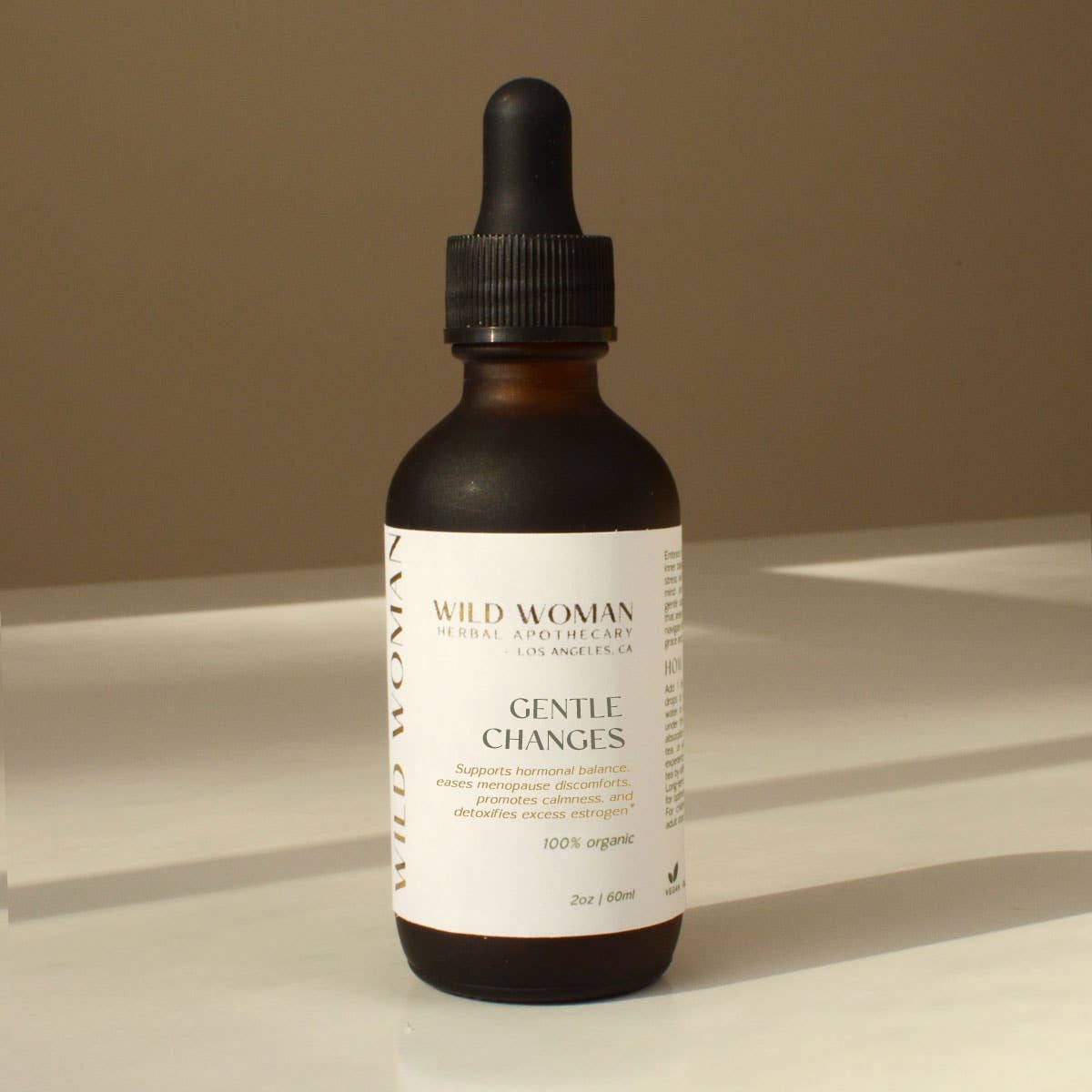
Gentle Changes Tincture

ease and balance through perimenopause

Sale price$30.00

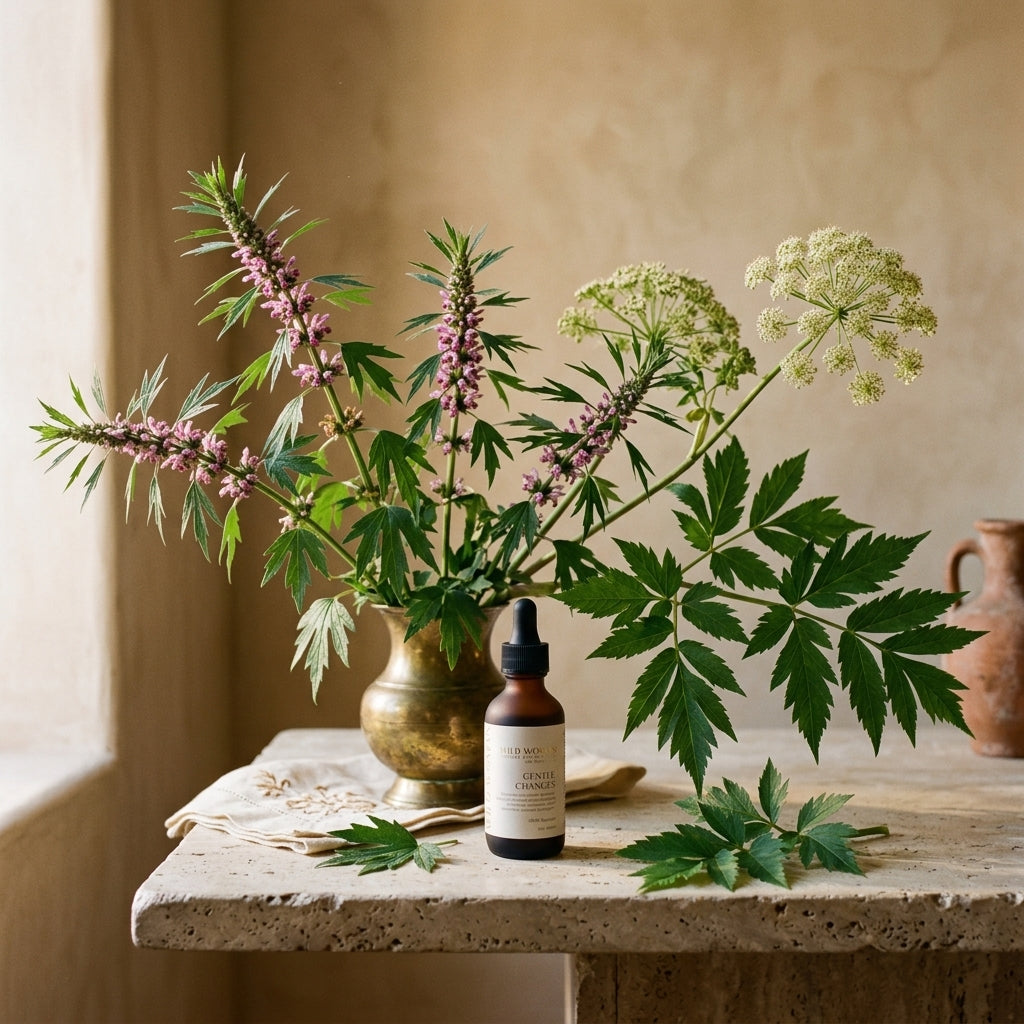
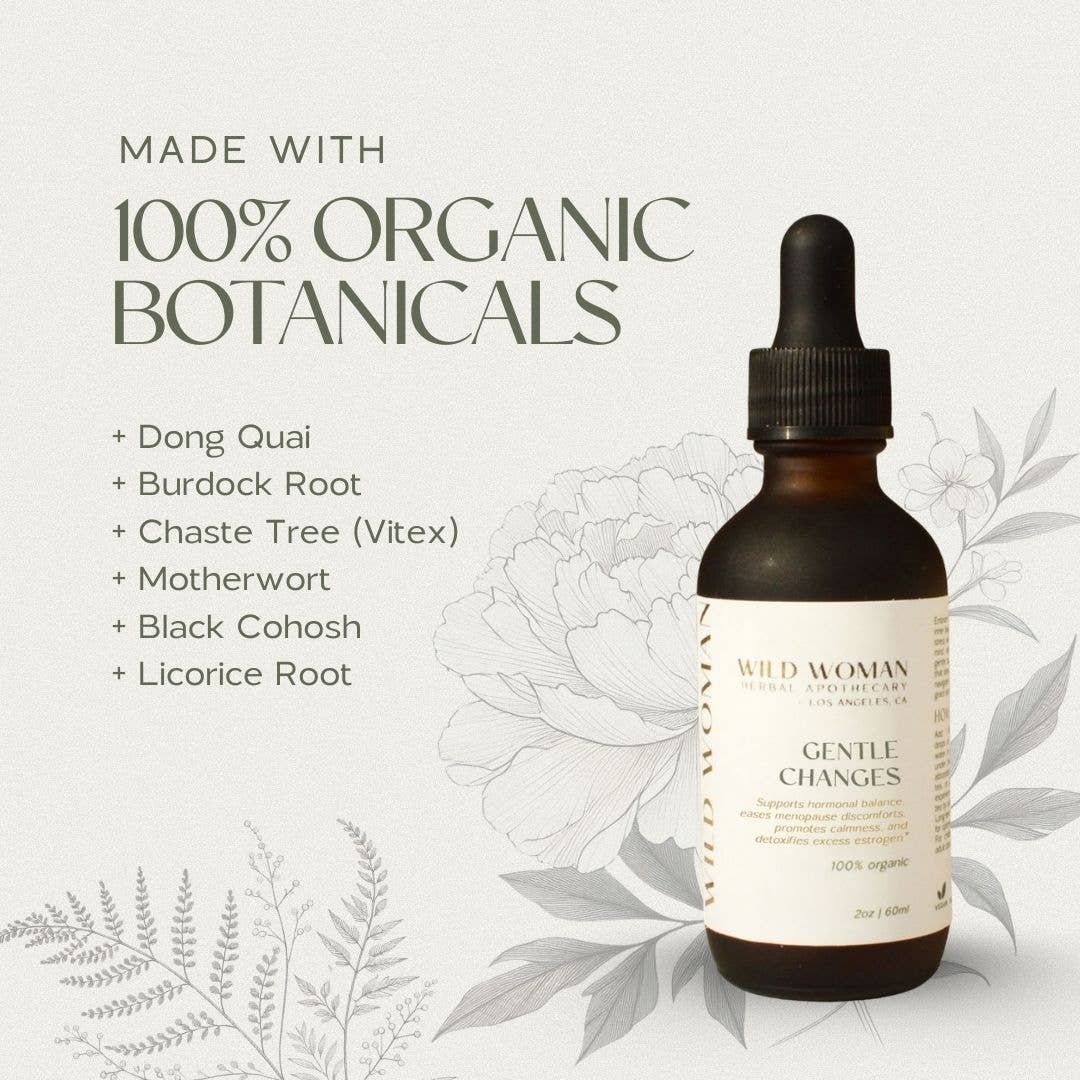
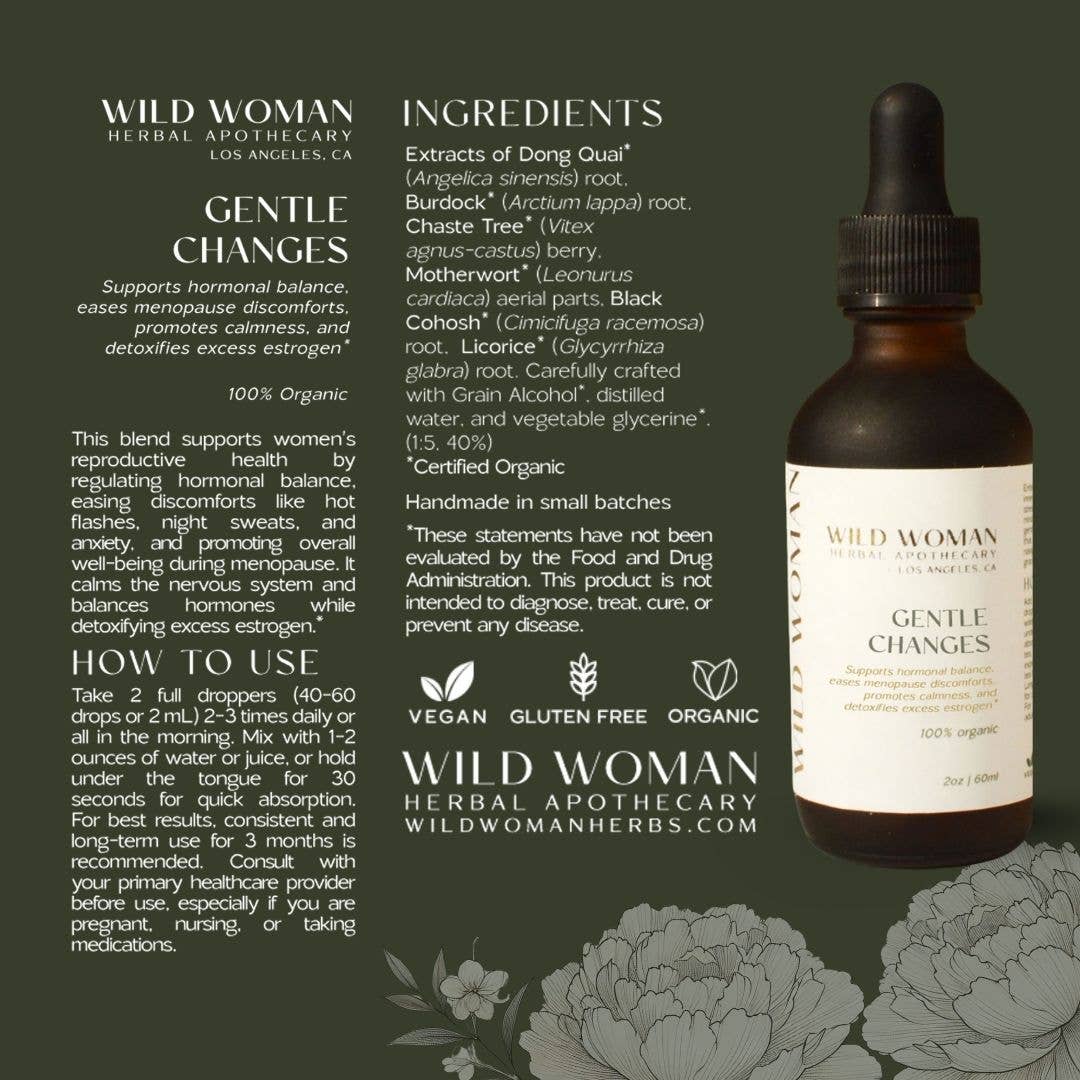
For the woman whose rhythms are beginning to shift: this herbal tincture for perimenopause was made for the long threshold, the season between the cycling years and the one that waits on the other side. Black Cohosh, Chaste Tree Berry, Dong Quai, Motherwort: plants women have turned to across centuries of crossing this passage. Gathered and tinctured slowly in small batches in Los Angeles.

earthy · faintly bitter · sweetened by licorice · slow and steadying

Gentle Changes Tincture
Gentle Changes Tincture Sale price$30.00

Gentle Changes

PRODUCT DETAILS

The Plants

This formula was built around one question: what does a woman's body need when it is no longer the body she has known? Not a body that is failing. A body that is changing shape, moving from the cycling years into something older and more settled. That passage asks a great deal. The plants in this formula answer it at every level it touches.

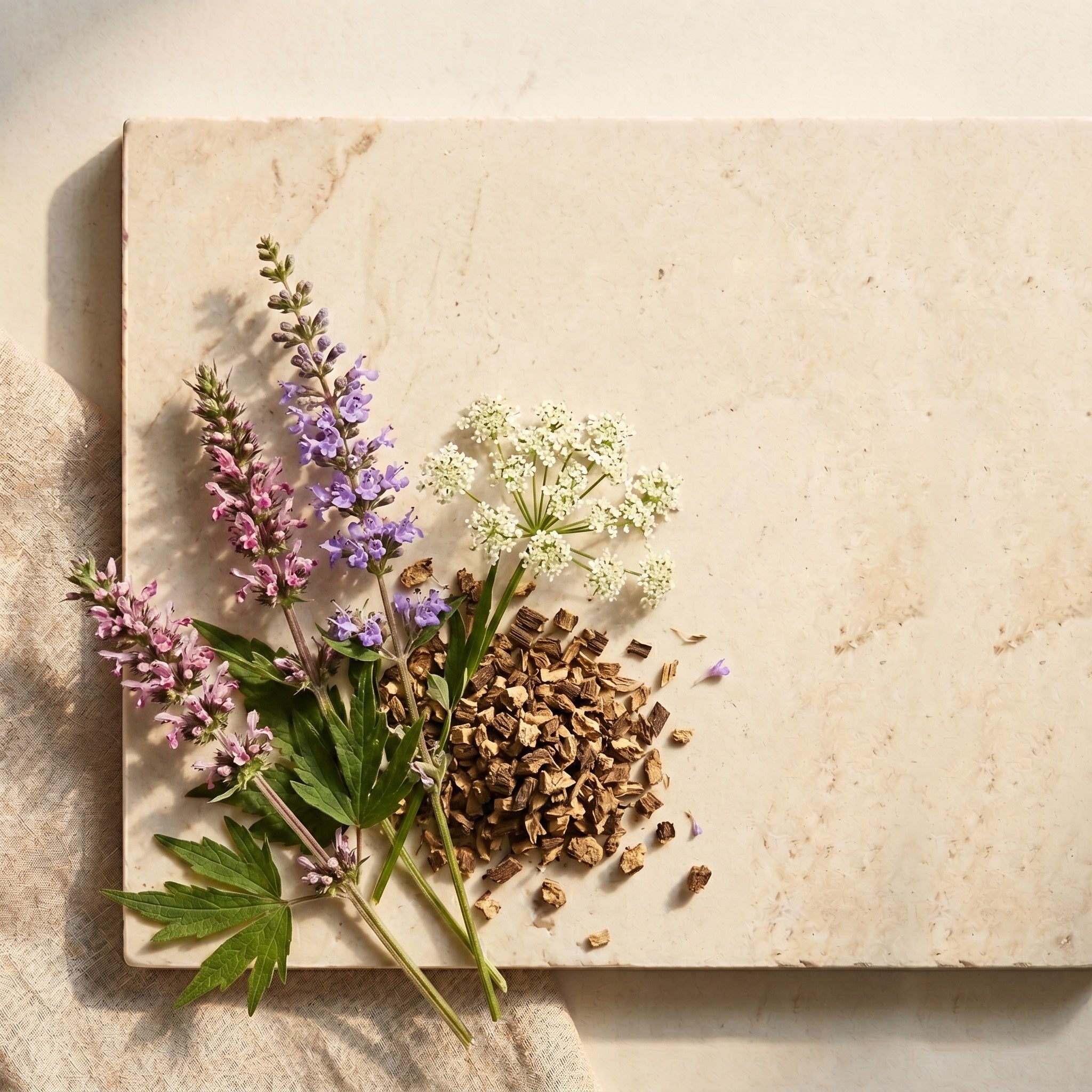
Chaste Tree Berry addresses the endocrine system's shifting rhythms at their source: the long, slow hormonal reorganization that perimenopause initiates. Black Cohosh works closer to the body's felt experience, the physical unpredictability and mood weather of a system in transition. Dong Quai brings the wisdom of Chinese medicine's oldest tradition of women's support, a root that has been tending female bodies through change for over two thousand years. Motherwort holds the nervous system: the agitation, the heart that beats too fast, the feeling of being undone by something you cannot yet name. Burdock Root and Licorice Root bring gentle depth, supporting the body's internal balance and the adrenal resilience that the menopausal transition quietly taxes.

These plants were not chosen for efficiency. They were chosen because this transition is not a problem to solve. It is a passage to be accompanied. The formula works slowly, over weeks and months, the way real medicine works. The body that has been shifting for years does not reorganize overnight. This is the companion you bring to a long crossing.

Season of Life

Season of Life

the threshold between · perimenopause · when rhythms begin to change

Tasting Notes

Tasting Notes

earthy · faintly bitter · sweet finish from licorice · grounding

Energetics

Energetics

deeply steadying

Ritual Moment

Ritual Moment

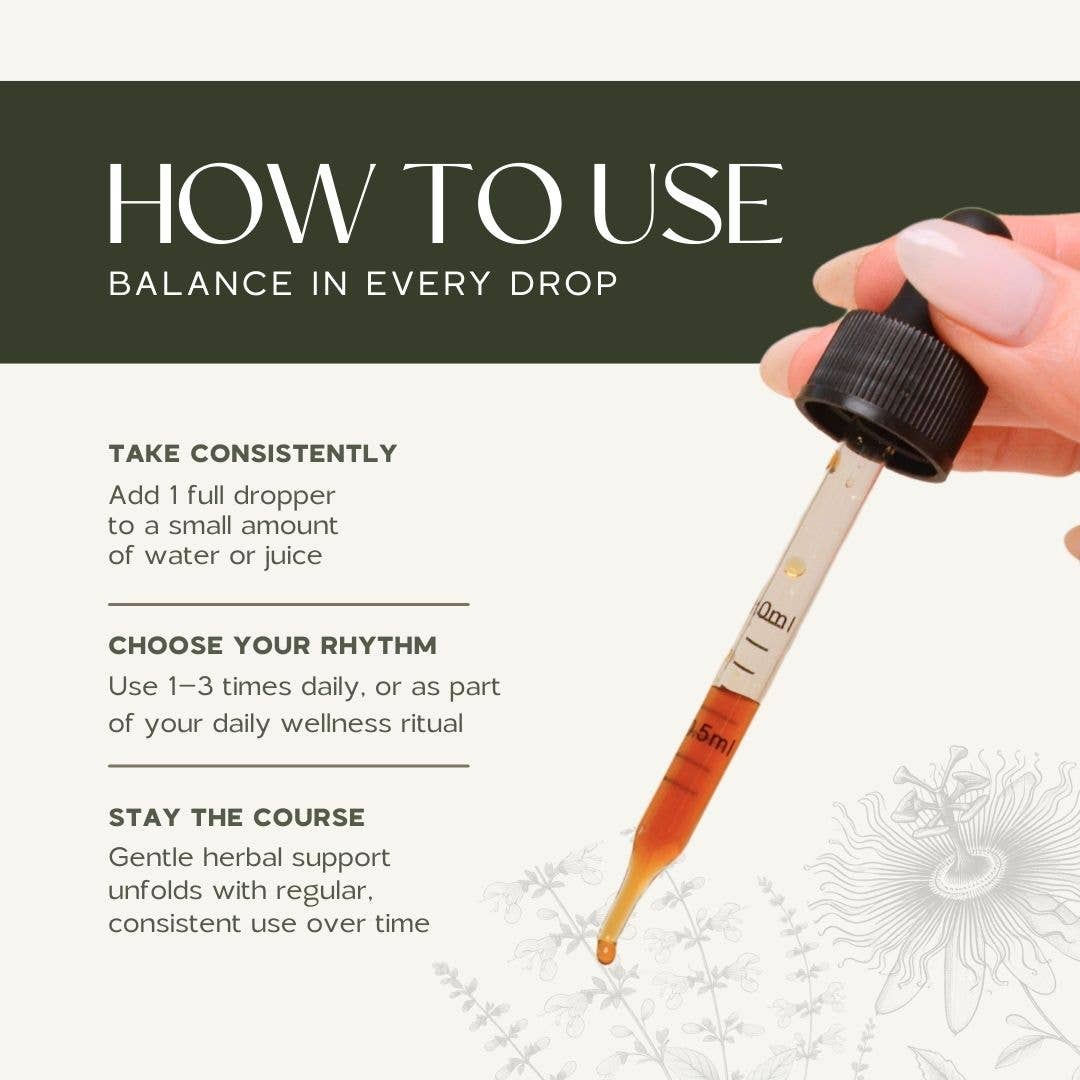
morning, midday, or evening · chosen and held consistently
Season of Life

Season of Life

the threshold between · perimenopause · when rhythms begin to change

Tasting Notes

Tasting Notes

earthy · faintly bitter · sweet finish from licorice · grounding

Energetics

Energetics

deeply steadying

Ritual Moment

Ritual Moment

morning, midday, or evening · chosen and held consistently
Vitex

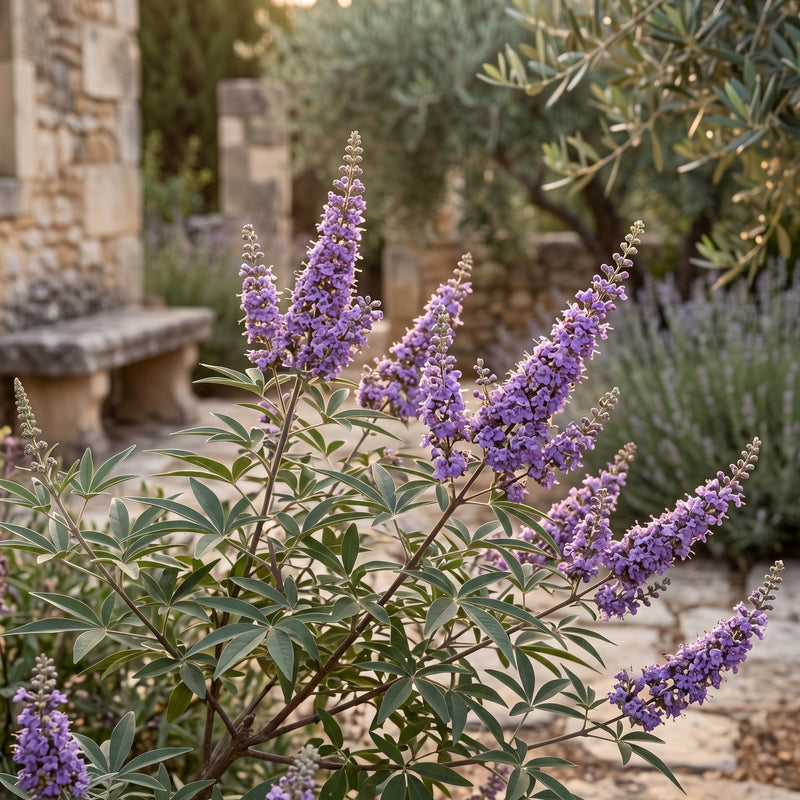
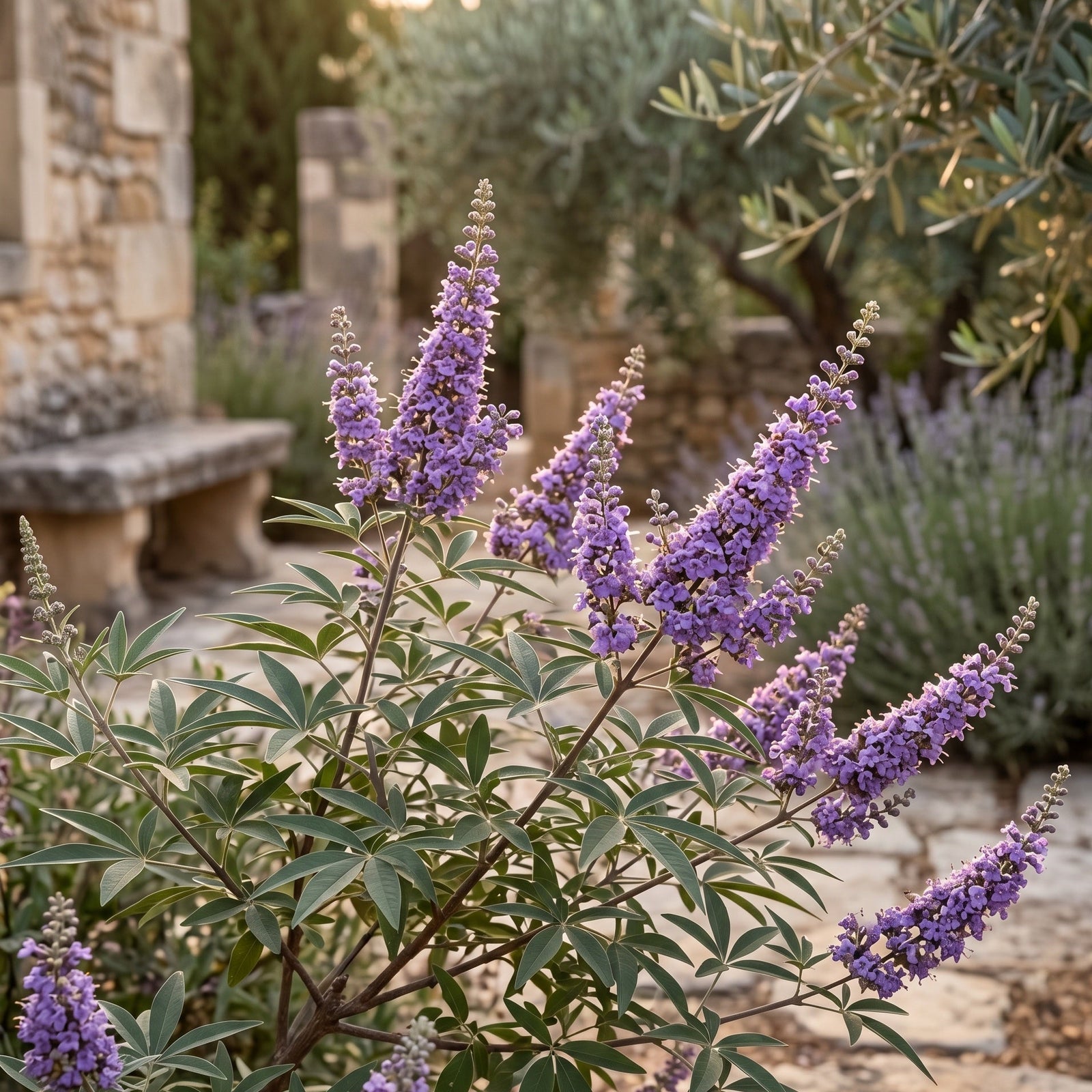
Vitex grows along dry riverbeds and stony slopes in the Mediterranean, a plant of resilient, arid places. Women in European herbal tradition have worked with it for thousands of years, and what they learned is what I still teach: Vitex is the slow plant. It is the one that asks for patience and rewards consistency. It does not work in a week. It works over months, gently and persistently, supporting the endocrine system's own capacity for rhythm rather than overriding it. Women who stay with it often describe a gradual returning to themselves — a sense of the ground coming back beneath their feet.

Dong Quai

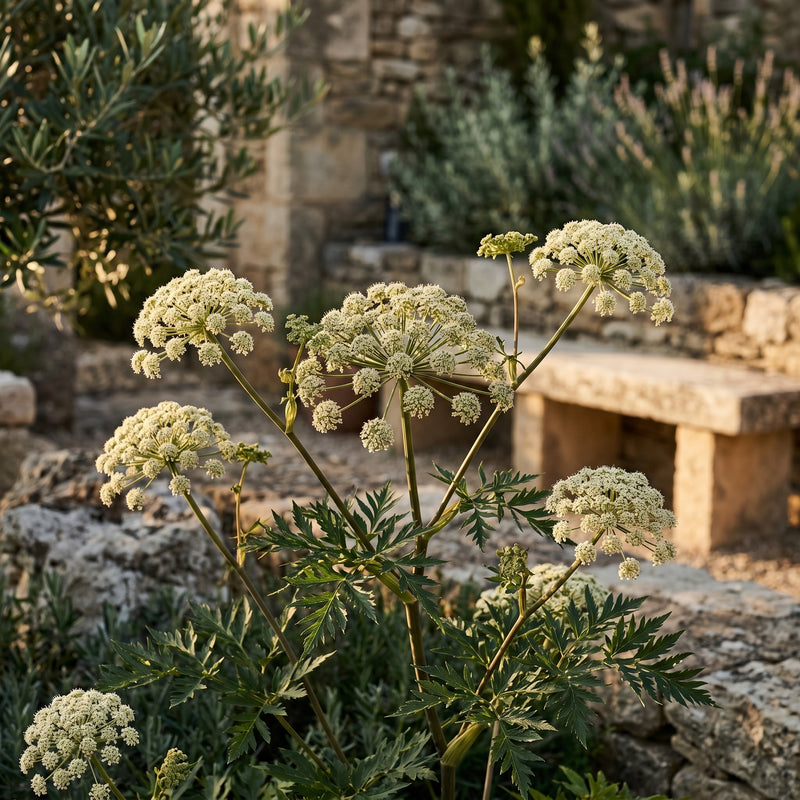
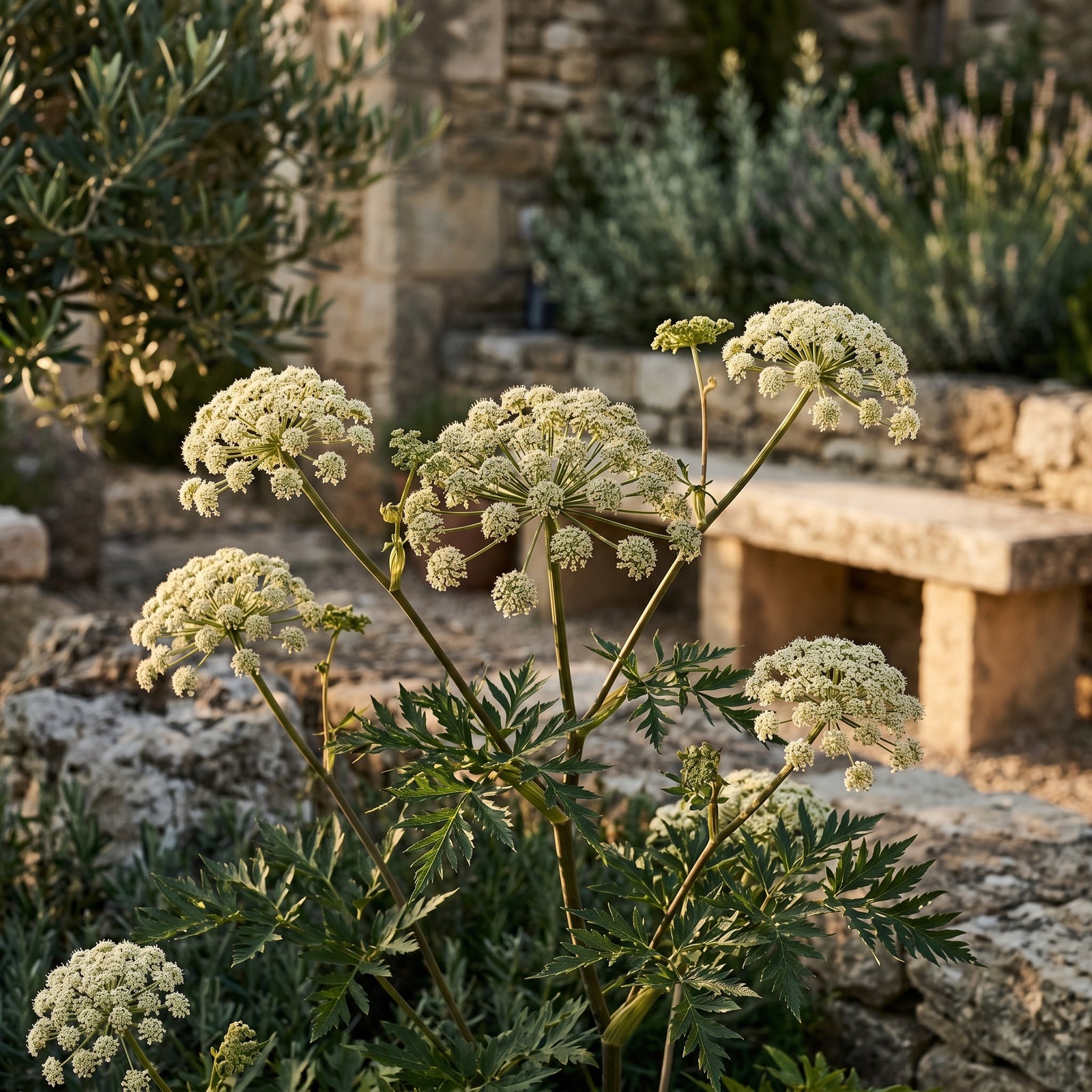
Dong Quai has been called the women's root in Chinese herbal tradition for centuries, and sometimes the female ginseng (Angelica sinensis). Both names carry the same essential character: this is a plant for us, specifically, in the seasons when the body most needs sustained nourishment. Where Black Cohosh addresses the variability of the menopausal transition from the outside in, Dong Quai works deeper: into the blood, the internal reserves, the foundational nourishment the crossing quietly taxes. I work with it in this formula for the quality of depletion that can accompany perimenopause and menopause: the sense of running on something thinner than before. Dong Quai does not stimulate. It nourishes in the way a long meal nourishes: slowly, completely, in a way that lingers.

Motherwort

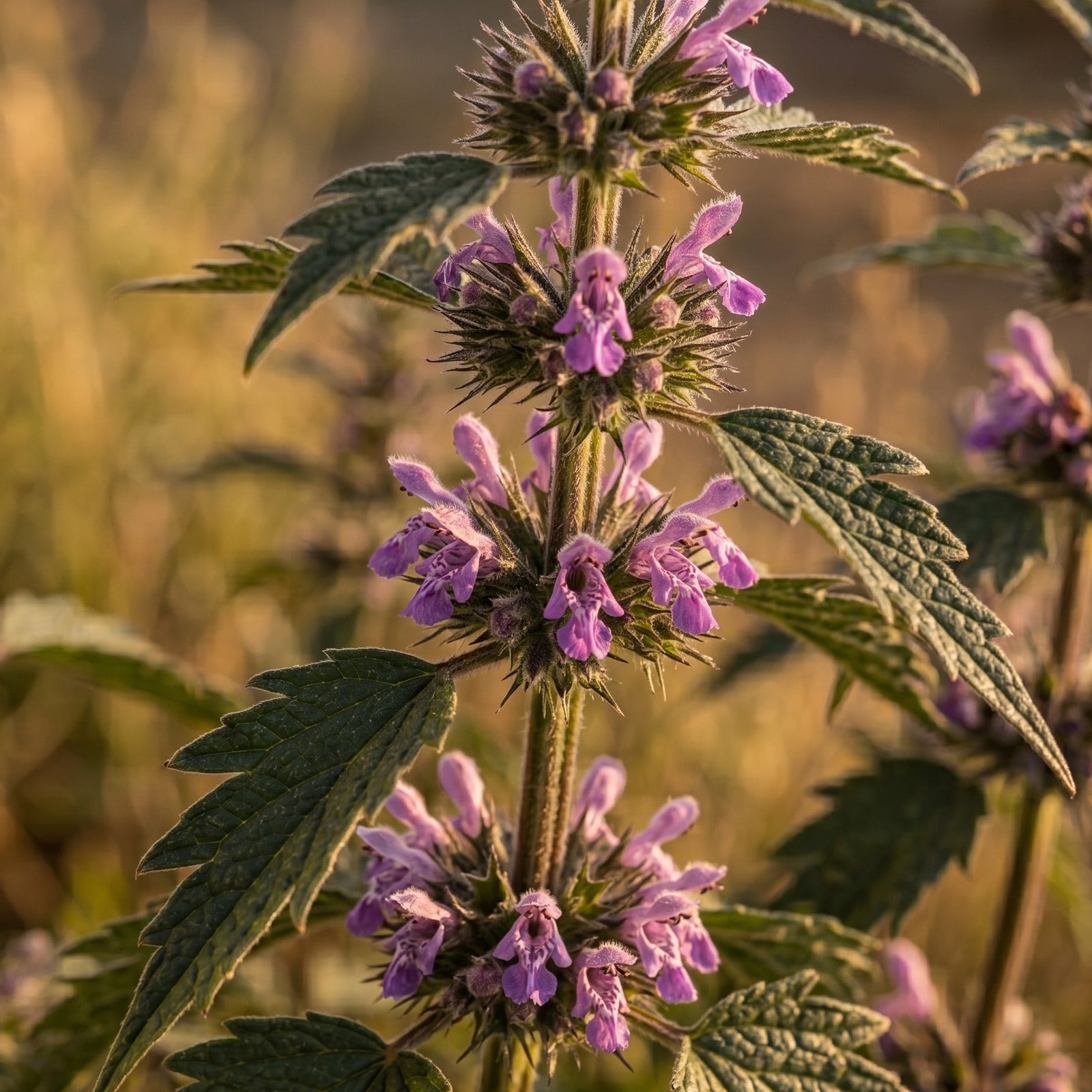
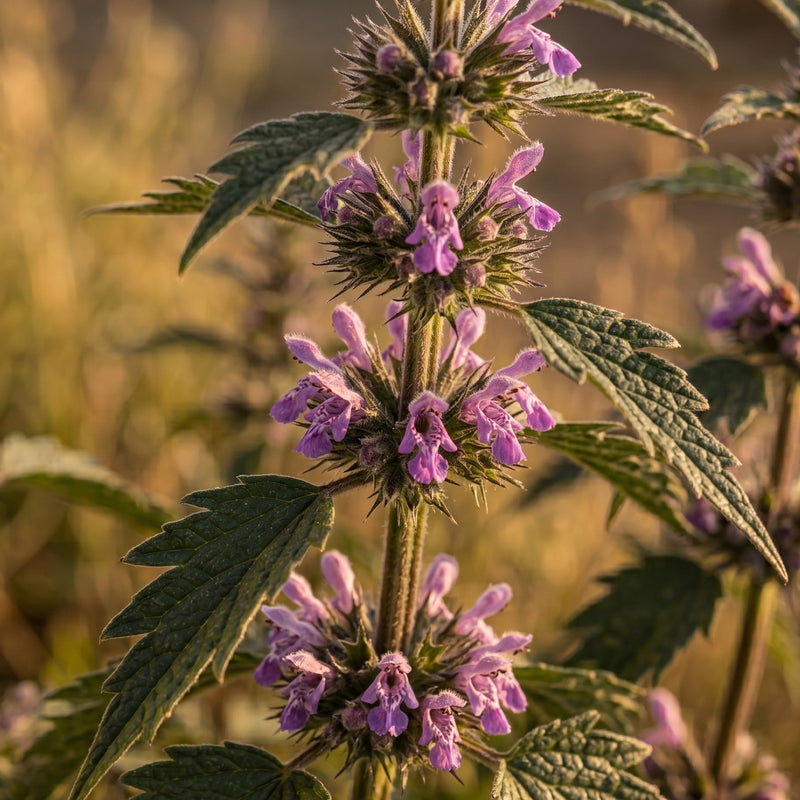
Motherwort has grown in the cracks of walls and along the edges of paths since before anyone thought to cultivate it. This is a plant that goes where women are. Its Latin name carries its meaning: leonine, of the heart. I reach for Motherwort when the nervous system needs steadying from the inside out, when the heart races at odd hours, when anxiety lives in the chest rather than the mind, when the menopausal transition announces itself as agitation rather than heat. It is a bitter herb, which means the body has to meet it honestly. That feels right for what this season asks.

Black Cohosh Root

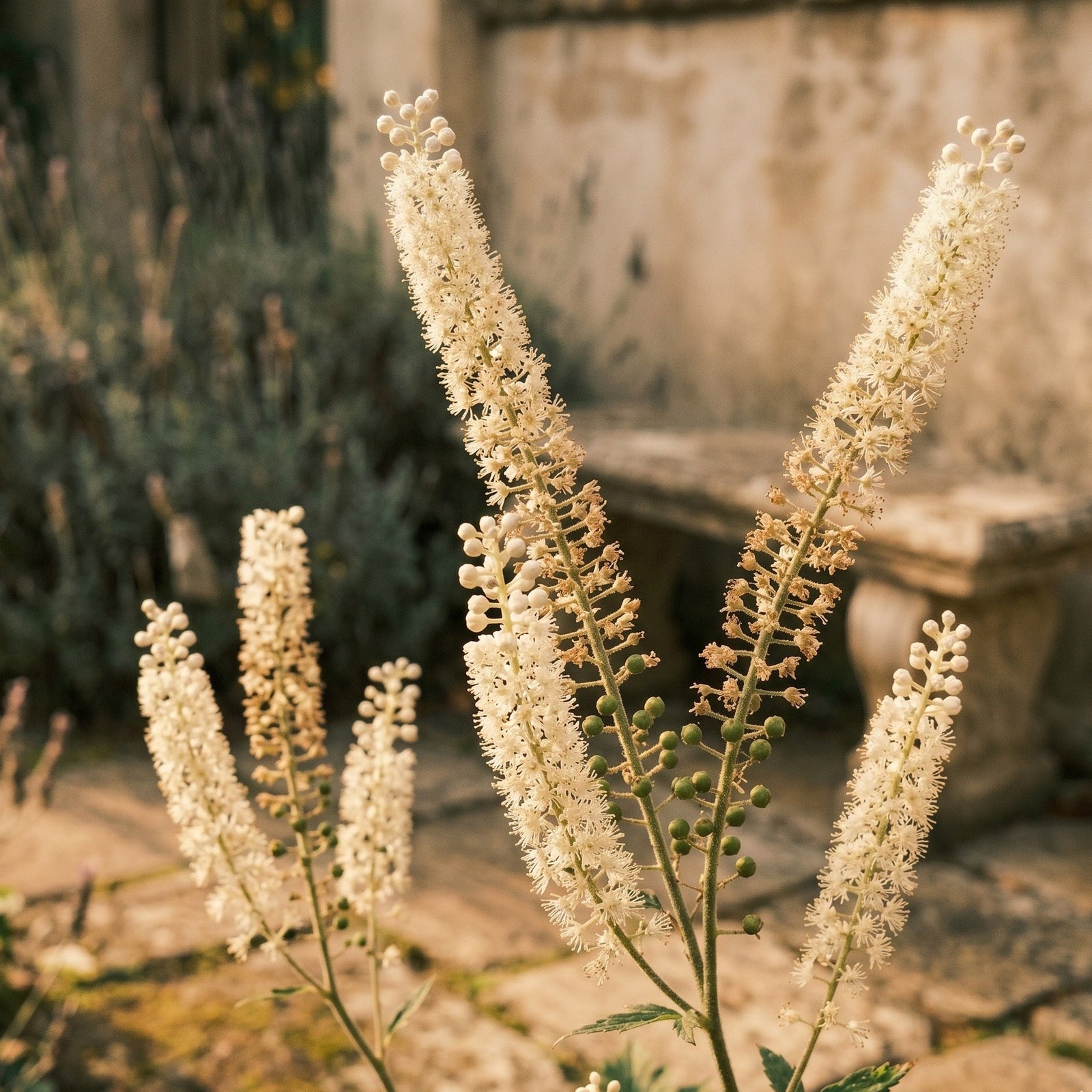
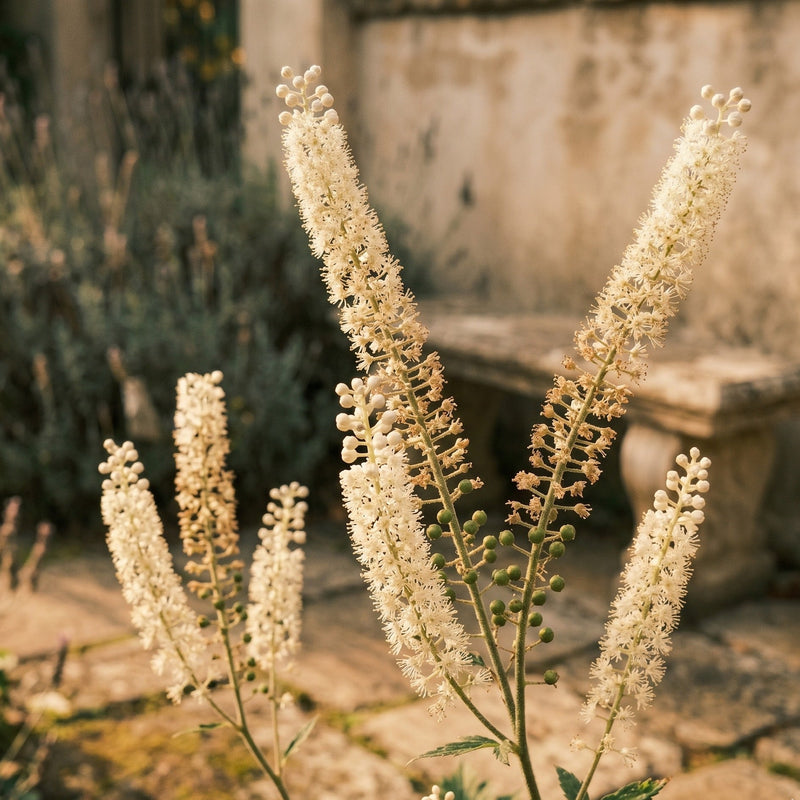
Black Cohosh grows in the shaded understory of eastern North American forests, in quiet, damp places away from direct light. It has been a cornerstone of women's herbal medicine on this continent far longer than it has had a Latin name. Indigenous peoples of Turtle Island worked with this root for generations before European herbalists took notice, and what they passed down is precisely what women are reaching for now: a plant that has something to say to the body in the midst of hormonal change. I come to Black Cohosh when a woman is navigating the disrupted sleep, the heat, the sense that her body has entered a conversation she was not quite prepared for. It is not a plant that overrides what the body is doing. It is a plant that helps the body move through what it needs to move through with less resistance.

Vitex

Vitex grows along dry riverbeds and stony slopes in the Mediterranean, a plant of resilient, arid places. Women in European herbal tradition have worked with it for thousands of years, and what they learned is what I still teach: Vitex is the slow plant. It is the one that asks for patience and rewards consistency. It does not work in a week. It works over months, gently and persistently, supporting the endocrine system's own capacity for rhythm rather than overriding it. Women who stay with it often describe a gradual returning to themselves — a sense of the ground coming back beneath their feet.

Dong Quai

Dong Quai has been called the women's root in Chinese herbal tradition for centuries, and sometimes the female ginseng (Angelica sinensis). Both names carry the same essential character: this is a plant for us, specifically, in the seasons when the body most needs sustained nourishment. Where Black Cohosh addresses the variability of the menopausal transition from the outside in, Dong Quai works deeper: into the blood, the internal reserves, the foundational nourishment the crossing quietly taxes. I work with it in this formula for the quality of depletion that can accompany perimenopause and menopause: the sense of running on something thinner than before. Dong Quai does not stimulate. It nourishes in the way a long meal nourishes: slowly, completely, in a way that lingers.

Motherwort

Motherwort has grown in the cracks of walls and along the edges of paths since before anyone thought to cultivate it. This is a plant that goes where women are. Its Latin name carries its meaning: leonine, of the heart. I reach for Motherwort when the nervous system needs steadying from the inside out, when the heart races at odd hours, when anxiety lives in the chest rather than the mind, when the menopausal transition announces itself as agitation rather than heat. It is a bitter herb, which means the body has to meet it honestly. That feels right for what this season asks.

Black Cohosh Root

Black Cohosh grows in the shaded understory of eastern North American forests, in quiet, damp places away from direct light. It has been a cornerstone of women's herbal medicine on this continent far longer than it has had a Latin name. Indigenous peoples of Turtle Island worked with this root for generations before European herbalists took notice, and what they passed down is precisely what women are reaching for now: a plant that has something to say to the body in the midst of hormonal change. I come to Black Cohosh when a woman is navigating the disrupted sleep, the heat, the sense that her body has entered a conversation she was not quite prepared for. It is not a plant that overrides what the body is doing. It is a plant that helps the body move through what it needs to move through with less resistance.

The Ritual

Practices that support the plants

Honor yourself

Come back to yourself

Pull your journal out, or a card from whatever deck you keep nearby, and ask it one question: what is this season asking of me? You do not need to answer it right now. You only need to sit with it for a moment and notice what rises. For the woman who does not keep a deck: just sit. Close your eyes and let the question live in the quiet.

Return to your body

Feel where you are

Supta Baddha Konasana: lie on your back, soles of your feet together, knees wide. Place one hand on your low belly and one on your heart. This pose is called the reclined bound angle and it is one of the oldest restorative postures for the female body. You are not trying to fix anything. You are giving the body the signal that it has been heard. If getting to the floor is not available today: place your hands the same way in whatever position you are in. The gesture is the practice.

Remember the earth

You are part of this

Step outside, even briefly, and let the season find you. Whatever the air is carrying today, let it land on your skin. The plants in this formula have been accompanying women through this crossing for centuries. The earth they grew from has been doing it longer. You are not alone in this passage.

Rooted in Lineage. Made with Reverence.

Every formula in this apothecary is made in small batches in Los Angeles, using herbs that are organically grown or seasonally wildcrafted whenever possible. We work with plants at the peak of their potency — harvested in the right season, prepared slowly, and handled with the same reverence we hope you bring to using them.

This is medicine in the oldest sense of the word: plant wisdom, carefully tended, passed forward with care.

Jasmine's Note

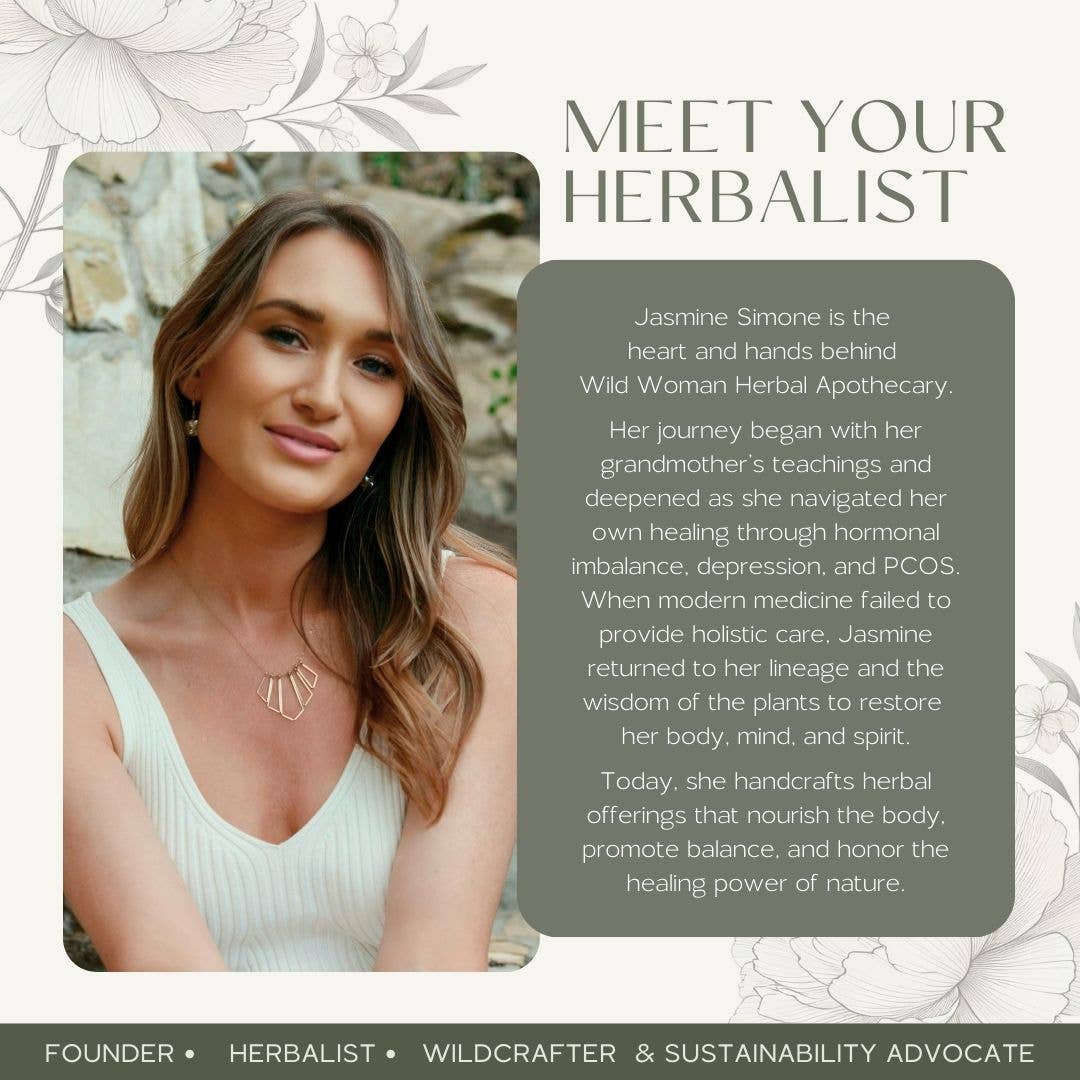
My grandmother didn't call it herbalism. She just knew things — which plants to reach for, which roots to dry, what the earth offered when the body asked. She learned it from her father, who kept a garden in Biloxi and understood plants the way some people understand people. That knowledge passed to her, and quietly, to me.

I didn't fully understand what I'd inherited until my own body started asking questions that medicine couldn't answer. Hormonal chaos, long seasons of depression, the particular exhaustion of feeling disconnected from yourself. I remembered the whisperings. I turned back toward the plants. Everything in this apothecary came from that turning — things I made for myself first, and then for the women in my life who needed the same. I offer them to you the way my grandmother offered what she knew: as a hand extended, as something real.

-Jasmine

Frequently Asked Questions

A Note on Plant Medicine

Plants are powerful — and like any potent thing, they deserve to be used with care and knowledge. These formulas are crafted with intention, but they are not a substitute for medical guidance. Before beginning a new herbal practice, we encourage you to speak with your healthcare provider, especially if you are pregnant, nursing, trying to conceive, managing a health condition, or taking prescription medication. Wild Woman products are not intended to diagnose, treat, cure, or prevent any disease.