
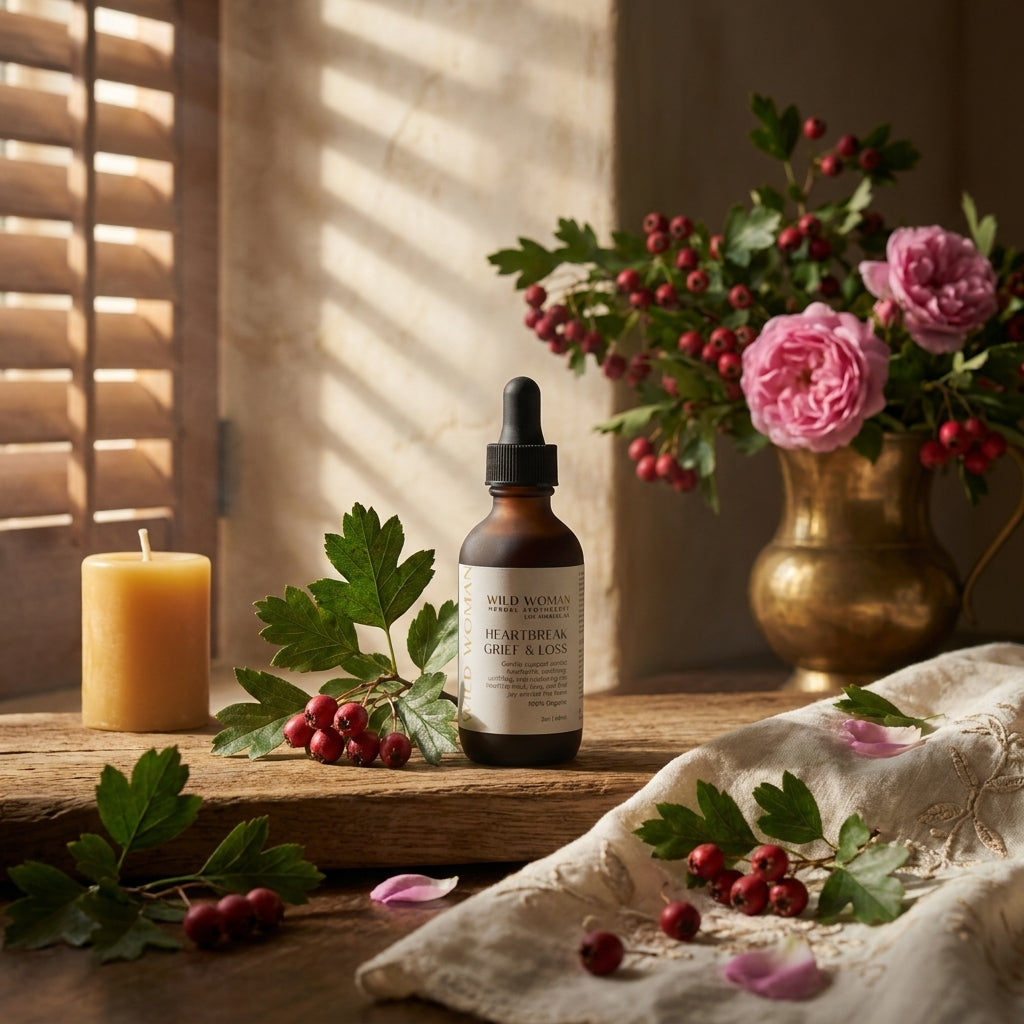
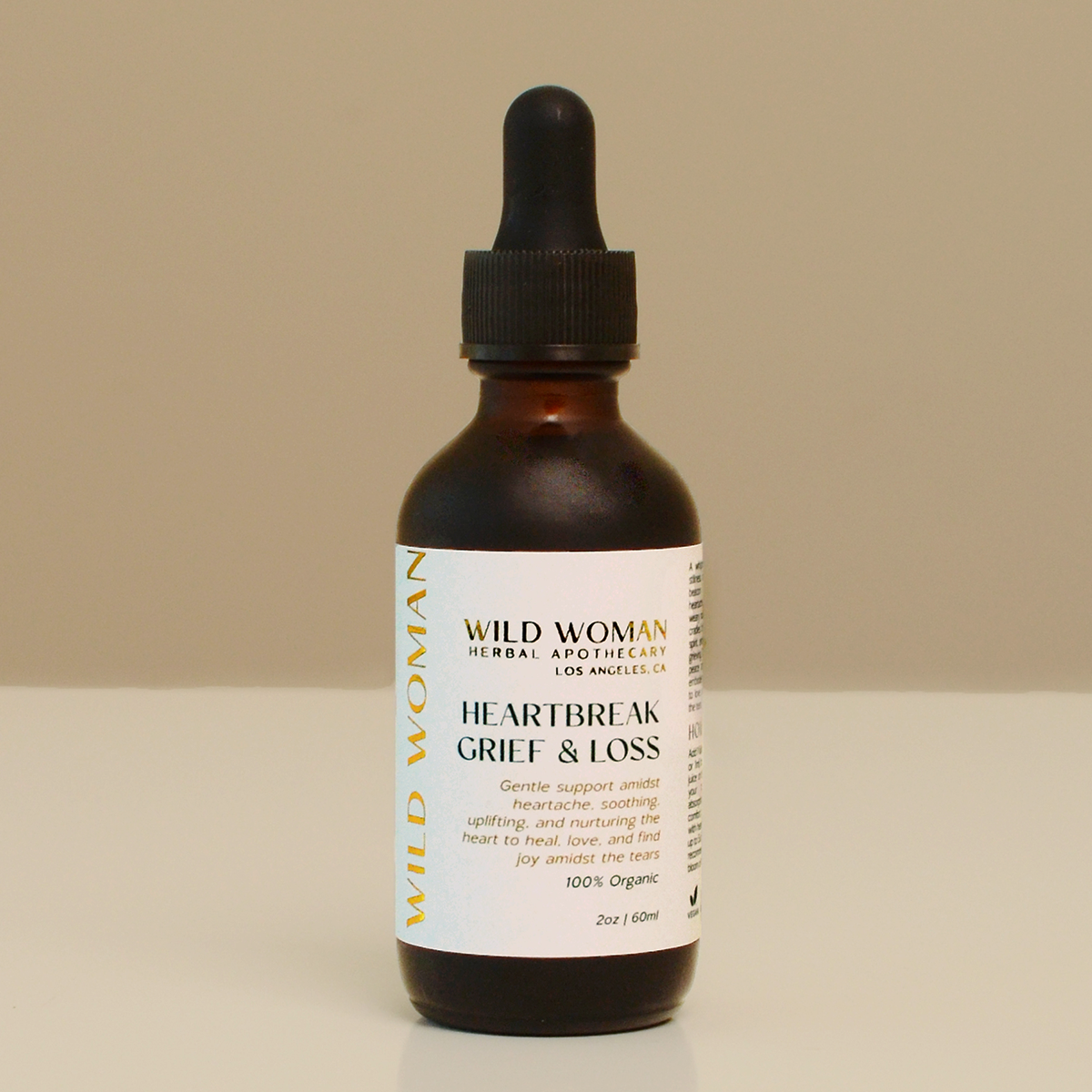


Heartbreak, Grief & Loss Tincture
herbal support for grief and heartbreak
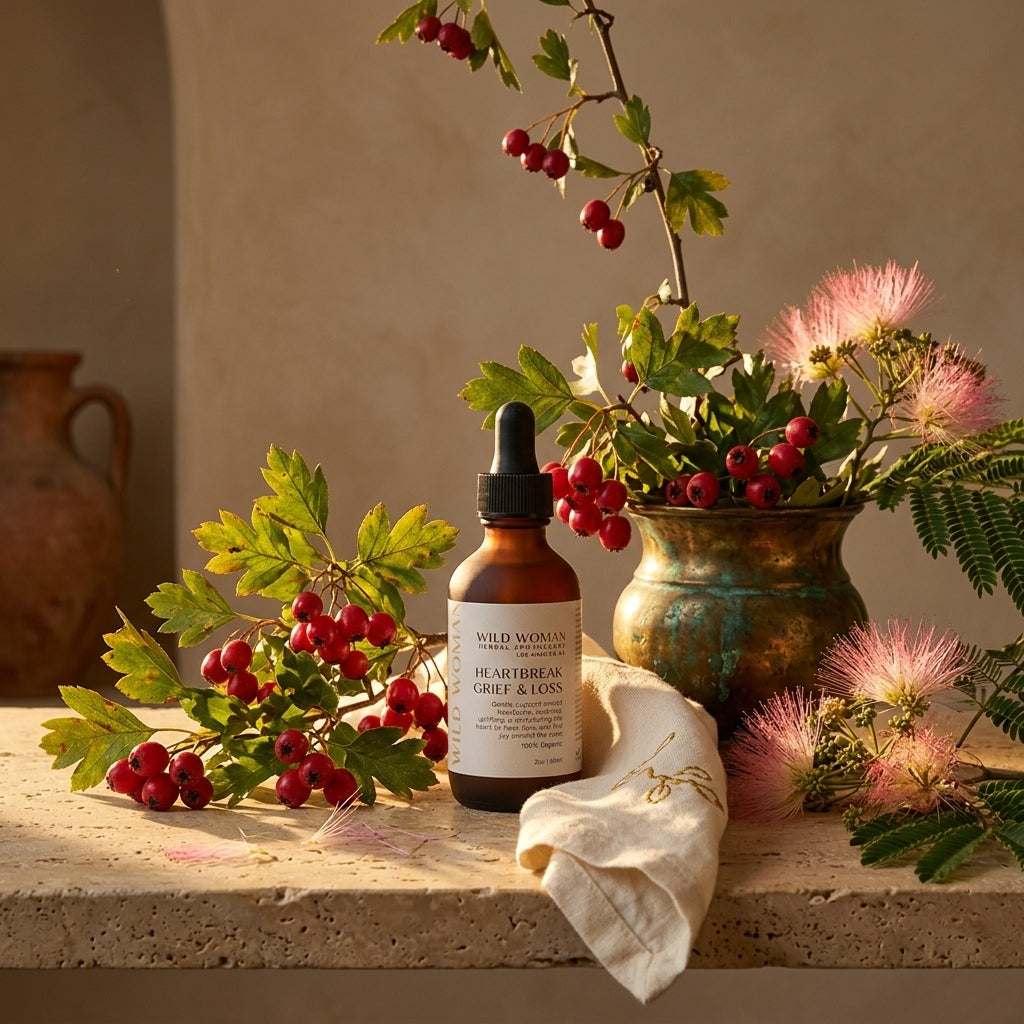
There are seasons the heart cannot rush through. This is an herbal tincture for grief and heartbreak, made for the long, tender weeks when the body is only asking to be held. Hawthorn for the emotional heart, Mimosa for the heaviness, Linden and Lemon Balm for a nervous system pulled thin.
floral · bittersweet · steadying · slow

Choose options


Heartbreak, Grief & Loss
PRODUCT DETAILS
In the European herbalism tradition, the herbs reached for during seasons of mourning are the same ones reached for to steady the heart: Hawthorn, Linden, Rose. They were the plants that hedged the threshold between the living and the dead, the plants women braided into the hair of brides and dressed the bodies of the recently passed. The grieving heart and the celebrating heart turn out to share the same medicine.
This formula is built on that lineage. Hawthorn aerial parts hold the center, both the Celtic tree of the threshold and a member of the Rose family, traditionally turned to when the heart is asked to carry more than it knows how. Mimosa flowers, the Chinese tree of happiness, are the lighter counterweight, gathered for the long heaviness that grief brings into the chest. Linden and Lemon Balm soften the nervous system around the work the heart is doing. Skullcap is the slow, restorative thread underneath, for the kind of fatigue that builds across weeks of feeling everything. Rose anchors the whole formula in compassion.
The plants do not move grief along. They sit with the body while it does its own work. This is the slower medicine, the kind that becomes a returning presence rather than a quick relief.
Every plant in this formula was chosen for its long relationship with the grieving heart. The herbs are USDA Certified Organic or wildcrafted from the trees and meadows of Southern California, with the Mimosa flowers gathered by Jasmine herself in early summer, when the blossoms are at their most fragrant. Tinctured in small batches in Los Angeles in organic sugarcane alcohol, prepared the way women have made medicine for centuries: slowly, by hand, and with care.
Shake gently before each use. Add 30 drops to a small glass of water or directly under the tongue, taken in the morning and again in the late afternoon, or whenever the heaviness arrives. During the most acute weeks, a third dose at sundown is welcome. This is not a task to remember. It is a small, returning kindness.
Hawthorn (Crataegus monogyna) · Lemon Balm (Melissa officinalis) · Linden (Tilia europaea) · Mimosa (Albizia julibrissin) · Skullcap (Scutellaria lateriflora) · Rose (Rosa centifolia) · Organic Sugarcane Alcohol · Vegetable Glycerine · Filtered Water
All herbs are USDA Certified Organic, with the exception of the Mimosa flowers, which Jasmine wildcrafts herself. Extracted at a 1:5 ratio. Full plant profiles below.
The Plants
In the European herbalism tradition, the herbs reached for during seasons of mourning are the same ones reached for to steady the heart: Hawthorn, Linden, Rose. They were the plants that hedged the threshold between the living and the dead, the plants women braided into the hair of brides and dressed the bodies of the recently passed. The grieving heart and the celebrating heart turn out to share the same medicine.
This formula is built on that lineage. Hawthorn aerial parts hold the center, both the Celtic tree of the threshold and a member of the Rose family, traditionally turned to when the heart is asked to carry more than it knows how. Mimosa flowers, the Chinese tree of happiness, are the lighter counterweight, gathered for the long heaviness that grief brings into the chest. Linden and Lemon Balm soften the nervous system around the work the heart is doing. Skullcap is the slow, restorative thread underneath, for the kind of fatigue that builds across weeks of feeling everything. Rose anchors the whole formula in compassion.
The plants do not move grief along. They sit with the body while it does its own work. This is the slower medicine, the kind that becomes a returning presence rather than a quick relief.
The Lineage
Every plant in this formula was chosen for its long relationship with the grieving heart. The herbs are USDA Certified Organic or wildcrafted from the trees and meadows of Southern California, with the Mimosa flowers gathered by Jasmine herself in early summer, when the blossoms are at their most fragrant. Tinctured in small batches in Los Angeles in organic sugarcane alcohol, prepared the way women have made medicine for centuries: slowly, by hand, and with care.
The Practice
Shake gently before each use. Add 30 drops to a small glass of water or directly under the tongue, taken in the morning and again in the late afternoon, or whenever the heaviness arrives. During the most acute weeks, a third dose at sundown is welcome. This is not a task to remember. It is a small, returning kindness.
The Formula
Hawthorn (Crataegus monogyna) · Lemon Balm (Melissa officinalis) · Linden (Tilia europaea) · Mimosa (Albizia julibrissin) · Skullcap (Scutellaria lateriflora) · Rose (Rosa centifolia) · Organic Sugarcane Alcohol · Vegetable Glycerine · Filtered Water
All herbs are USDA Certified Organic, with the exception of the Mimosa flowers, which Jasmine wildcrafts herself. Extracted at a 1:5 ratio. Full plant profiles below.
Tasting Notes
Floral · faintly bitter · soft · honey-sweet finish
Ritual Moment
Mornings and the heavy hours
Season of Life
Times of loss and transition
Energetics
Heart-anchoring · softening
Tasting Notes
Floral · faintly bitter · soft · honey-sweet finish
Ritual Moment
Mornings and the heavy hours
Season of Life
Times of loss and transition
Energetics
Heart-anchoring · softening

Mimosa
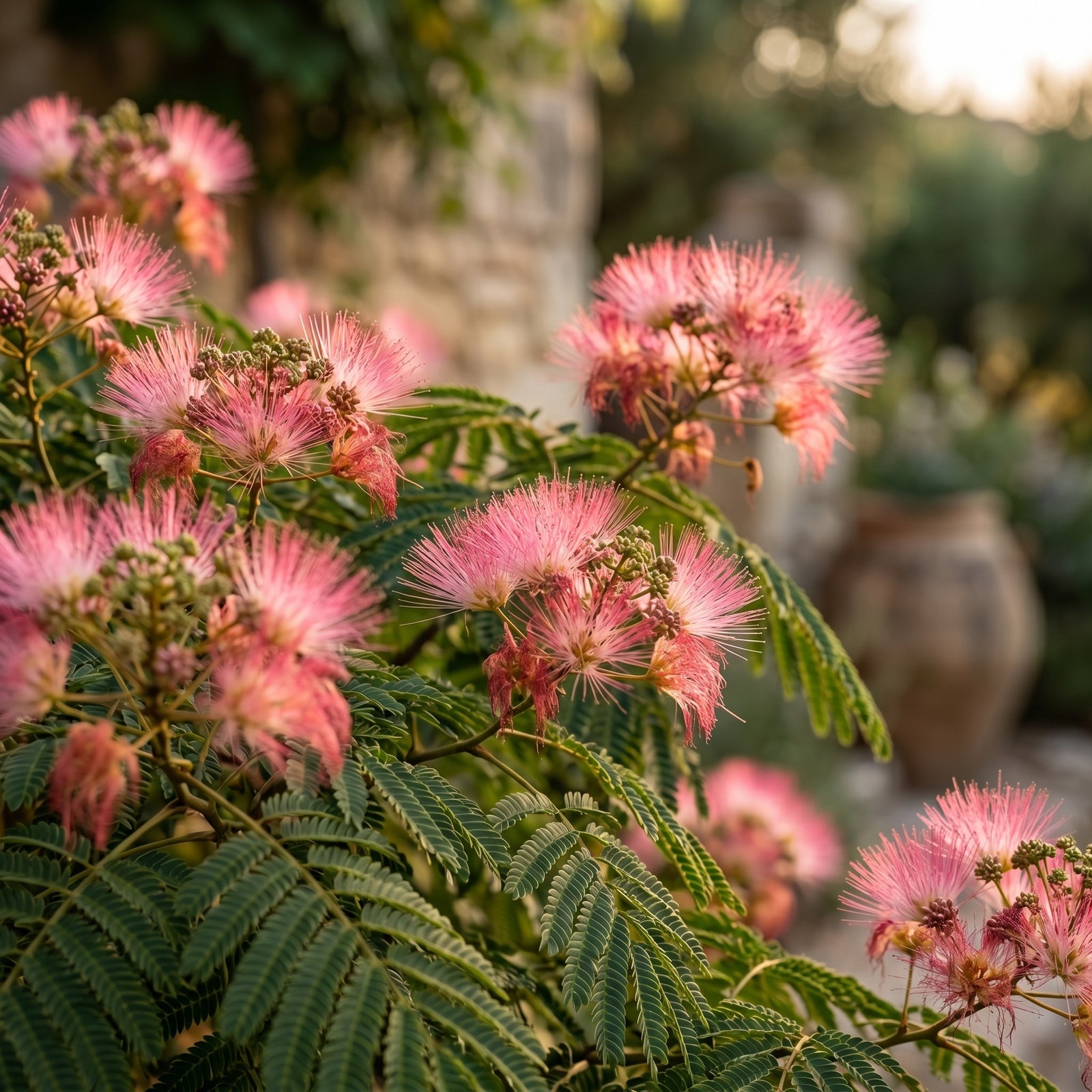
Mimosa, the silk tree, is best known by her summer blossoms, those soft pink filaments that look more like feathers than flowers. The Chinese have called her He Huan Hua for centuries, which translates roughly to "collective happiness flower," and traditional Chinese medicine has turned to her for the kind of heaviness that settles in the chest after a loss. I harvest these blossoms myself in early summer from the trees that grow wild in pockets of Southern California, gathered while they are still freshly opened and most fragrant. She is the lighter note in the formula, the small uplift inside the heaviness. Not to bypass grief, but to make the body's weight a little more bearable as it moves through.
Hawthorn
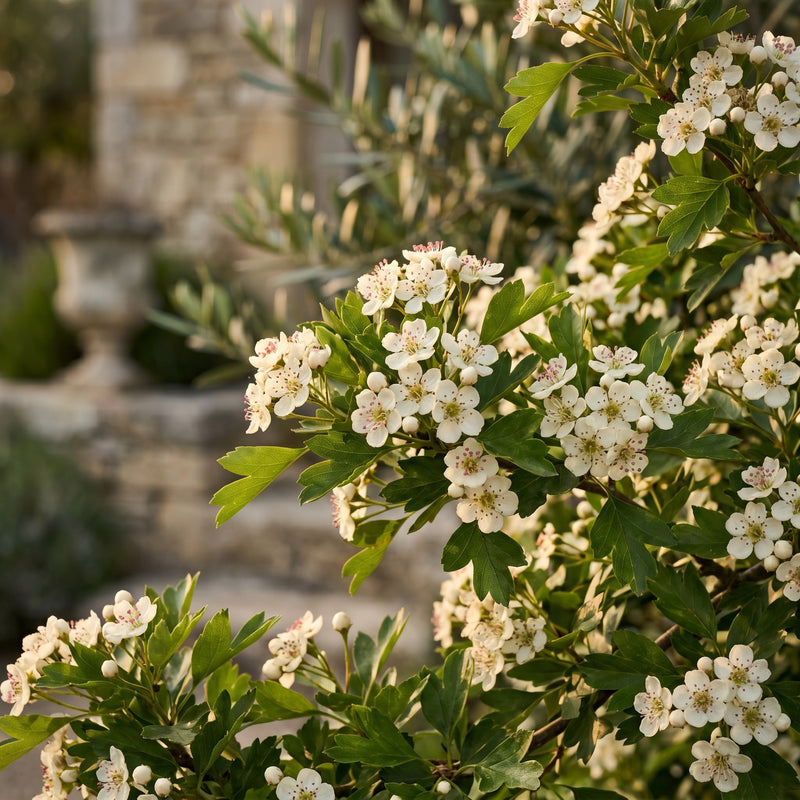
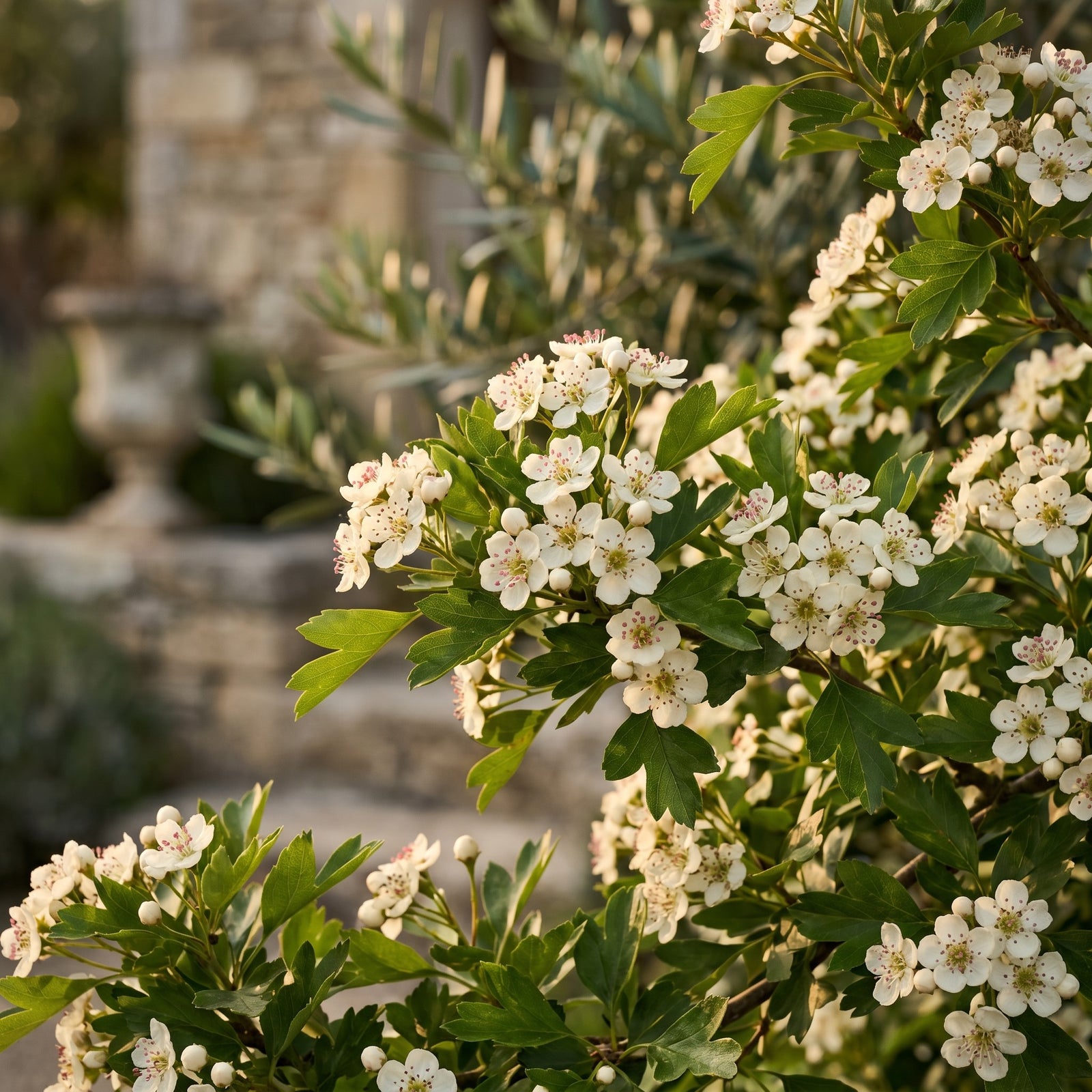
Hawthorn grows along the hedgerows of the British Isles and across Europe, a small thorned tree that flowers white in late spring and bears red haws in the autumn. In the Celtic tradition she was the threshold tree, the plant that marked the in-between: sacred ground, planted to protect what mattered most. I work with her aerial parts rather than her berries because the leaves and flowers carry the threshold medicine most clearly, the medicine for the heart that is between two seasons of itself. She steadies without numbing. She does not pretend grief is something other than what it is.
Linden
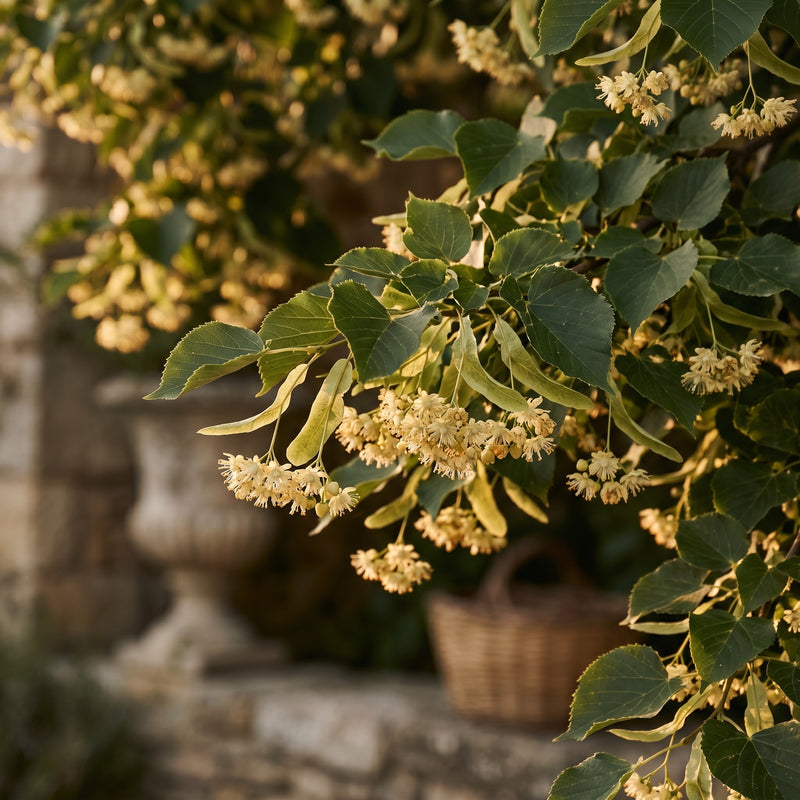
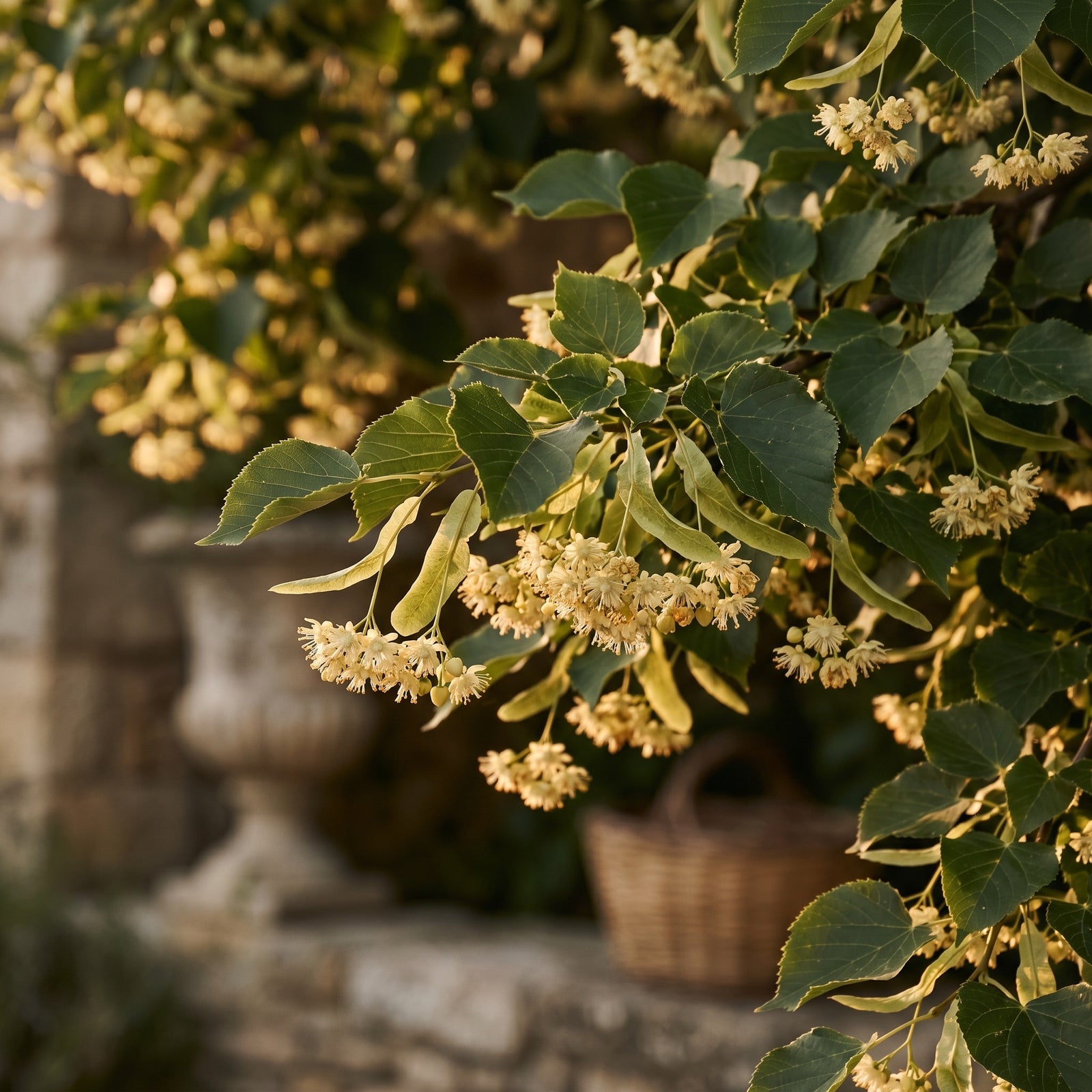
Linden is one of the great heart trees of European herbalism, a tall, sweet-smelling tree whose leaves are shaped like little hearts and whose flowers carry a honey-like fragrance when they bloom in midsummer. Across the old herbals, she is reached for in seasons of acute distress: for the children who cannot sleep, for the women who have cried too long, for the bodies whose nervous systems have run themselves thin around a sorrow. She has a moistening quality, which is what the over-cried, over-extended body is asking for. In this formula she works alongside Lemon Balm to soften everything around the work the heart is doing. She does not push; she softens what is already there.
Skullcap
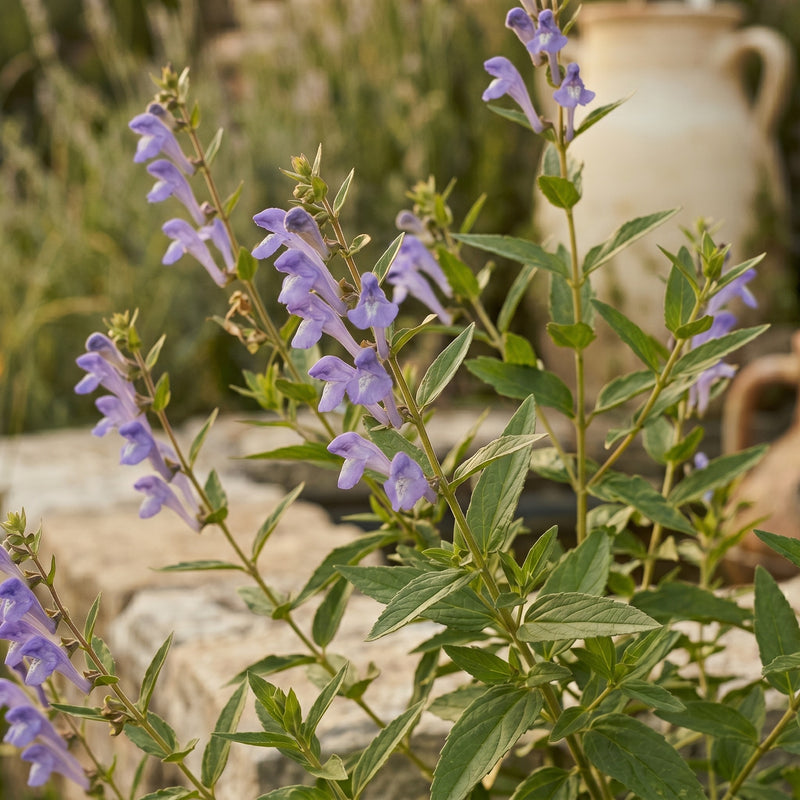
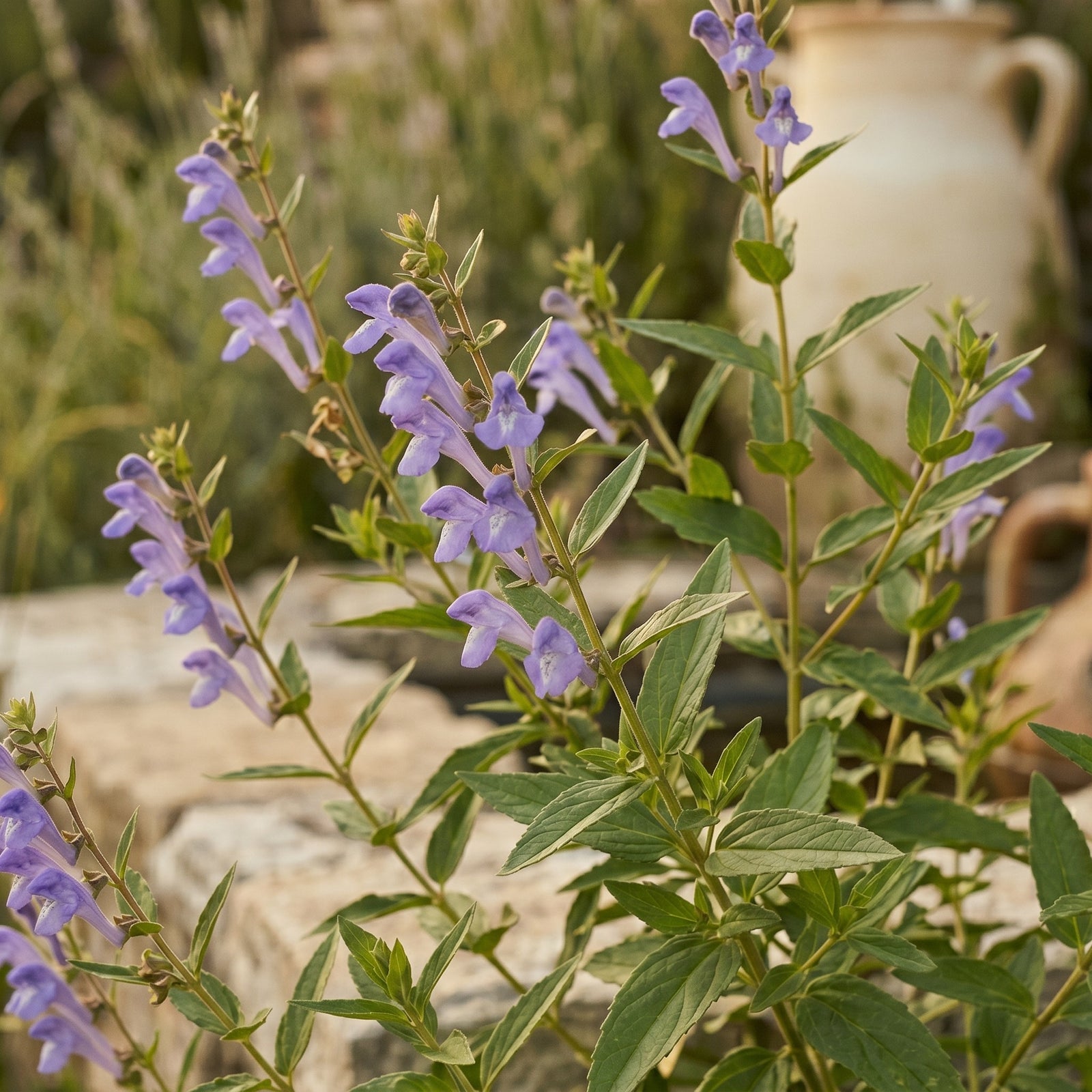
Skullcap is a small wetland herb of the North American mint family, with delicate blue helmet-shaped flowers along the stem (the cap that gave her her name). She is one of the great Western nervines, traditionally reached for when the nervous system has been carrying something for a long time: the chronic stress, the prolonged emotional weight, the kind of strain that does not lift in a night's sleep. She is restorative more than sedating. In this formula she is the slow undercurrent, the trophorestorative for the body that has been doing the long work of grief. She does not make the grief smaller; she makes the body that is holding it more able to keep holding it.

Mimosa
Mimosa, the silk tree, is best known by her summer blossoms, those soft pink filaments that look more like feathers than flowers. The Chinese have called her He Huan Hua for centuries, which translates roughly to "collective happiness flower," and traditional Chinese medicine has turned to her for the kind of heaviness that settles in the chest after a loss. I harvest these blossoms myself in early summer from the trees that grow wild in pockets of Southern California, gathered while they are still freshly opened and most fragrant. She is the lighter note in the formula, the small uplift inside the heaviness. Not to bypass grief, but to make the body's weight a little more bearable as it moves through.

Hawthorn
Hawthorn grows along the hedgerows of the British Isles and across Europe, a small thorned tree that flowers white in late spring and bears red haws in the autumn. In the Celtic tradition she was the threshold tree, the plant that marked the in-between: sacred ground, planted to protect what mattered most. I work with her aerial parts rather than her berries because the leaves and flowers carry the threshold medicine most clearly, the medicine for the heart that is between two seasons of itself. She steadies without numbing. She does not pretend grief is something other than what it is.

Linden
Linden is one of the great heart trees of European herbalism, a tall, sweet-smelling tree whose leaves are shaped like little hearts and whose flowers carry a honey-like fragrance when they bloom in midsummer. Across the old herbals, she is reached for in seasons of acute distress: for the children who cannot sleep, for the women who have cried too long, for the bodies whose nervous systems have run themselves thin around a sorrow. She has a moistening quality, which is what the over-cried, over-extended body is asking for. In this formula she works alongside Lemon Balm to soften everything around the work the heart is doing. She does not push; she softens what is already there.

Skullcap
Skullcap is a small wetland herb of the North American mint family, with delicate blue helmet-shaped flowers along the stem (the cap that gave her her name). She is one of the great Western nervines, traditionally reached for when the nervous system has been carrying something for a long time: the chronic stress, the prolonged emotional weight, the kind of strain that does not lift in a night's sleep. She is restorative more than sedating. In this formula she is the slow undercurrent, the trophorestorative for the body that has been doing the long work of grief. She does not make the grief smaller; she makes the body that is holding it more able to keep holding it.
The Ritual
Practices that support the plants

Honor yourself
The Altar of Loss

Build a small altar to what was lost. A photograph, an object, a flower from a tree she walked under. Light a candle when the heaviness arrives. The altar gives the grief a physical place to live so the body does not have to be the only place that holds it.

Return to the body
Cross the heart
Try the Butterfly Hug, a bilateral self-tapping practice developed by Lucina Artigas in Mexico in 1997 and now used in EMDR therapy for the nervous system's processing of grief and shock. Cross your arms over your chest, fingertips resting on the opposite shoulders, and tap slow and steady, left then right, for a minute or two. The alternating rhythm gives the body a way to metabolize what the mind cannot.

Rememberr the earth
Grief Tending at Water

Going to any body of moving watersuch as a river, stream, ocean edge, even a vigorous garden tap and speak your grief aloud to it. In the Dagara tradition, water is understood as the element of grief: speaking sorrow at the water's edge is a return of grief to its natural home. Complete the practice with a small offering, a flower held briefly and released into the current, a handful of earth pressed to the bank. The water is the witness and the carrier.

Jasmine's Note
I didn't fully understand what I'd inherited until my own body started asking questions that medicine couldn't answer. Hormonal chaos, long seasons of depression, the particular exhaustion of feeling disconnected from yourself. I remembered the whisperings. I turned back toward the plants. Everything in this apothecary came from that turning — things I made for myself first, and then for the women in my life who needed the same. I offer them to you the way my grandmother offered what she knew: as a hand extended, as something real.
-Jasmine

Rooted in Lineage. Made with Reverence.
This is medicine in the oldest sense of the word: plant wisdom, carefully tended, passed forward with care.
Frequently Asked Questions
What herbs help with grief and heartbreak?
The herbal tincture for grief and heartbreak in this formula draws from the canonical plants of mourning across Western and Eastern traditions. Hawthorn (Crataegus monogyna), Linden (Tilia europaea), Mimosa (Albizia julibrissin), Lemon Balm (Melissa officinalis), Skullcap (Scutellaria lateriflora), and Rose (Rosa centifolia) have each been used for centuries to support the grieving heart and the nervous system carrying the weight of loss. Hawthorn is the heart anchor, the threshold tree of the Celtic tradition, traditionally turned to when the emotional heart is asked to hold what feels unbearable. Mimosa, called He Huan Hua in traditional Chinese medicine, is the lighter counterweight, traditionally used for the heaviness that settles in the chest after a loss. Together with the nervines Linden, Lemon Balm, and Skullcap, and Rose for compassion, they form a slow medicine for the season of grief.
What is hawthorn good for emotionally?
Hawthorn (Crataegus monogyna) has been used for centuries to support both the physical and emotional heart, and is one of the most universally cited plants for grief and heartbreak in herbal traditions. In Celtic tradition she was the threshold tree, the plant marking the in-between, planted to protect what mattered most. Modern Western herbalists turn to Hawthorn for the heart that is asked to carry more than it knows how, including the kind of emotional weight that arrives with loss, separation, and major life transition. In this formula I work with the aerial parts of Hawthorn, the leaves and flowers, rather than the berries alone, because the aerial parts carry the threshold medicine most clearly. She steadies without numbing, which is what the grieving heart most needs.
What is mimosa flower used for in herbalism?
Mimosa flower (Albizia julibrissin) is one of the great underappreciated herbs for grief and emotional heaviness in the Western herbal canon, though it has been used in this context for centuries in traditional Chinese medicine, where it is called He Huan Hua, the "collective happiness flower." TCM herbalists have traditionally turned to it for the heaviness that settles in the chest after a loss, after a long disappointment, after a sustained period of low mood. In Western herbalism it is reached for as a gentle emotional uplifter, particularly when grief feels lodged in the chest. I wildcraft these blossoms myself in early summer, when the trees that grow in pockets of Southern California are at their most fragrant. The medicine is not to bypass the grief, but to make its weight a little more bearable to carry.
How is this tincture different from Sacred Heart Elixir?
Both products belong to our Mood & Emotional Wellness pillar, but they hold different lanes. Sacred Heart Elixir is a glycerite, alcohol-free and glycerine-based, formulated for daily emotional balance and the woman building a long-term practice of emotional resilience and sensitivity-tending. Heartbreak, Grief & Loss is a tincture, extracted in organic sugarcane alcohol, formulated for the acute seasons of grief, heartbreak, and major life transition rather than for daily resilience. The two formulas share Rose petals as a connecting thread, but each centers different hero plants for different work. Many women hold both in their apothecary for different moments in their lives.
How do I take an herbal tincture for grief support?
This herbal tincture for grief and heartbreak is taken sublingually or in a small glass of water, 30 drops at a time. I recommend taking it twice daily during the acute weeks of a loss, once in the morning and again in the late afternoon, with a third dose at sundown on the heaviest days. The formula works through consistent use rather than through any single dose, meaning it becomes a returning presence in the body over weeks rather than producing an immediate shift. Many women find that the morning dose grounds the start of the day and the evening dose softens the transition into the long hours. The tincture has a faintly bitter, honey-finished taste, and the vegetable glycerine in the base softens the alcohol notes.
Is this herbal tincture safe to take with other medications or during pregnancy?
We always recommend checking with your healthcare provider before beginning any new herbal practice, especially if you are pregnant, breastfeeding, taking prescription medications, or under the care of a clinician for cardiovascular or mental health concerns. Several of the herbs in this formula, including Hawthorn (Crataegus monogyna), Skullcap (Scutellaria lateriflora), and Mimosa (Albizia julibrissin), are traditionally cardioactive or nervine and may interact with medications affecting the heart or nervous system. The organic sugarcane alcohol base is also a meaningful consideration for women who avoid alcohol for any reason, including in pregnancy. Grief and loss are seasons that may also call for the support of a therapist, grief counselor, or trusted community in addition to plant medicine.
Where are the herbs in this formula sourced?
Every herb in this formula is either USDA Certified Organic or wildcrafted. The Hawthorn, Lemon Balm, Linden, Skullcap, and Rose petals are sourced from certified organic farms that supply our apothecary. The Mimosa flowers are wildcrafted by our founder and herbalist Jasmine Simone from trees that grow in pockets of Southern California, gathered in early summer when the blossoms are at their most fragrant. All of our tinctures are extracted in small batches in our Los Angeles apothecary using organic sugarcane alcohol and a 1:5 herb-to-menstruum ratio. The herbs are prepared the way women have prepared plant medicine for centuries: slowly, by hand, and with care.
A Note on Plant Medicine
Plants are powerful — and like any potent thing, they deserve to be used with care and knowledge. These formulas are crafted with intention, but they are not a substitute for medical guidance. Before beginning a new herbal practice, we encourage you to speak with your healthcare provider, especially if you are pregnant, nursing, trying to conceive, managing a health condition, or taking prescription medication. Wild Woman products are not intended to diagnose, treat, cure, or prevent any disease.
Stay close to the apothecary
THE LETTER
Herbal rituals for every season of womanhood
Sent four times a year, when the season turns. Plant wisdom, slow writing, and occasional notes from the bench. No promotions, no urgency.
SMALL BATCH
Made by hand in our Los Angeles apothecary
WILDCRAFTED & ORGANIC
Herbs gathered seasonally or grown by farmers we trust
CRAFTED SLOWLY
Each formula prepared without rushing for scale
ROOTED IN LINEAGE
In the tradition of the women who have come before us