










Hormone Harmony Tincture
daily herbal tincture for hormonal balance
A daily herbal tincture for hormonal balance, made for the woman who feels the chemistry of her cycle shift before it arrives and wants to work with that rhythm rather than against it. This formula draws from two of the oldest women's herbal traditions on earth: the Ayurvedic rasayana practice of building deep nourishment over time, and the classical Chinese women's pharmacopoeia, where Dong Quai and White Peony have been paired for over a thousand years. Take it every morning as a practice of tending, pair it with Chaste Tree Berry tincture for deeper cyclical support, and let the weeks do their work.
earthy · warming · faintly sweet · licorice finish · rooted

Choose options


Hormone Harmony
PRODUCT DETAILS
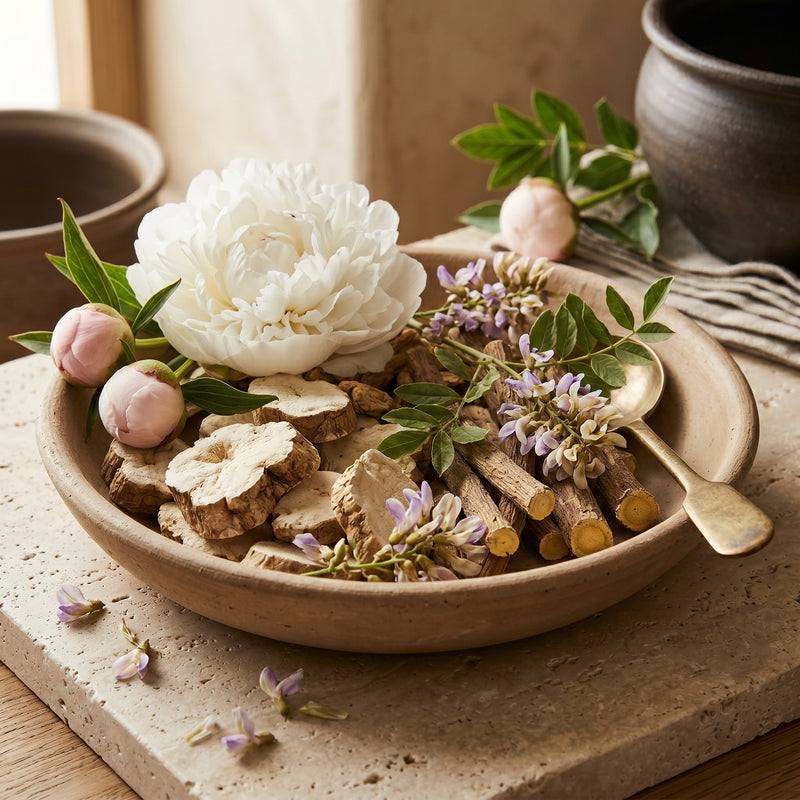
Somewhere in the classical Chinese pharmacopoeia, White Peony root and Licorice Root have been paired for well over a thousand years. The combination has its own name in traditional Chinese medicine — Bai Shao Gan Cao — and its own logic: White Peony gathers the blood and quiets the restlessness that can come with hormonal fluctuation; Licorice Root harmonizes, buffering the formula's action and supporting the adrenal ground that so much of women's cyclical rhythm depends on. I have always been drawn to this pairing because of how precise it is. Not powerful in the loud way. Attuned.
Alongside the Chinese foundation, Shatavari brings the depth of the Ayurvedic tradition — the root that has been used for thousands of years to nourish the reproductive body through every season of a woman's life, from the cycling years through the transitions that follow. I reach for Shatavari not when something is acutely wrong, but when the body needs to be built back from a deeper foundation. It is the plant in this formula that requires the most patience, and the one that rewards it most.
This is a formula made for the long game. It does not arrive suddenly. It accumulates over weeks of daily use, the way any real nourishment does — the way a garden builds soil, the way a good season follows a year of tending. The plants in this tincture are not meant to be reached for only on the difficult days. They are meant to become part of the morning rhythm, taken with quiet intention as a practice of returning to yourself. Pair it with Chaste Tree Berry (Vitex) tincture each morning for deeper cyclical support, and let both work across the full arc of your month.
Every plant in this formula is USDA Certified Organic, sourced from growers whose standards we know and trust. The formula is handcrafted in small batches in Los Angeles, extracted slowly in organic sugarcane alcohol and vegetable glycerin — not because it is the fastest method, but because it preserves the full intelligence of the plants. Nothing in this tincture was added to fill a bottle. Every root, flower, and rhizome belongs here, chosen from the same tradition women have used to tend their cyclical wellness for generations.
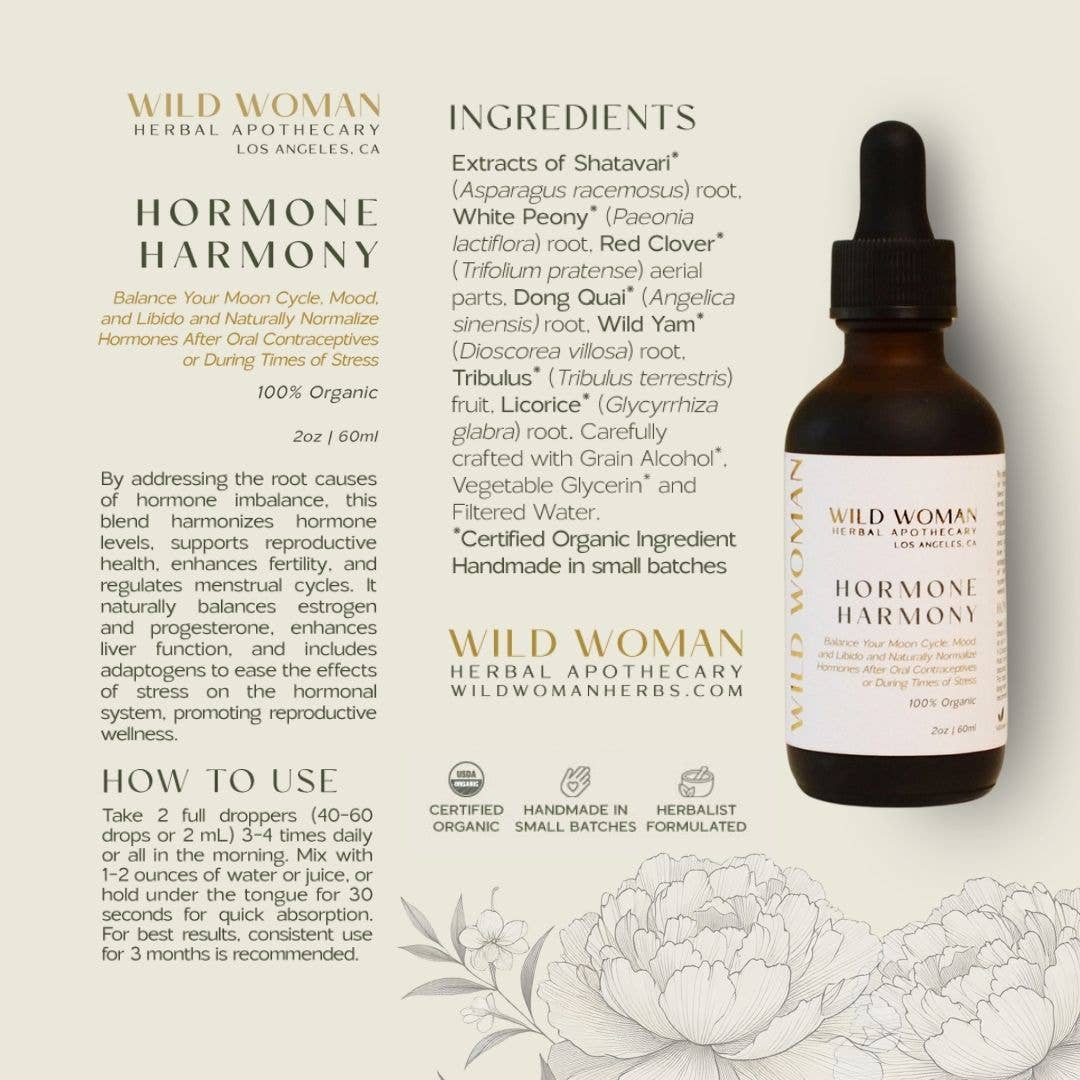
Shake gently before use. Take 30 drops in a small glass of water or directly under the tongue each morning, ideally at the same time each day to build rhythm with your cycle. For deeper cyclical support, take Hormone Harmony alongside Chaste Tree Berry (Vitex agnus-castus) tincture as a daily morning pairing — the two formulas are designed to work together, and a bundle is available in the shop. This formula is built for consistent daily use rather than occasional support; the most meaningful shifts tend to arrive after four to six weeks of steady practice. Your morning ritual is the medicine as much as the plants are.
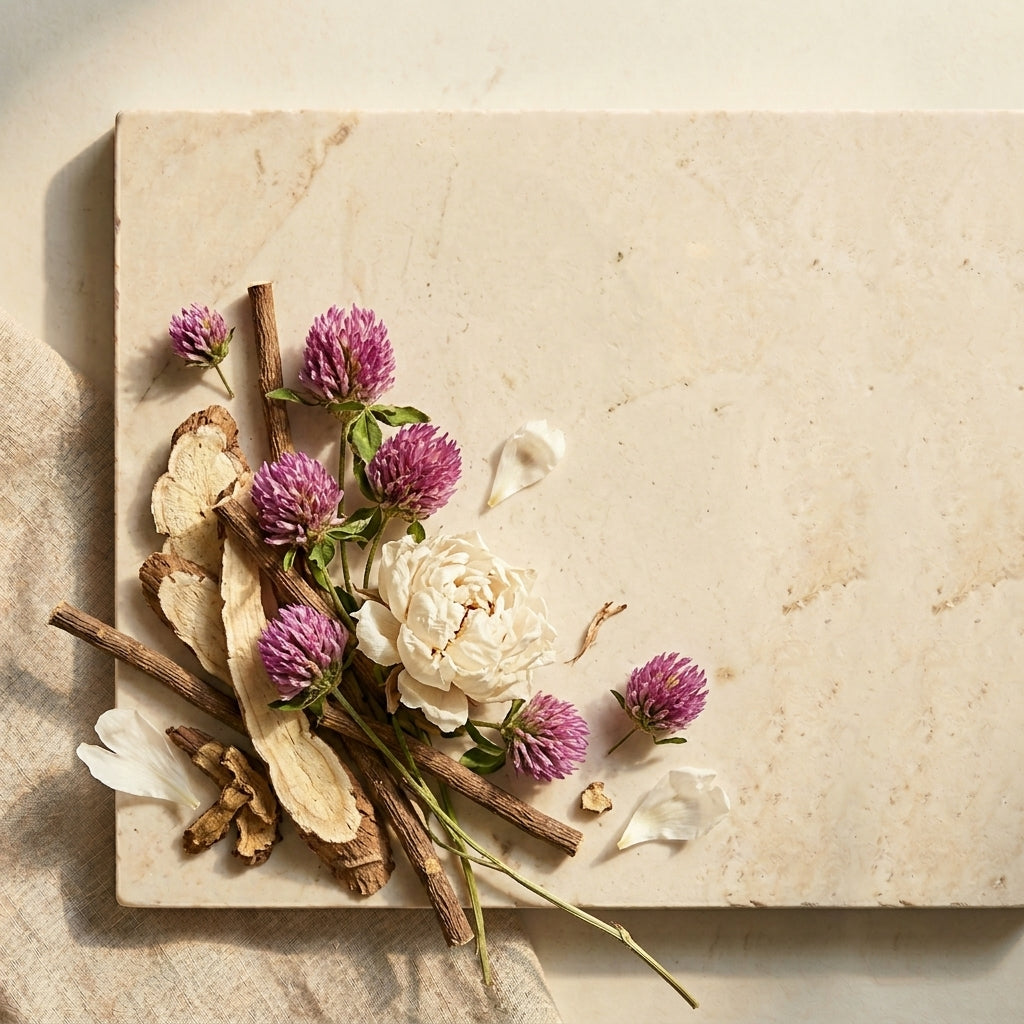
Shatavari (Asparagus racemosus) · White Peony (Paeonia lactiflora) · Dong Quai (Angelica sinensis) · Red Clover (Trifolium pratense) · Wild Yam (Dioscorea villosa) · Tribulus (Tribulus terrestris) · Licorice Root (Glycyrrhiza glabra) · Organic Sugarcane Extract (40%) · Organic Vegetable Glycerin · Filtered Water
All herbs are USDA Certified Organic. Extraction ratio 1:5. Full plant profiles below.
The Plants
Somewhere in the classical Chinese pharmacopoeia, White Peony root and Licorice Root have been paired for well over a thousand years. The combination has its own name in traditional Chinese medicine — Bai Shao Gan Cao — and its own logic: White Peony gathers the blood and quiets the restlessness that can come with hormonal fluctuation; Licorice Root harmonizes, buffering the formula's action and supporting the adrenal ground that so much of women's cyclical rhythm depends on. I have always been drawn to this pairing because of how precise it is. Not powerful in the loud way. Attuned.
Alongside the Chinese foundation, Shatavari brings the depth of the Ayurvedic tradition — the root that has been used for thousands of years to nourish the reproductive body through every season of a woman's life, from the cycling years through the transitions that follow. I reach for Shatavari not when something is acutely wrong, but when the body needs to be built back from a deeper foundation. It is the plant in this formula that requires the most patience, and the one that rewards it most.
This is a formula made for the long game. It does not arrive suddenly. It accumulates over weeks of daily use, the way any real nourishment does — the way a garden builds soil, the way a good season follows a year of tending. The plants in this tincture are not meant to be reached for only on the difficult days. They are meant to become part of the morning rhythm, taken with quiet intention as a practice of returning to yourself. Pair it with Chaste Tree Berry (Vitex) tincture each morning for deeper cyclical support, and let both work across the full arc of your month.
The Lineage
Every plant in this formula is USDA Certified Organic, sourced from growers whose standards we know and trust. The formula is handcrafted in small batches in Los Angeles, extracted slowly in organic sugarcane alcohol and vegetable glycerin — not because it is the fastest method, but because it preserves the full intelligence of the plants. Nothing in this tincture was added to fill a bottle. Every root, flower, and rhizome belongs here, chosen from the same tradition women have used to tend their cyclical wellness for generations.
The Practice
Shake gently before use. Take 30 drops in a small glass of water or directly under the tongue each morning, ideally at the same time each day to build rhythm with your cycle. For deeper cyclical support, take Hormone Harmony alongside Chaste Tree Berry (Vitex agnus-castus) tincture as a daily morning pairing — the two formulas are designed to work together, and a bundle is available in the shop. This formula is built for consistent daily use rather than occasional support; the most meaningful shifts tend to arrive after four to six weeks of steady practice. Your morning ritual is the medicine as much as the plants are.
The Formula
Shatavari (Asparagus racemosus) · White Peony (Paeonia lactiflora) · Dong Quai (Angelica sinensis) · Red Clover (Trifolium pratense) · Wild Yam (Dioscorea villosa) · Tribulus (Tribulus terrestris) · Licorice Root (Glycyrrhiza glabra) · Organic Sugarcane Extract (40%) · Organic Vegetable Glycerin · Filtered Water
All herbs are USDA Certified Organic. Extraction ratio 1:5. Full plant profiles below.
Tasting Notes
earthy · warming · faintly sweet · licorice finish
Ritual Moment
morning · daily through the full cycle
Season of Life
the cycling years · the luteal window
Pairs With
Chaste Tree Berry tincture · castor oil pack · nourishing foods
Tasting Notes
earthy · warming · faintly sweet · licorice finish
Ritual Moment
morning · daily through the full cycle
Season of Life
the cycling years · the luteal window
Pairs With
Chaste Tree Berry tincture · castor oil pack · nourishing foods

White Peony & Licorice Root
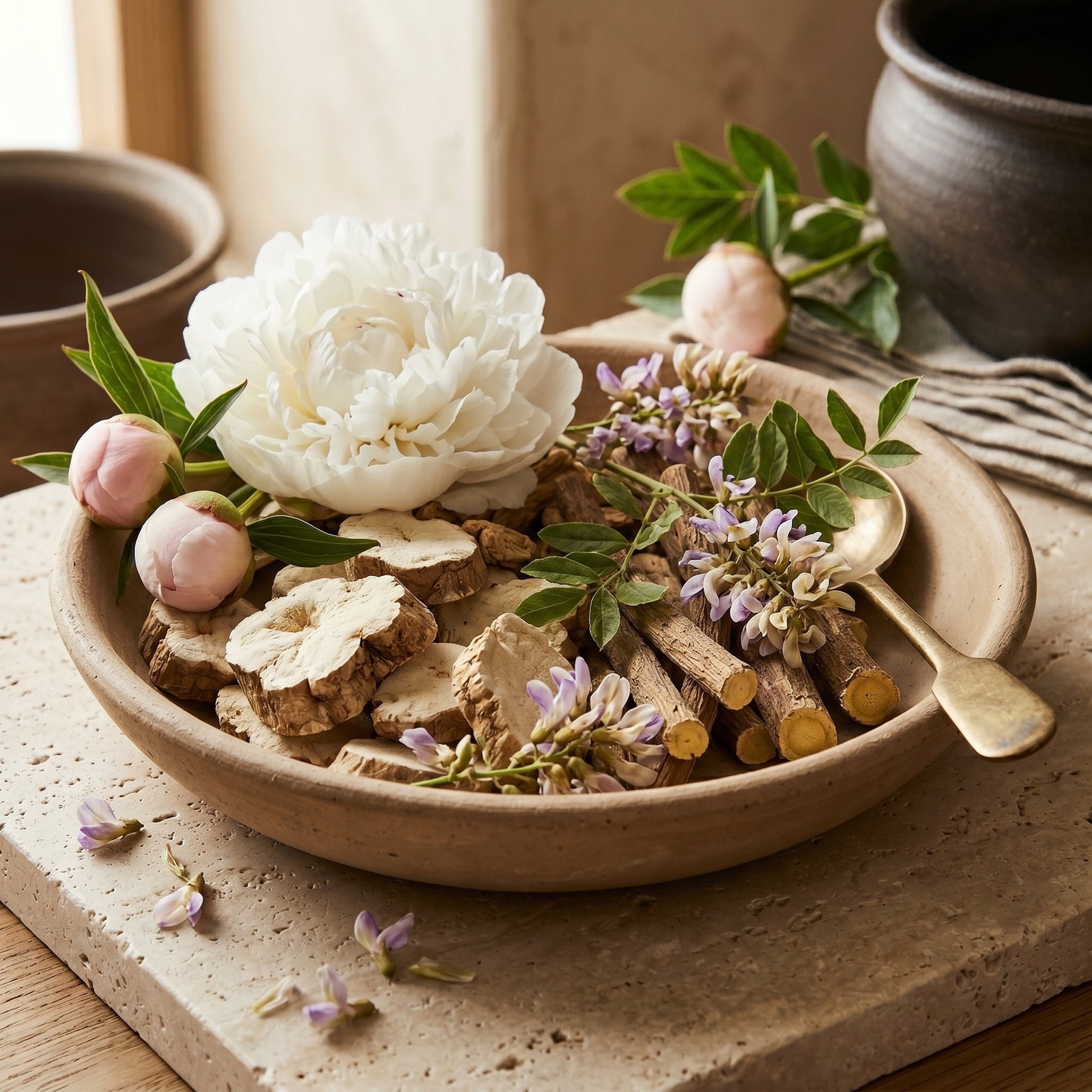
White Peony (Paeonia lactiflora) grows in temperate gardens and roadsides across China and Japan, its roots used in Chinese medicine for well over a thousand years. In classical Chinese gynecology, it is almost never used alone — it is paired with Licorice Root (Glycyrrhiza glabra), the two roots forming a foundational duo that herbalists have depended on for cyclical balance across generations, known in the TCM tradition as Bai Shao Gan Cao. I think of White Peony as the cooling, gathering root: the one that draws inward, quiets excess, brings the body back toward its own steadiness. Licorice harmonizes everything it meets — balancing the stronger herbs in a formula, supporting the adrenal tissue that underlies so much of how women experience their cycles, and lending the whole blend a sweetness that softens the earthy bitterness of the roots alongside it. Together they are the foundation this formula is built on.
Shatavari
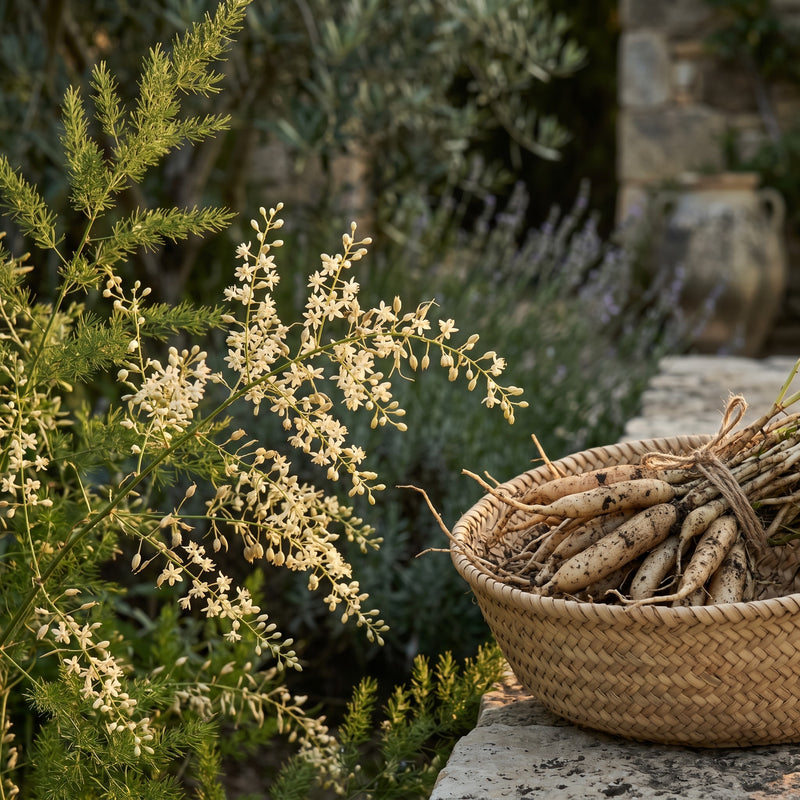
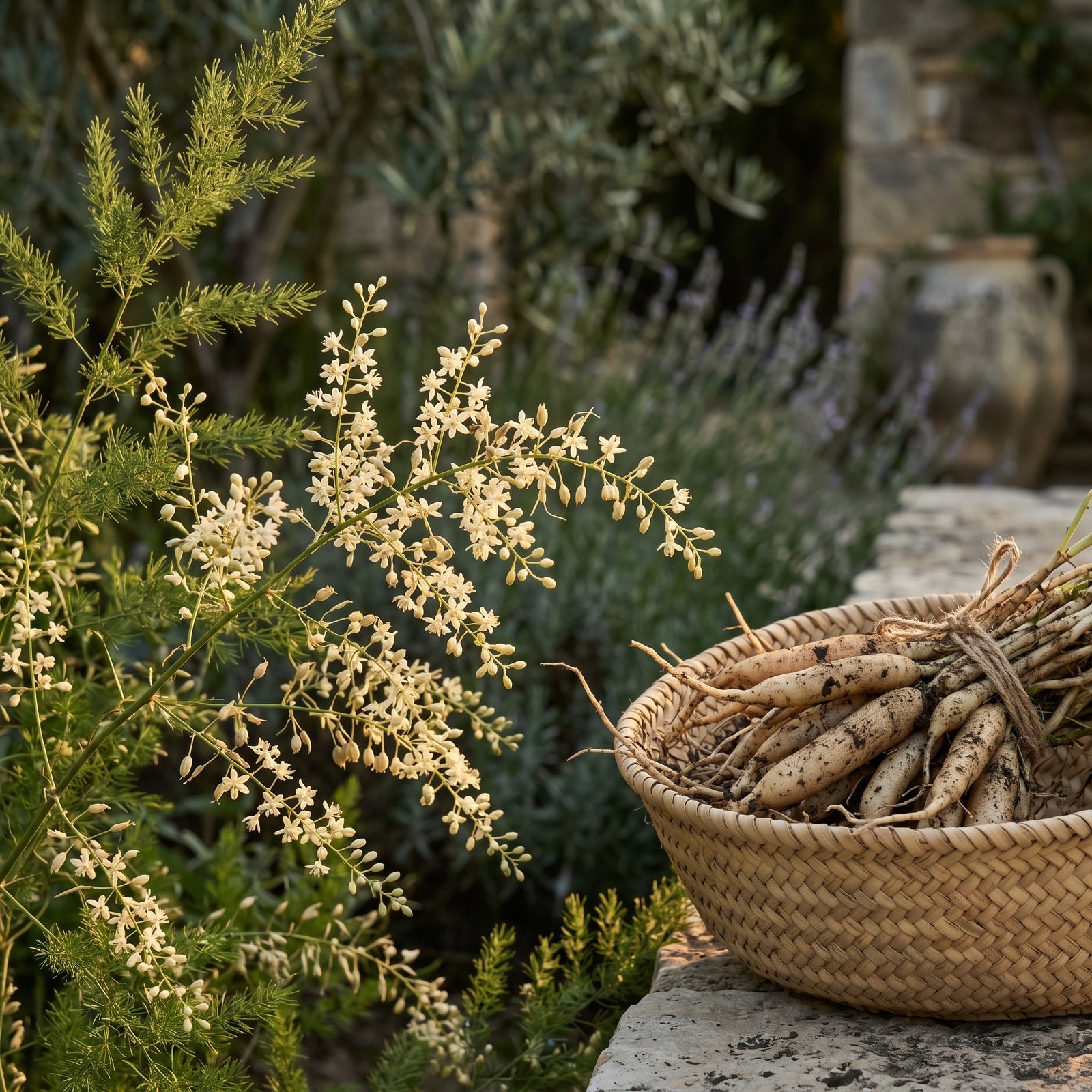
Shatavari (Asparagus racemosus) grows in the tropical forests of India and Sri Lanka, its roots a deep milky white that reveals something of the plant's nourishing character before you have even tasted it. It is one of the most honored plants in the Ayurvedic pharmacopoeia — used for thousands of years to support the reproductive system through every season of a woman's life, from the cycling years through the longer transitions that follow. The name translates roughly as "she who possesses a hundred husbands," which traditional texts used to describe a plant whose capacity to nourish and sustain is understood as boundless. I use Shatavari not when something is in acute need of attention, but when the body needs to be built back from a deeper foundation — when the hormonal ground itself needs tending. It is a root that teaches patience, and one that works beautifully over the long arc.
Red Clover
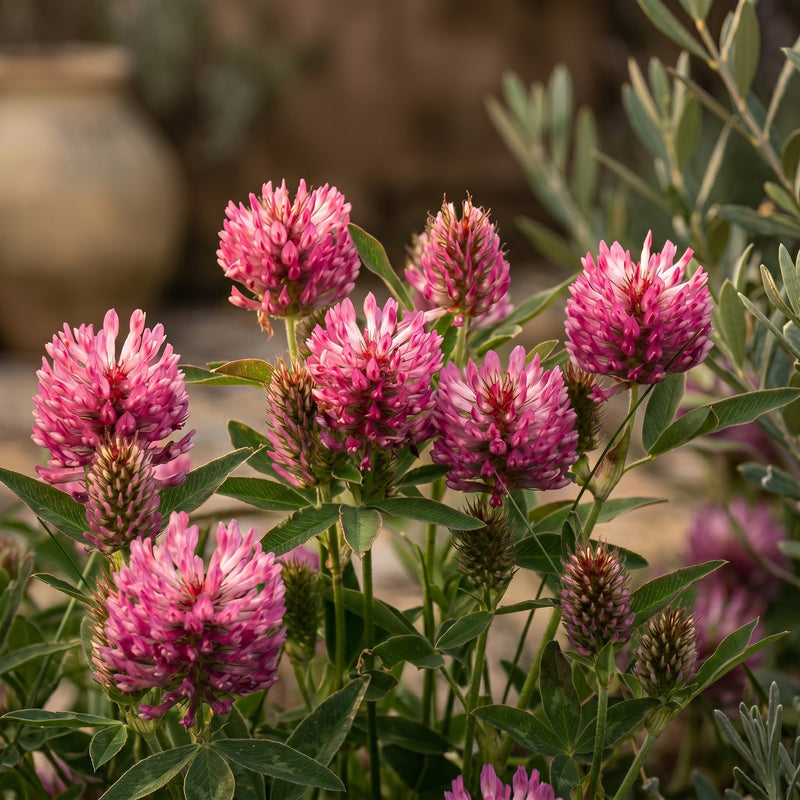
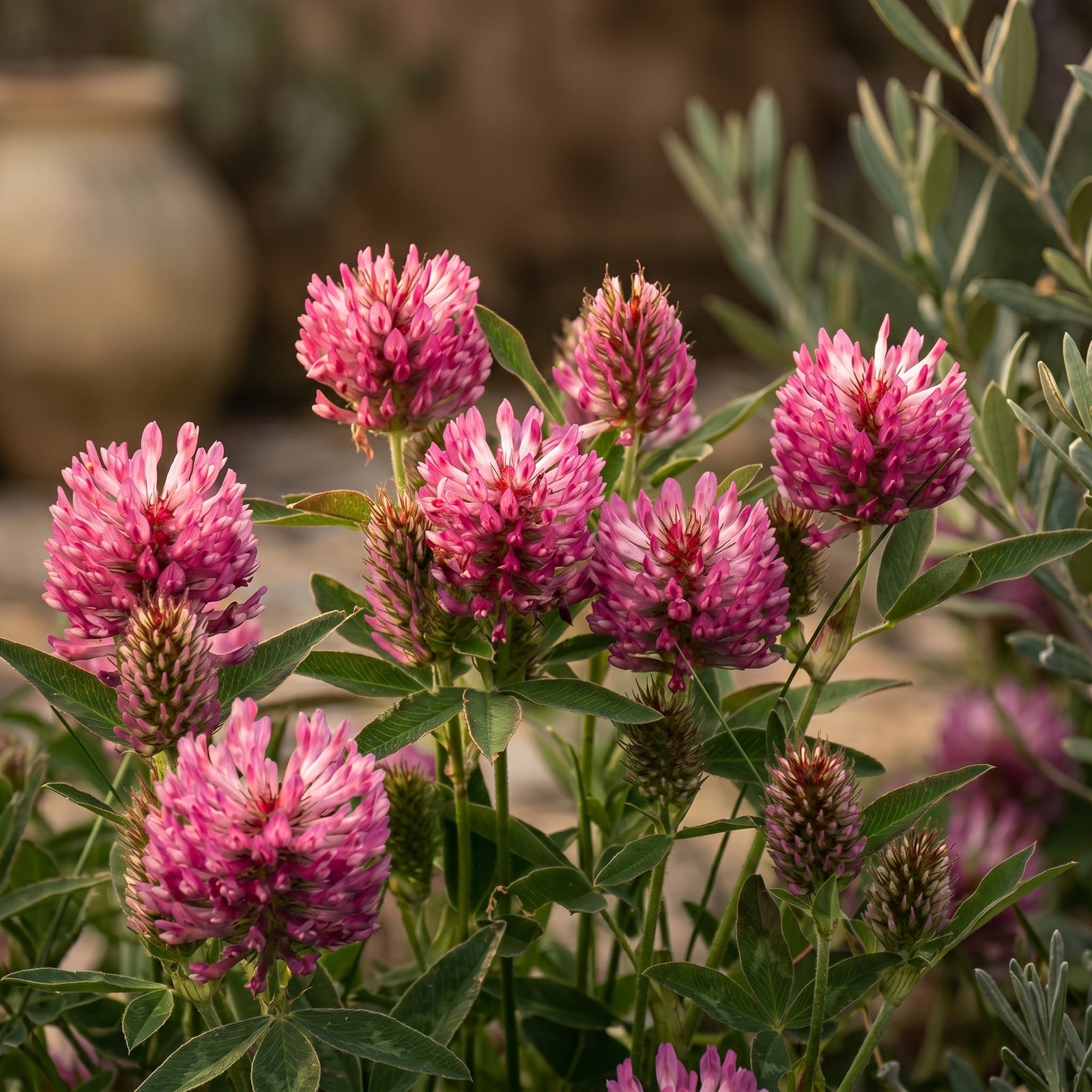
Red Clover (Trifolium pratense) grows freely at field margins and meadow edges — a plant so ordinary it barely announces itself as medicine, which I have always found to be true of some of the most reliable plants. It has been present in women's herbal traditions for centuries, used long before the science of phytoestrogens gave language to what herbal practitioners already understood: that this plant has a nourishing, supportive relationship with the cycling body that builds through consistent presence rather than acute intervention. I include it in this formula because of that quality of accumulated gentleness — a meadow plant, generous and unfussy, holding space for the deeper herbs to do their work. There is something fitting about having it here in a formula designed for the woman who tends herself slowly, across the long season of a month.
Wild Yam
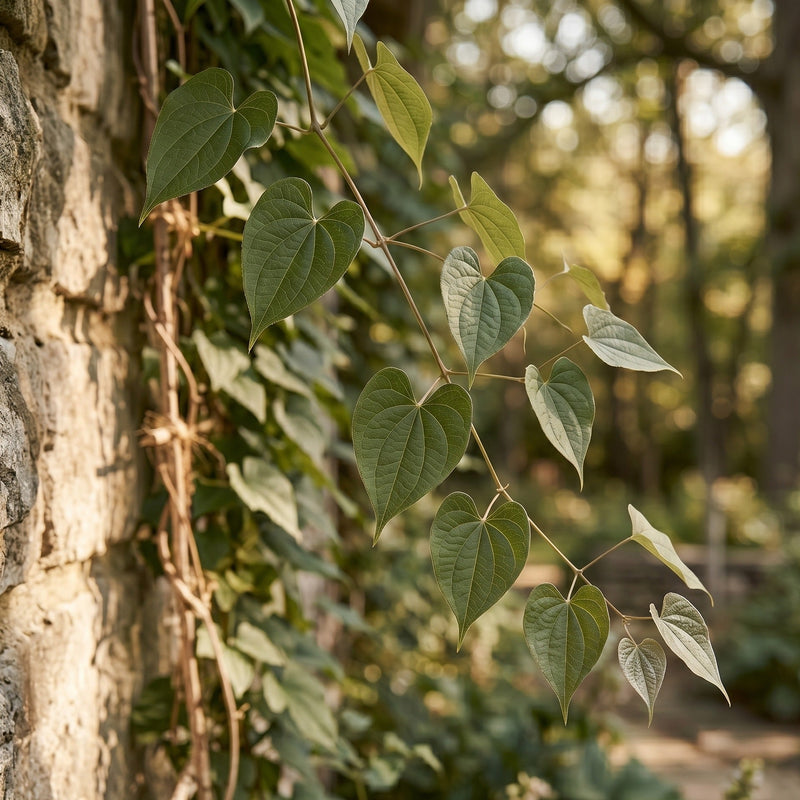
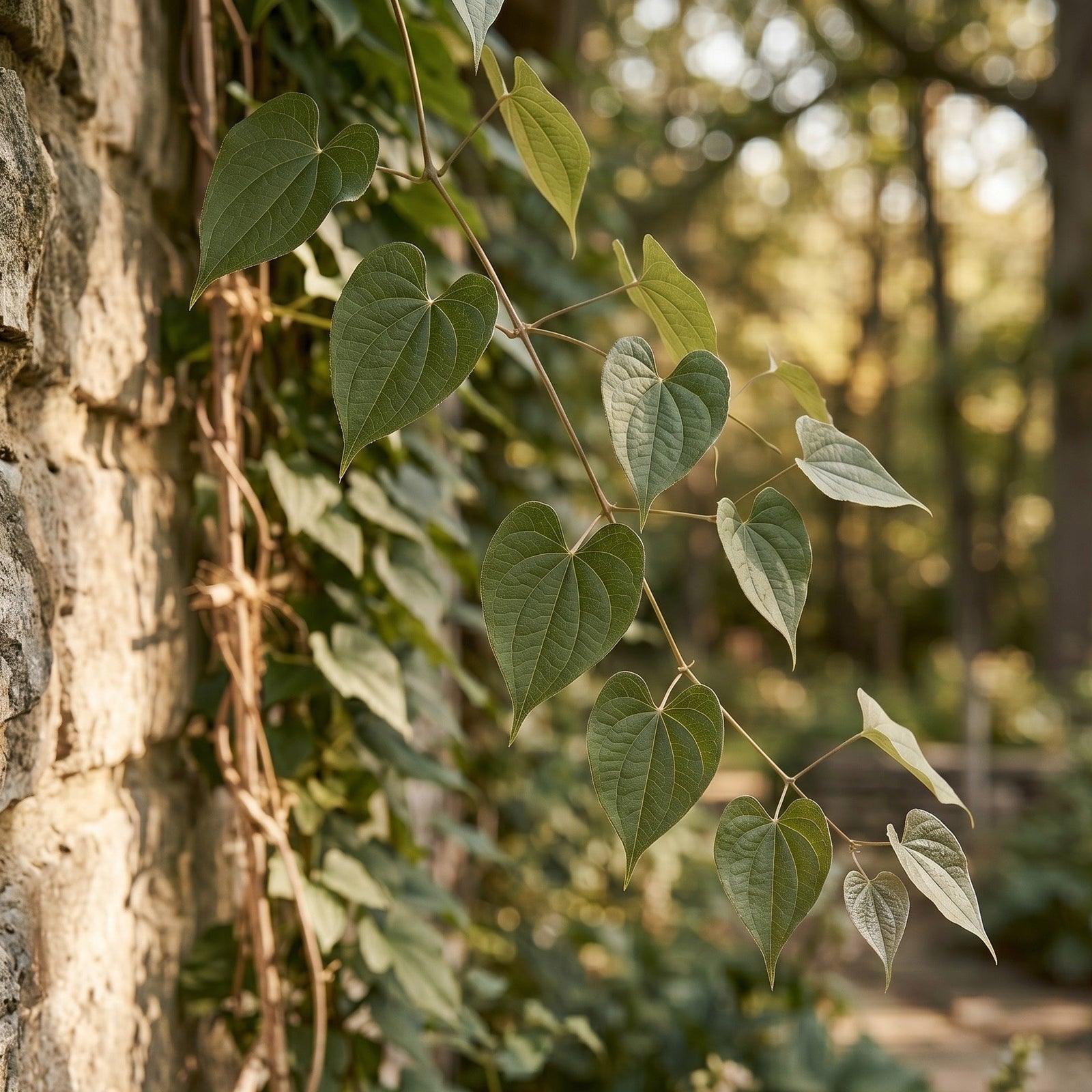
Wild Yam (Dioscorea villosa) grows along moist forest margins and river banks in the eastern United States and Mexico, where it has been used by Indigenous communities across generations in women's wellness traditions. The root carries a warmth to it — a quality traditional herbalists associate with the pelvic bowl and with the deeper terrain of women's hormonal life across the full cycle, not only in the bleeding days. In this formula, I reach for Wild Yam for the arc of the month: as a plant that has long been used to support the reproductive system's own intelligence from the inside out, working quietly in the background as the stronger herbs do their more visible work. It is a root that does not announce itself. You notice what it has done when you look back across a few months and realize the ground has shifted.

White Peony & Licorice Root
White Peony (Paeonia lactiflora) grows in temperate gardens and roadsides across China and Japan, its roots used in Chinese medicine for well over a thousand years. In classical Chinese gynecology, it is almost never used alone — it is paired with Licorice Root (Glycyrrhiza glabra), the two roots forming a foundational duo that herbalists have depended on for cyclical balance across generations, known in the TCM tradition as Bai Shao Gan Cao. I think of White Peony as the cooling, gathering root: the one that draws inward, quiets excess, brings the body back toward its own steadiness. Licorice harmonizes everything it meets — balancing the stronger herbs in a formula, supporting the adrenal tissue that underlies so much of how women experience their cycles, and lending the whole blend a sweetness that softens the earthy bitterness of the roots alongside it. Together they are the foundation this formula is built on.

Shatavari
Shatavari (Asparagus racemosus) grows in the tropical forests of India and Sri Lanka, its roots a deep milky white that reveals something of the plant's nourishing character before you have even tasted it. It is one of the most honored plants in the Ayurvedic pharmacopoeia — used for thousands of years to support the reproductive system through every season of a woman's life, from the cycling years through the longer transitions that follow. The name translates roughly as "she who possesses a hundred husbands," which traditional texts used to describe a plant whose capacity to nourish and sustain is understood as boundless. I use Shatavari not when something is in acute need of attention, but when the body needs to be built back from a deeper foundation — when the hormonal ground itself needs tending. It is a root that teaches patience, and one that works beautifully over the long arc.

Red Clover
Red Clover (Trifolium pratense) grows freely at field margins and meadow edges — a plant so ordinary it barely announces itself as medicine, which I have always found to be true of some of the most reliable plants. It has been present in women's herbal traditions for centuries, used long before the science of phytoestrogens gave language to what herbal practitioners already understood: that this plant has a nourishing, supportive relationship with the cycling body that builds through consistent presence rather than acute intervention. I include it in this formula because of that quality of accumulated gentleness — a meadow plant, generous and unfussy, holding space for the deeper herbs to do their work. There is something fitting about having it here in a formula designed for the woman who tends herself slowly, across the long season of a month.

Wild Yam
Wild Yam (Dioscorea villosa) grows along moist forest margins and river banks in the eastern United States and Mexico, where it has been used by Indigenous communities across generations in women's wellness traditions. The root carries a warmth to it — a quality traditional herbalists associate with the pelvic bowl and with the deeper terrain of women's hormonal life across the full cycle, not only in the bleeding days. In this formula, I reach for Wild Yam for the arc of the month: as a plant that has long been used to support the reproductive system's own intelligence from the inside out, working quietly in the background as the stronger herbs do their more visible work. It is a root that does not announce itself. You notice what it has done when you look back across a few months and realize the ground has shifted.
The Ritual
Practices that support the plants

Honor Yourself
Your Moon Space

Before your bleeding begins, choose one object — a stone from the earth, a red flower, something that feels chosen rather than placed — and set it in a corner of your home as your moon space for the days that follow. Across traditions, from the Hebrew Niddah to the Native American moon lodge to menstrual practices found across pan-indigenous cultures, there is a shared recognition: that the bleeding body holds a concentrated, sacred power worthy of its own designated space. Return to yours each day to remember what the bleeding body is actually doing: building the conditions to sustain life.

Return to eh Body
The spine leads
Lie on the floor and let your spine lead: not a stretch, not a sequence, just the sacrum beginning to move and the rest of the body following wherever it needs to go. This is the pelvic bowl practice of Continuum Movement, developed by somatic researcher Emily Conrad: you are not directing the movement, you are following it, giving the body full permission to release through whatever shape it finds.

Remember the earth
giving back to the soil

Collect a small amount of menstrual blood in a vessel and bring it to a tree or plant, the same one each cycle, and pour it into the soil at its roots. Across the Ohlone, Hawaiian, and pan-African traditions, the menstruating body was understood as carrying concentrated life force, and returning that force to the earth was genuine reciprocity: giving back what the earth gave you. Press your hands into the soil after and stay long enough that the exchange feels complete.

Jasmine's Note
I didn't fully understand what I'd inherited until my own body started asking questions that medicine couldn't answer. Hormonal chaos, long seasons of depression, the particular exhaustion of feeling disconnected from yourself. I remembered the whisperings. I turned back toward the plants. Everything in this apothecary came from that turning — things I made for myself first, and then for the women in my life who needed the same. I offer them to you the way my grandmother offered what she knew: as a hand extended, as something real.
-Jasmine

Rooted in Lineage. Made with Reverence.
This is medicine in the oldest sense of the word: plant wisdom, carefully tended, passed forward with care.
Frequently Asked Questions
What is an herbal tincture for hormonal balance, and how is it different from a supplement?
An herbal tincture for hormonal balance is a liquid plant extract made for daily use over weeks and months, designed to support the body's own cyclical intelligence rather than supply an isolated compound to override it. The difference from a capsule or supplement is both physical and philosophical: a tincture is a whole-plant extraction in alcohol or glycerin, which means you receive the full spectrum of the plant's chemistry in a form the body absorbs quickly and directly. In my practice, I prefer tinctures for hormonal support because they invite a daily ritual — drops under the tongue, a small glass of water, a morning of tending — and ritual is part of what makes this kind of plant medicine work. Hormone Harmony was made to be taken the way the plants intended: slowly, consistently, and with patience.
What is dong quai, and why is it used in women's herbal traditions?
Dong Quai (Angelica sinensis) has been used in traditional Chinese medicine for over two thousand years — sometimes called the female ginseng, which speaks to how central it has been to the Chinese women's pharmacopoeia across generations. Revered for its relationship to the blood and to cyclical rhythm, it appears in some of the oldest classical gynecological formulas still in use today, including the foundational Si Wu Tang. I find it in almost every TCM formula built around women's reproductive wellness, which tells you something about how herbalists across centuries have understood it: not as a plant that acts on a single isolated concern, but as one that works within the broader conversation of women's hormonal life. In Hormone Harmony it works alongside White Peony root in a classical TCM pairing that has supported women's cyclical balance for over a thousand years. Please note that Dong Quai is not recommended during pregnancy — if you are pregnant or trying to conceive, we always recommend checking with your healthcare provider before beginning any new herbal practice.
What does white peony root do for hormonal health?
White Peony (Paeonia lactiflora) is one of the foundational herbs in classical Chinese women's medicine — the root that appears in Si Wu Tang, the four-herb formula that has supported women's cyclical wellness for over a thousand years. In my practice, I reach for White Peony when the body needs to return to its own steadiness: when hormonal fluctuation shows up in the mood, in disrupted sleep before the cycle, in the restlessness of the premenstrual window. It works most beautifully when paired with Licorice Root (Glycyrrhiza glabra), as it is in Hormone Harmony — the two roots forming a foundational TCM duo called Bai Shao Gan Cao, used together to support cyclical balance through consistent daily use. This is not an herb for the acute moment. It is an herb for the long practice.
How do I take Hormone Harmony alongside the Chaste Tree Berry tincture?
Hormone Harmony and Chaste Tree Berry (Vitex agnus-castus) are designed to be taken together — I recommend this pairing in my practice because the two formulas work on different but complementary layers of women's cyclical support. Vitex has been used for centuries to support the body's own hormonal rhythms through the full cycle; Hormone Harmony's blend of Shatavari, Dong Quai, and White Peony nourishes the blood and supports the reproductive terrain that gives that rhythm a foundation to build from. Take both each morning — 30 drops of each in a small glass of water, or directly under the tongue — and keep both bottles together as a single daily ritual. A bundle of the two tinctures is available in the shop. Both formulas are built for consistent daily use, and the most meaningful shifts tend to arrive after six to eight weeks of that consistency.
How long does it take to feel a difference from a daily herbal tincture for hormonal balance?
The honest answer is that this formula is not designed for the day you are struggling. It is designed for the month ahead of that day. Most women in my practice who are taking a daily herbal tincture for hormonal balance notice the first meaningful shifts after four to six weeks of consistent use — changes in the quality of the days before their cycle, in their relationship with the premenstrual window, in the steadiness available to them when the hormonal weather rolls in. Some notice earlier; some need longer. What matters more than the timeline is the consistency: daily use, same time each morning, both bottles on the counter. Plants work the way seasons do — gradually, without announcing themselves, and then one morning you notice that something has changed.
Is Hormone Harmony safe to take during pregnancy or while breastfeeding?
This formula contains Dong Quai (Angelica sinensis), which has a long tradition of use as a blood-moving herb and is not recommended during pregnancy. Several other botanicals in the blend have not been extensively studied in the context of pregnancy and nursing, and as a clinical herbalist I would not recommend taking this formula while pregnant or breastfeeding without first working with a qualified practitioner who knows your full health picture. We always recommend checking with your healthcare provider before beginning any new herbal practice, especially during pregnancy, postpartum, or while nursing. For women who are in a preconception window or trying to conceive, a conversation with your midwife, OB, or a clinical herbalist about timing and appropriate formulas is the right first step.
What is shatavari, and why is it in a cycle support formula?
Shatavari (Asparagus racemosus) is one of the most honored plants in the Ayurvedic women's tradition — known as the Queen of women's herbs, used for thousands of years to support the reproductive system through every season of a woman's life. Its name translates roughly as "she who possesses a hundred husbands," which traditional Ayurvedic texts used to describe the plant's capacity to nourish and sustain the reproductive body across a very long arc. In Ayurvedic medicine, Shatavari is classified as a rasayana — a class of herbs that build the body's foundational reserves over time rather than acting acutely — and this is exactly why I reach for it in a formula designed for daily consistent use. I include it here for cycle support because building a solid hormonal foundation is a slow, nourishing practice, and Shatavari, more than almost any other plant I know, understands that kind of patience.
A Note on Plant Medicine
Plants are powerful — and like any potent thing, they deserve to be used with care and knowledge. These formulas are crafted with intention, but they are not a substitute for medical guidance. Before beginning a new herbal practice, we encourage you to speak with your healthcare provider, especially if you are pregnant, nursing, trying to conceive, managing a health condition, or taking prescription medication. Wild Woman products are not intended to diagnose, treat, cure, or prevent any disease.
Stay close to the apothecary
THE LETTER
Herbal rituals for every season of womanhood
Sent four times a year, when the season turns. Plant wisdom, slow writing, and occasional notes from the bench. No promotions, no urgency.
SMALL BATCH
Made by hand in our Los Angeles apothecary
WILDCRAFTED & ORGANIC
Herbs gathered seasonally or grown by farmers we trust
CRAFTED SLOWLY
Each formula prepared without rushing for scale
ROOTED IN LINEAGE
In the tradition of the women who have come before us