


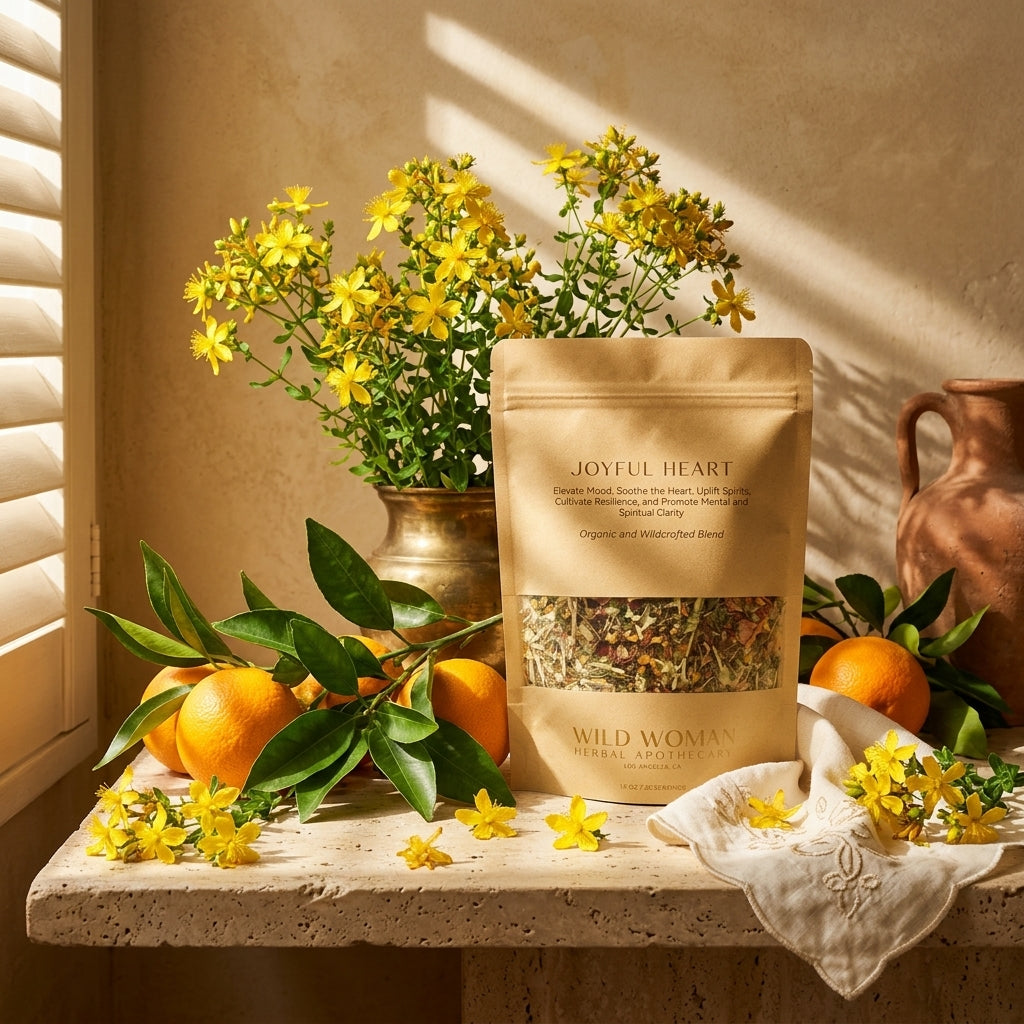
Joyful Heart Tea
for the woman who needs to find her way back to herself
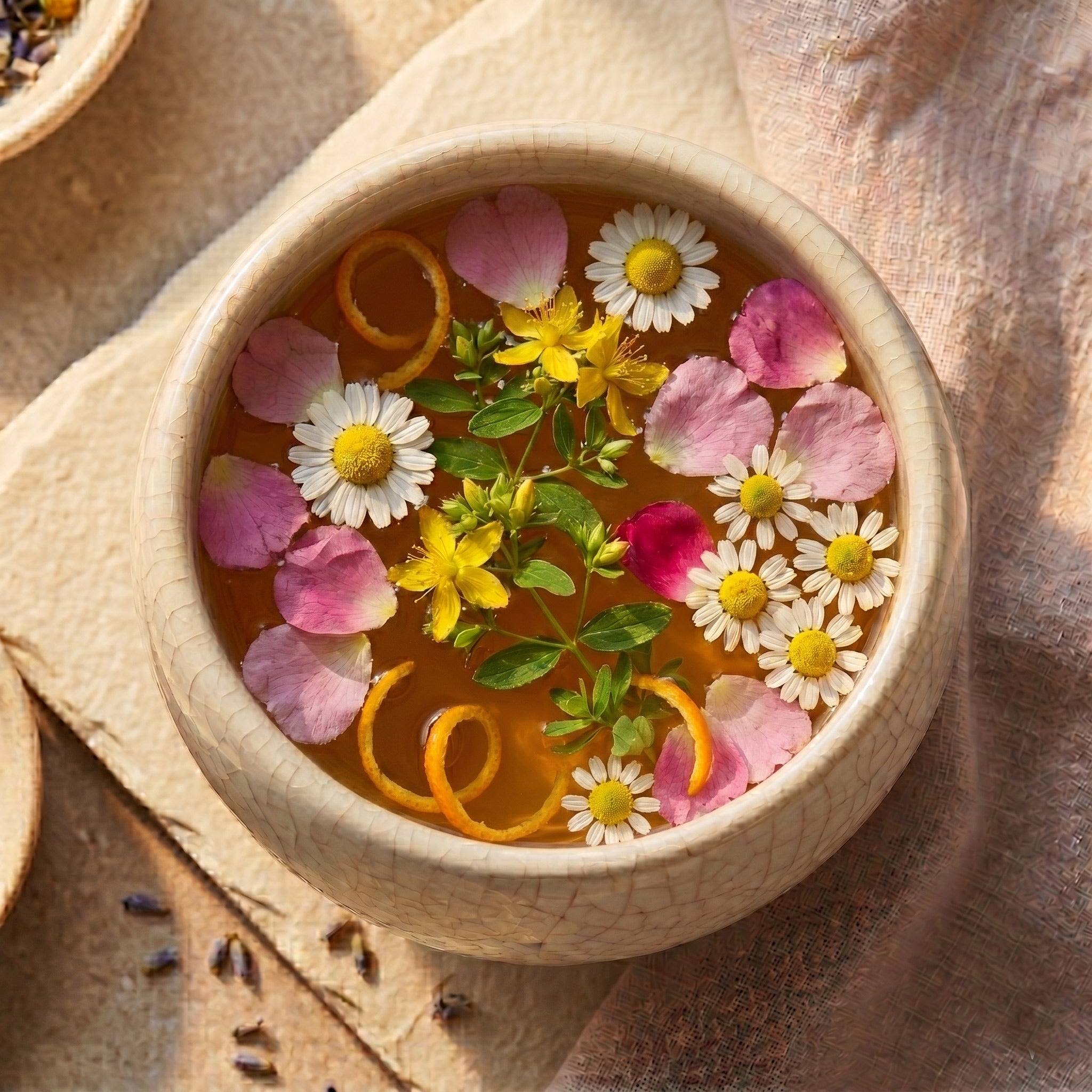
Some seasons just ask more of you than you have. This tea was made for those weeks — the ones that leave your nervous system full and your heart a little heavier than you'd like it to be. Lemon balm, hawthorn, St. John's Wort, rose: plants that women have steeped and reached for across centuries of ordinary hardship, brought together in a cup that is both light enough to drink all day and rooted enough to mean something.
soft citrus · floral · a warmth on the finish · gentle on the palate
Choose options
Joyful Heart
PRODUCT DETAILS
There is a particular kind of heaviness that is not depression and not grief and not quite stress — it is the weight of a long season, the feeling of a nervous system that has been asked to hold too much for too long without enough softness in return. Joyful Heart was formulated for that.
At the center of this blend is the pairing of lemon balm and St. John's Wort — two plants with centuries of use in supporting emotional lightness, each working with a different quality of the experience. Lemon balm meets the nervous system's agitation; St. John's Wort works with the low, dimmed quality that settles in when the days have been heavy for a while. Together they hold the emotional range that one plant alone rarely covers. Hawthorn leaf and flower bring steadiness from the heart outward — not the heart that feels too much, but the heart that needs to remember it can bear what it is carrying. Linden and skullcap soften the nervous tension that heavy emotions always carry with them. Rose and oat straw nourish what the season has depleted.
This is a tea meant for all day, not for the single transitional cup. The herbs work gently and cumulatively. The ritual of returning to it is part of the medicine.
Every plant in this formula is USDA Certified Organic, with the exception of the oat straw, which is responsibly wildcrafted. Joyful Heart is blended in small batches in Los Angeles by Jasmine Simone, using botanicals sourced from growers whose relationship to the land reflects the same reverence that goes into the blending. Nothing here was rushed. Nothing was chosen from a catalog of trending ingredients. These are the herbs Jasmine reaches for herself — and that is the only qualification that matters.
Steep one rounded teaspoon of loose leaf tea in eight ounces of water just off the boil for five to seven minutes. Cover the cup while it steeps to hold the volatile oils close — they are part of what you are drinking. Strain and drink slowly, or let it cool and return to it throughout the morning. Two to three cups across the day is a gentle and effective rhythm. This is not a tea to rush through. Let it be the pause.
Lemon Balm (Melissa officinalis) · Hawthorn (Crataegus spp.) leaf and flower · Linden (Tilia spp.) flowers and bracts · Rose (Rosa spp.) petals · Orange Peel (Citrus sinensis) · Skullcap (Scutellaria lateriflora) aerial parts · Oat Straw† (Avena sativa) · St. John's Wort (Hypericum perforatum) aerial parts
All herbs are USDA Certified Organic unless marked. †Wildcrafted. Full plant profiles below.
The Plants
There is a particular kind of heaviness that is not depression and not grief and not quite stress — it is the weight of a long season, the feeling of a nervous system that has been asked to hold too much for too long without enough softness in return. Joyful Heart was formulated for that.
At the center of this blend is the pairing of lemon balm and St. John's Wort — two plants with centuries of use in supporting emotional lightness, each working with a different quality of the experience. Lemon balm meets the nervous system's agitation; St. John's Wort works with the low, dimmed quality that settles in when the days have been heavy for a while. Together they hold the emotional range that one plant alone rarely covers. Hawthorn leaf and flower bring steadiness from the heart outward — not the heart that feels too much, but the heart that needs to remember it can bear what it is carrying. Linden and skullcap soften the nervous tension that heavy emotions always carry with them. Rose and oat straw nourish what the season has depleted.
This is a tea meant for all day, not for the single transitional cup. The herbs work gently and cumulatively. The ritual of returning to it is part of the medicine.
The Lineage
Every plant in this formula is USDA Certified Organic, with the exception of the oat straw, which is responsibly wildcrafted. Joyful Heart is blended in small batches in Los Angeles by Jasmine Simone, using botanicals sourced from growers whose relationship to the land reflects the same reverence that goes into the blending. Nothing here was rushed. Nothing was chosen from a catalog of trending ingredients. These are the herbs Jasmine reaches for herself — and that is the only qualification that matters.
The Practice
Steep one rounded teaspoon of loose leaf tea in eight ounces of water just off the boil for five to seven minutes. Cover the cup while it steeps to hold the volatile oils close — they are part of what you are drinking. Strain and drink slowly, or let it cool and return to it throughout the morning. Two to three cups across the day is a gentle and effective rhythm. This is not a tea to rush through. Let it be the pause.
The Formula
Lemon Balm (Melissa officinalis) · Hawthorn (Crataegus spp.) leaf and flower · Linden (Tilia spp.) flowers and bracts · Rose (Rosa spp.) petals · Orange Peel (Citrus sinensis) · Skullcap (Scutellaria lateriflora) aerial parts · Oat Straw† (Avena sativa) · St. John's Wort (Hypericum perforatum) aerial parts
All herbs are USDA Certified Organic unless marked. †Wildcrafted. Full plant profiles below.

Tasting Notes
bright · soft citrus · gently floral · warm on the finish

Ritual Moment
a slow morning · the return to yourself mid-afternoon

Season of Life
every woman in a heavy season

Energetics
uplifting · softening · quietly steadying
Tasting Notes
bright · soft citrus · gently floral · warm on the finish
Ritual Moment
a slow morning · the return to yourself mid-afternoon
Season of Life
every woman in a heavy season
Energetics
uplifting · softening · quietly steadying
St. John's Wort
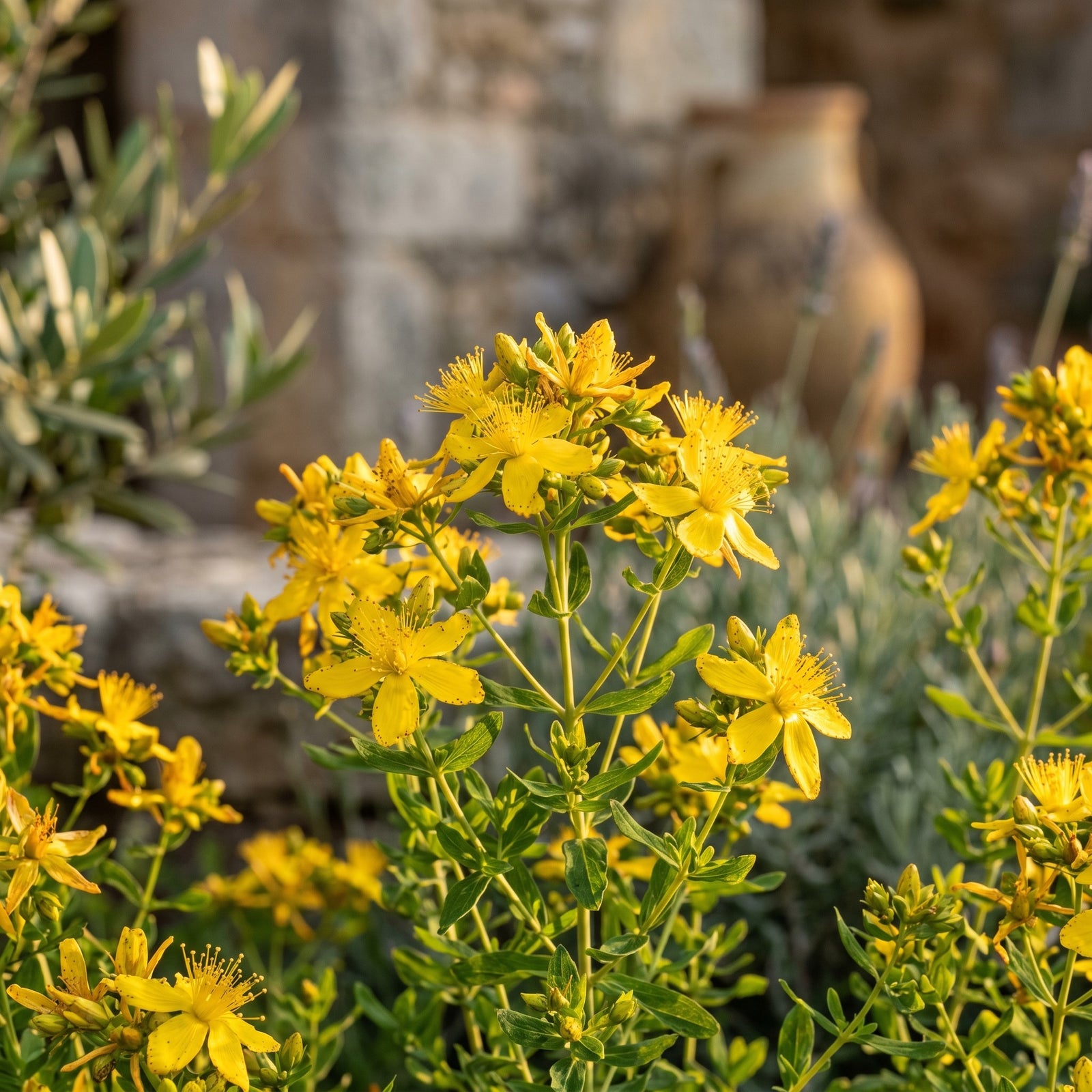
St. John's Wort blooms at the peak of summer — the days around the summer solstice, when the sun is at its highest and the light is most generous. In the European folk tradition, it was gathered on St. John's Day, June 24th, when the flowers were in full bloom and the hypericin inside them would stain your fingers a deep red-orange when crushed. That red has always seemed right to me for a plant associated with restoring warmth to the spirit — something in the body's chemistry, made visible.
Women have steeped and tinctured St. John's Wort for a very long time, turning to it in the seasons when the inner light dims — when the days feel shorter than they are, when the emotional weight accumulates without obvious cause. It is not a sedating plant and it is not a stimulating one. It is closer to what sunlight does: not dramatic, but organizing. Things come back into proportion.
One note worth naming honestly: St. John's Wort is an active botanical that can interact with certain medications, including SSRIs, hormonal contraceptives, and blood thinners. If you are taking any of these, please speak with your healthcare provider before including this tea in your daily practice. This is not a disclaimer — it is the herbalist's genuine recommendation, offered the same way my grandmother would have offered it.
Lemon Balm
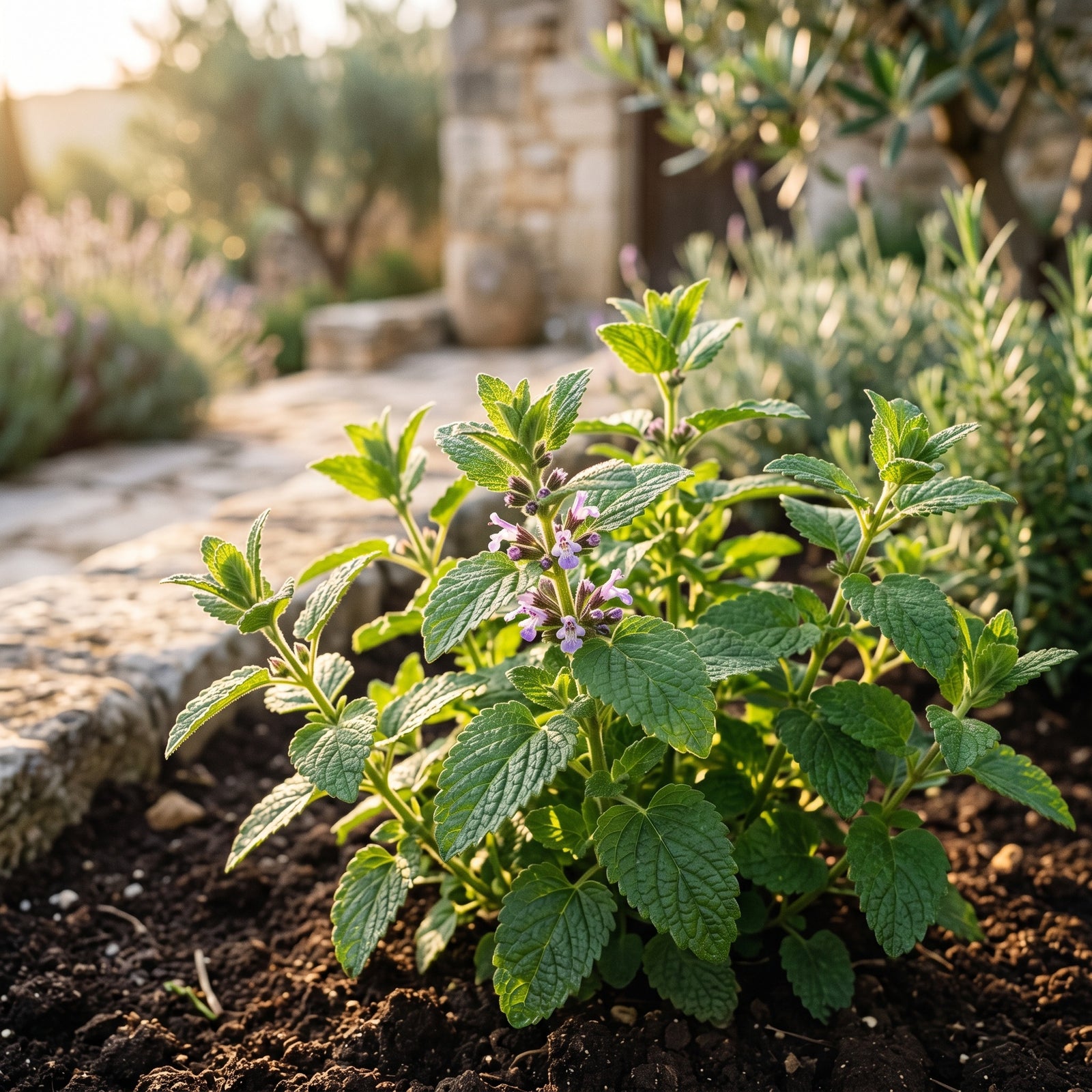
Lemon balm grows quickly, generously, almost faster than you want it to. It spreads. It comes back. In a garden it can be overzealous, and I have always found that quality charming — a plant that insists on being present, that refuses to be diminished. The bees love it. Melissa, its Latin name, means honeybee. There is something in that sweetness that translates into what the plant does.
Lemon balm has been used to lift the spirit for as long as women have been making plant medicine. Not lift in the caffeinated sense — lift in the sense of restoring access to lightness when it has been obscured by the accumulated weight of hard days. It meets the agitation that lives underneath heavy emotions — the restlessness, the difficulty sitting still with how things feel — and offers a kind of quiet negotiation. The spirit doesn't need to be fixed. It needs to be met.
Hawthorn
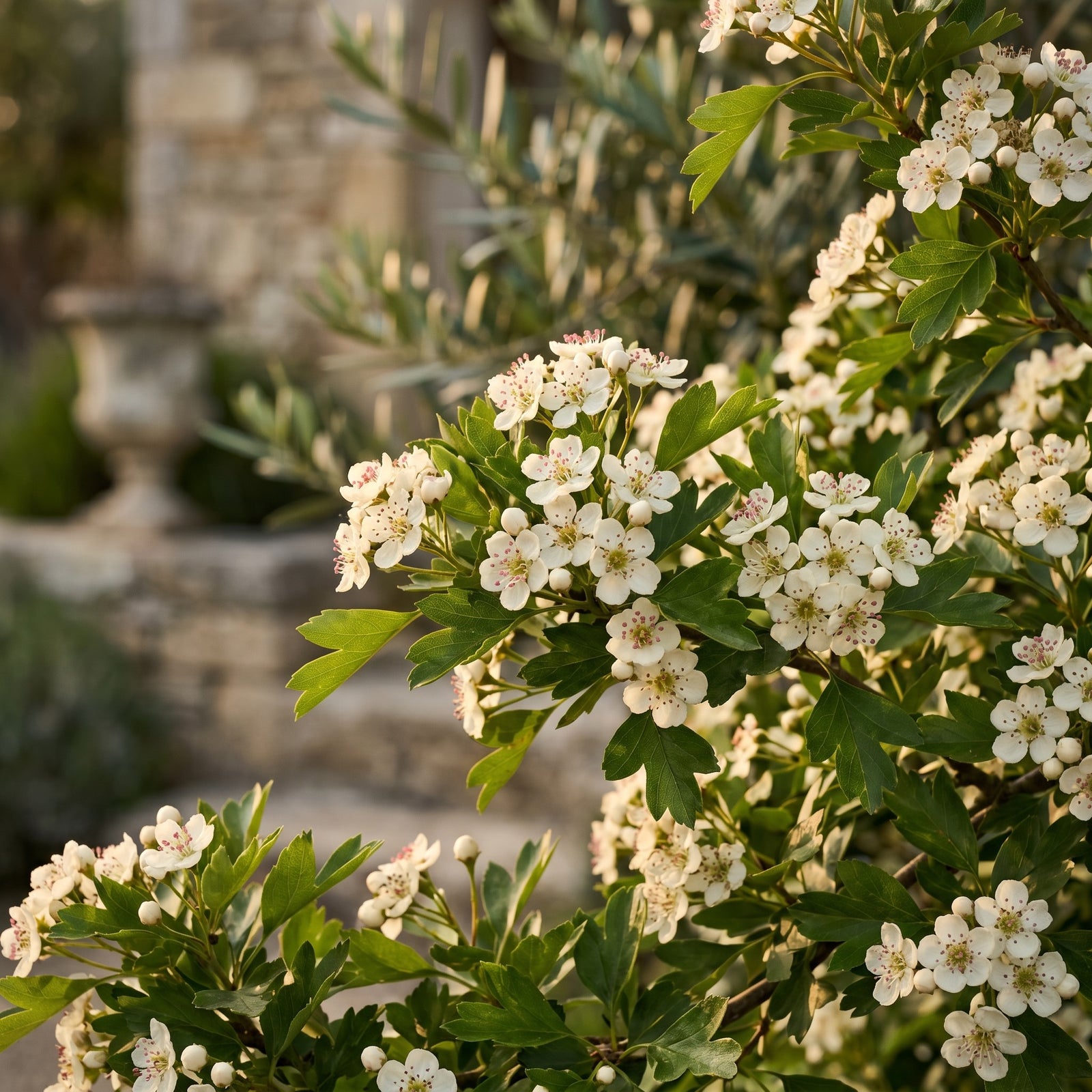
Hawthorn grows at the edges of things — at the margins of fields, along hedgerows, in the in-between spaces where cultivated land meets wild. There is something apt in that for a plant that has been used, across many traditions, to support the heart in its own in-between times: the seasons of transition, the periods when the heart is full and the path forward is not yet clear.
It is the leaf and flower I use here, not the berry. The berry has its own story — rich and astringent, dense with tannins, associated with the deep winter and the body's structural work. The leaf and flower belong to the spring and the open season: softer, more accessible, carrying the heart-steadying quality without the weight. When I think of what hawthorn does for the emotional body, I think of it as the plant that reminds the heart it is strong enough. Not by numbing what is felt — by supporting the capacity to keep feeling without being undone by it.
Orange Peel
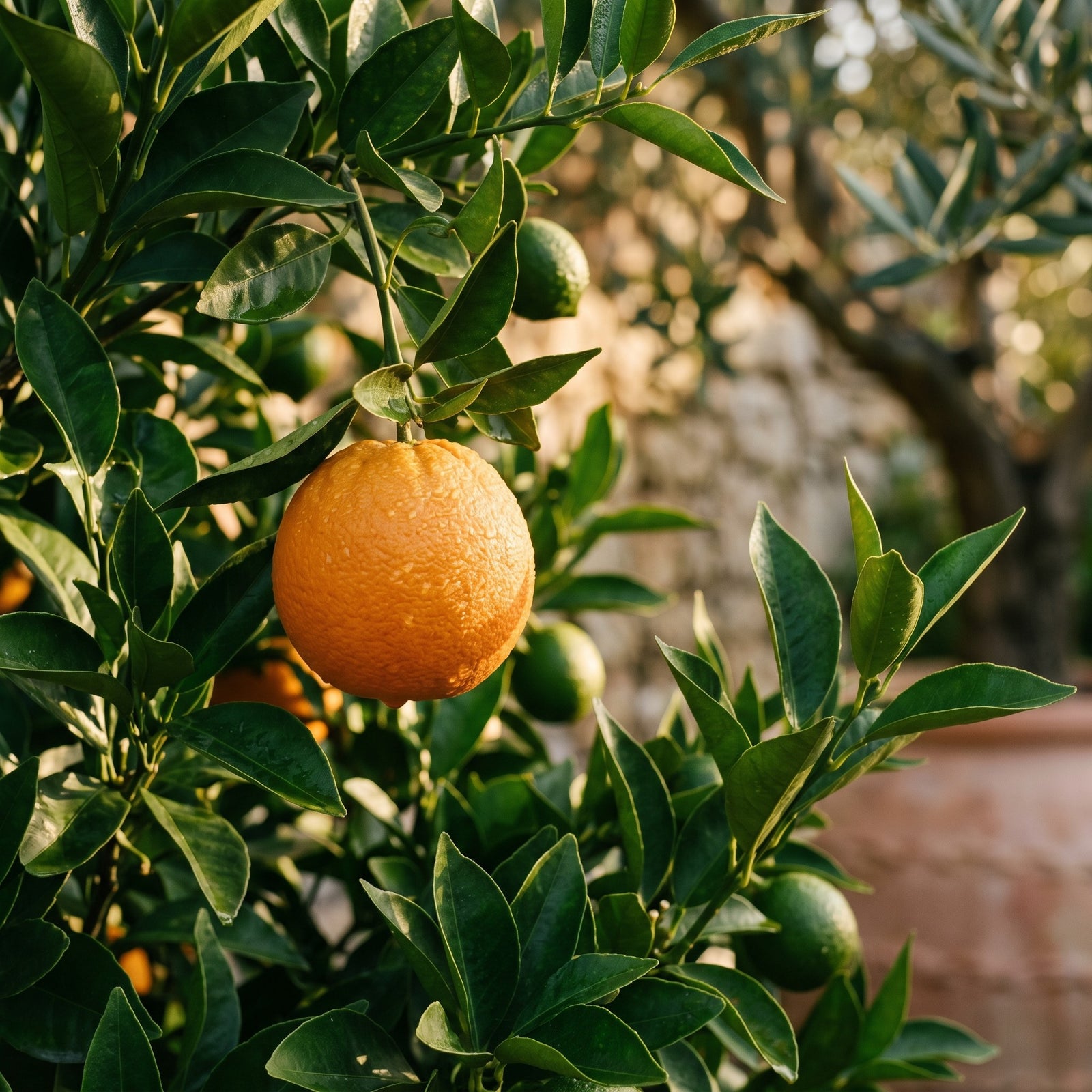
Not every plant in a formula is there for a medicinal reason, and I think it is worth saying that plainly. Orange peel is here because it makes the tea taste like something you will actually want to drink twice a day. That is not a small thing. The bitterness of St. John's Wort and the dryness of skullcap are real — left unbalanced, they push back against the palate in a way that turns a daily ritual into a chore. Orange peel softens that. It brings a round, bright sweetness that opens the flavor rather than competing with it, the way a good counterpoint in music makes the whole composition easier to receive.
In traditional Western herbalism, citrus peel has long been used as what formulation calls a "corrective" — an ingredient whose primary purpose is to make the medicine more accessible. There is no shame in that function. The herbalists who worked before us were pragmatists. They understood that a formula that goes undrunk helps no one. The peel of Citrus sinensis, the sweet orange, dried and added to a blend, does something generous: it reminds the cup that it was made for a woman who deserves something beautiful, not just something good for her.
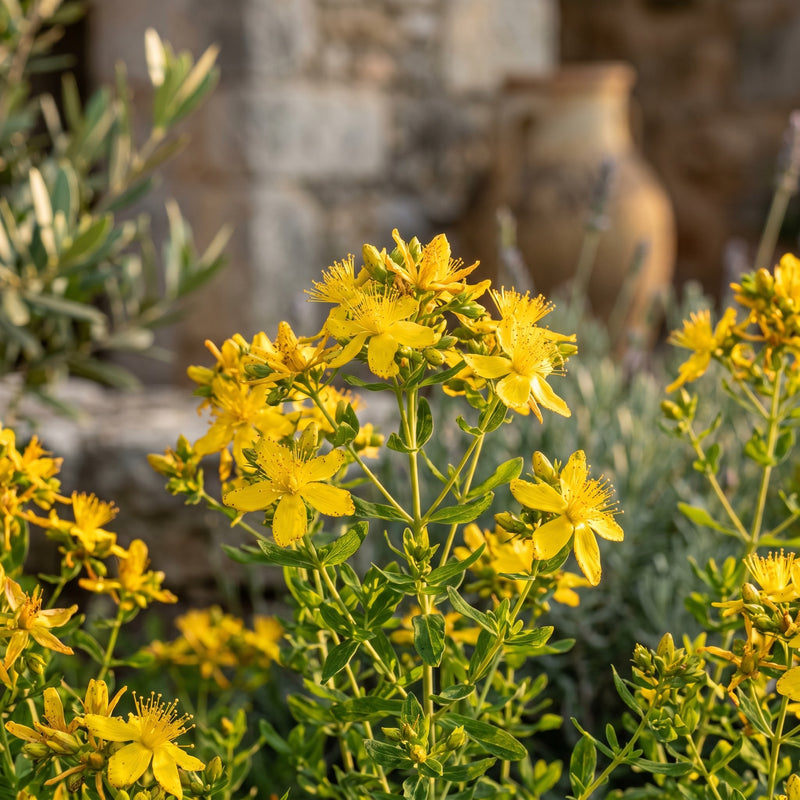
St. John's Wort
St. John's Wort blooms at the peak of summer — the days around the summer solstice, when the sun is at its highest and the light is most generous. In the European folk tradition, it was gathered on St. John's Day, June 24th, when the flowers were in full bloom and the hypericin inside them would stain your fingers a deep red-orange when crushed. That red has always seemed right to me for a plant associated with restoring warmth to the spirit — something in the body's chemistry, made visible.
Women have steeped and tinctured St. John's Wort for a very long time, turning to it in the seasons when the inner light dims — when the days feel shorter than they are, when the emotional weight accumulates without obvious cause. It is not a sedating plant and it is not a stimulating one. It is closer to what sunlight does: not dramatic, but organizing. Things come back into proportion.
One note worth naming honestly: St. John's Wort is an active botanical that can interact with certain medications, including SSRIs, hormonal contraceptives, and blood thinners. If you are taking any of these, please speak with your healthcare provider before including this tea in your daily practice. This is not a disclaimer — it is the herbalist's genuine recommendation, offered the same way my grandmother would have offered it.
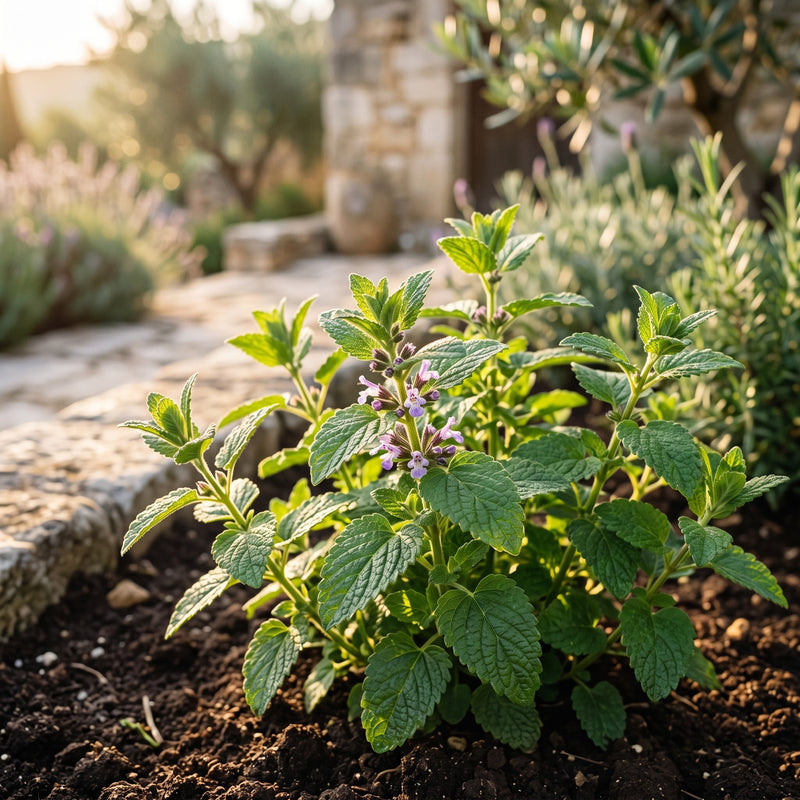
Lemon Balm
Lemon balm grows quickly, generously, almost faster than you want it to. It spreads. It comes back. In a garden it can be overzealous, and I have always found that quality charming — a plant that insists on being present, that refuses to be diminished. The bees love it. Melissa, its Latin name, means honeybee. There is something in that sweetness that translates into what the plant does.
Lemon balm has been used to lift the spirit for as long as women have been making plant medicine. Not lift in the caffeinated sense — lift in the sense of restoring access to lightness when it has been obscured by the accumulated weight of hard days. It meets the agitation that lives underneath heavy emotions — the restlessness, the difficulty sitting still with how things feel — and offers a kind of quiet negotiation. The spirit doesn't need to be fixed. It needs to be met.
Hawthorn
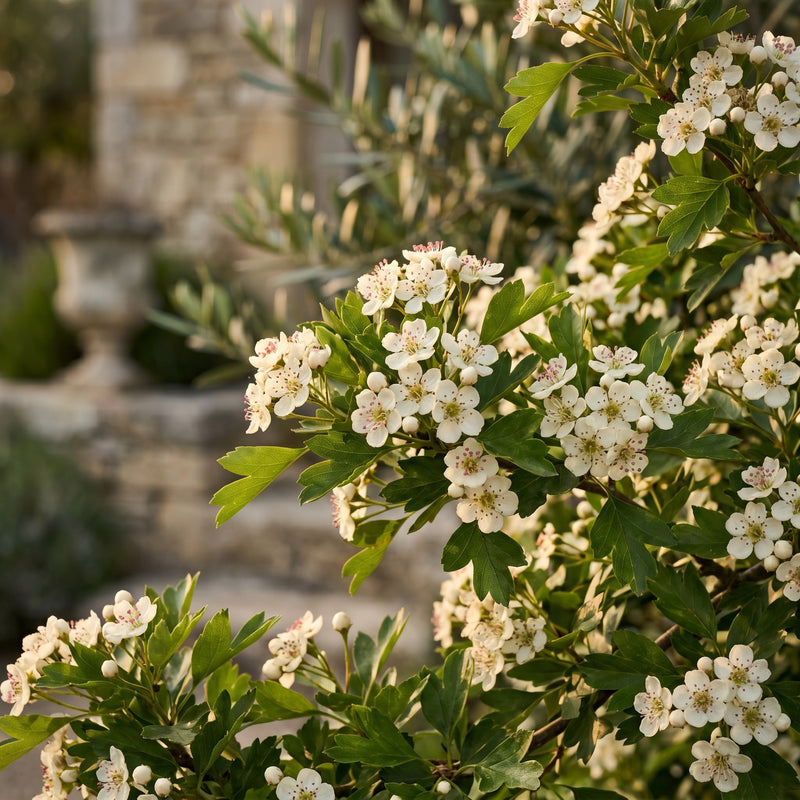
Hawthorn grows at the edges of things — at the margins of fields, along hedgerows, in the in-between spaces where cultivated land meets wild. There is something apt in that for a plant that has been used, across many traditions, to support the heart in its own in-between times: the seasons of transition, the periods when the heart is full and the path forward is not yet clear.
It is the leaf and flower I use here, not the berry. The berry has its own story — rich and astringent, dense with tannins, associated with the deep winter and the body's structural work. The leaf and flower belong to the spring and the open season: softer, more accessible, carrying the heart-steadying quality without the weight. When I think of what hawthorn does for the emotional body, I think of it as the plant that reminds the heart it is strong enough. Not by numbing what is felt — by supporting the capacity to keep feeling without being undone by it.
Orange Peel
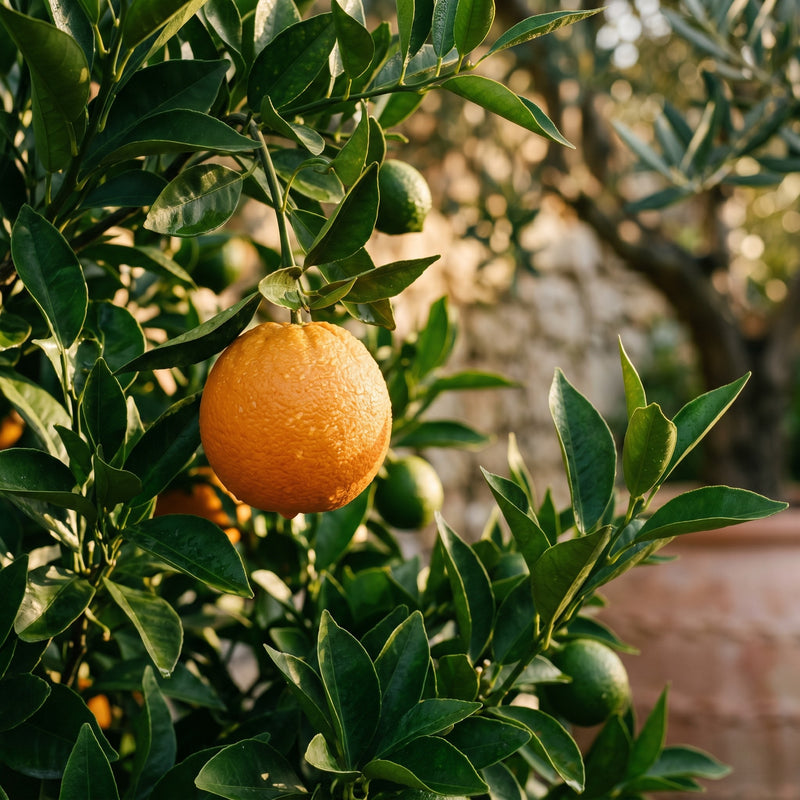
Not every plant in a formula is there for a medicinal reason, and I think it is worth saying that plainly. Orange peel is here because it makes the tea taste like something you will actually want to drink twice a day. That is not a small thing. The bitterness of St. John's Wort and the dryness of skullcap are real — left unbalanced, they push back against the palate in a way that turns a daily ritual into a chore. Orange peel softens that. It brings a round, bright sweetness that opens the flavor rather than competing with it, the way a good counterpoint in music makes the whole composition easier to receive.
In traditional Western herbalism, citrus peel has long been used as what formulation calls a "corrective" — an ingredient whose primary purpose is to make the medicine more accessible. There is no shame in that function. The herbalists who worked before us were pragmatists. They understood that a formula that goes undrunk helps no one. The peel of Citrus sinensis, the sweet orange, dried and added to a blend, does something generous: it reminds the cup that it was made for a woman who deserves something beautiful, not just something good for her.
The Ritual
Practices that support the plants

Honor Yourself
Metta Bhavana
Metta Bhavana is a Theravada Buddhist meditation practice documented across two and a half millennia specifically for the cultivation of the open heart after grief, anger, or the particular isolation that comes from a long hard season. Sit quietly, close your eyes, and direct these four phrases toward yourself first, which is where it is almost always the hardest: May I be happy. May I be well. May I be safe. May I be at peace. When you have held them toward yourself long enough to mean them, extend the sequence to someone you love easily, then to a neutral person, then to someone difficult, then to all beings without distinction. The practice does not ask you to feel any particular way. It asks only that you say the words with the willingness to let them land.
Return to the body
Kum Nye
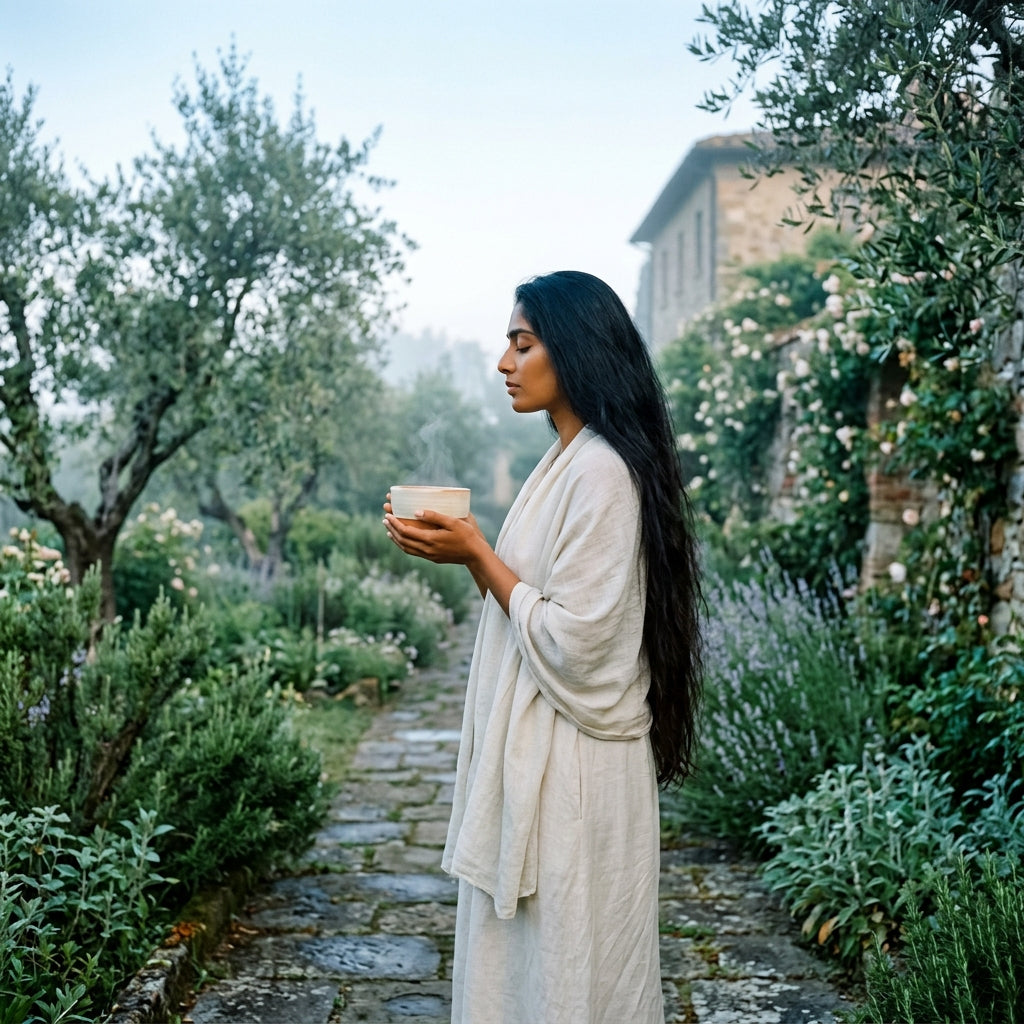
Kum Nye is a Tibetan somatic practice that works with sensation as a doorway rather than a problem to be managed. One of its simplest forms: hold something warm in both hands — your cup of tea, a heated stone, a small vessel — and let your attention follow the warmth slowly up through the palms, into the wrists, through the forearms. Not directing it, not visualizing. Just noticing where the warmth goes and where the body opens to receive it. The Tibetan understanding is that warmth carries the quality of nurturing; that in receiving it through the hands, the emotional body also learns it is being cared for. Stay with it until the cup cools.

Remember the earth
The water remembers
Across many indigenous and folk traditions, water has been understood as both purification and delight, the body's oldest teacher in what it means to be completely present. This is not exercise, not productivity, not anything the mind can claim credit for: it is wading into a creek, standing outside in the rain without an umbrella, playing at the ocean's edge the way you did before you learned to be self-conscious about it. The body in water remembers something that predates all of that, a quality of joy that does not need to be constructed or deserved, only allowed. Go find some water.

Jasmine's Note
I didn't fully understand what I'd inherited until my own body started asking questions that medicine couldn't answer. Hormonal chaos, long seasons of depression, the particular exhaustion of feeling disconnected from yourself. I remembered the whisperings. I turned back toward the plants. Everything in this apothecary came from that turning — things I made for myself first, and then for the women in my life who needed the same. I offer them to you the way my grandmother offered what she knew: as a hand extended, as something real.
-Jasmine
Rooted in Lineage. Made with Reverence.
This is medicine in the oldest sense of the word: plant wisdom, carefully tended, passed forward with care.
Frequently Asked Questions
What is Joyful Heart herbal tea good for?
Joyful Heart is a loose-leaf herbal tea formulated to support mood balance and emotional steadiness during the seasons of life that ask the most of you. The blend brings together plants traditionally used to support a lighter emotional state — lemon balm and St. John's Wort for the spirit, hawthorn leaf and flower for the heart's resilience, linden and skullcap for the nervous system tension that always travels alongside heavy emotions, and rose and oat straw for the depletion that comes from feeling too much for too long. It is made for daily use: two to three cups across the day creates a gentle, cumulative rhythm that most women find more meaningful than a single cup taken as intervention.
What does St. John's Wort do for mood?
St. John's Wort (Hypericum perforatum) has been used in European and North American herbal traditions for centuries to support emotional lightness during periods when the spirit feels dimmed or low. Women have reached for it through hard winters and long seasons of ordinary grief, steeping its bright yellow flowers in oil or water and trusting what experience taught them across generations. Its use is rooted in observation far older than any mechanism we have since named.
There is an important note that comes with this plant, and I offer it the way an herbalist should — with honesty rather than in the fine print. St. John's Wort is a well-documented inducer of liver enzymes involved in metabolizing many medications. If you take SSRIs, hormonal contraceptives, blood thinners (such as warfarin), or any immunosuppressants, please speak with your healthcare provider before drinking this tea regularly. This interaction is not a reason to avoid the plant — it is a reason to be informed, which is what good herbal practice asks of everyone. If you are not taking any of these medications, Joyful Heart is formulated to be safe for most healthy adults.
What is hawthorn good for emotionally?
Hawthorn (Crataegus spp.) leaf and flower has been used in European herbal traditions as a heart-centered botanical — not heart in the cardiological sense only, but in the older sense that recognized the heart as the seat of emotional life. Women have turned to hawthorn during the in-between seasons: the transitions, the waiting periods, the times when the emotional weight is real but the path forward is not yet visible. What the plant offers is steadiness rather than relief. It supports the heart's capacity to stay open and hold what it is holding without being undone by it. There is something in hawthorn that seems to understand that not everything can be fixed — only borne with more grace. That is the quality I wanted in this formula.
How is Joyful Heart different from Sacred Heart Elixir?
They are different products for different moments — both grounded in emotional wellness, but each with its own depth and use. Sacred Heart Elixir is a glycerite (an alcohol-free liquid extract) built around Vana Tulsi and Rosa centifolia, formulated for the deeper emotional work: grief, tenderness, the periods when the heart needs specific medicine and a quieter kind of attention. Joyful Heart is a loose-leaf tea formulated for the everyday texture of a hard season — the weeks when the emotional load is heavy but life keeps asking you to show up, and you need something you can return to throughout the day without interruption. They share a Pillar — Mood and Emotional Wellness — but they do not occupy the same moment. Many women find themselves reaching for one at certain times and the other at different ones. That is exactly how it is meant to work.
Can I drink Joyful Heart every day?
Yes — Joyful Heart is formulated as a daily practice, not a situational one. Two to three cups across the day is a gentle and effective rhythm for most women. The herbs in this blend work cumulatively: lemon balm and oat straw nourish the nervous system over time, and hawthorn's support for emotional steadiness deepens with consistent use rather than arriving in a single dose. Think of it less as a supplement and more as a daily ritual of returning to yourself. Some women make their first cup part of a morning practice; others find that a mid-afternoon cup is what interrupts the accumulation of the day most usefully. The formula works with either rhythm.
One note on St. John's Wort for those taking any medications: please see the FAQ on St. John's Wort above, or speak with your healthcare provider before beginning daily use.
Is Joyful Heart safe during pregnancy or while breastfeeding?
Joyful Heart contains St. John's Wort (Hypericum perforatum) and skullcap (Scutellaria lateriflora), both of which are herbs with insufficient safety data in pregnancy and breastfeeding contexts to recommend general use. We always recommend speaking with your midwife, OB, or a qualified herbalist before including any herbal tea in your practice during pregnancy or while nursing — not because we believe these plants are harmful, but because the responsible practice of herbalism honors the particular physiology and vulnerability of those seasons. If you are pregnant and looking for a daily herbal tea ritual, our Labor of Love blend is formulated specifically for the third trimester with botanical safety front of mind.
What does Joyful Heart taste like?
The cup opens gently — lemon balm and linden bring a soft herbaceous quality, with rose running quietly underneath. Orange peel carries warmth through the middle, softening the slight dryness that St. John's Wort contributes and keeping the blend honest about what it is without tasting medicinal. The finish settles warm and faintly sweet. This is not a tea that announces itself. It is the kind of cup that stays with you while you are thinking about something else, which is exactly the quality it was made to have.
A Note on Plant Medicine
Plants are powerful — and like any potent thing, they deserve to be used with care and knowledge. These formulas are crafted with intention, but they are not a substitute for medical guidance. Before beginning a new herbal practice, we encourage you to speak with your healthcare provider, especially if you are pregnant, nursing, trying to conceive, managing a health condition, or taking prescription medication. Wild Woman products are not intended to diagnose, treat, cure, or prevent any disease.
Stay close to the apothecary
THE LETTER
Herbal rituals for every season of womanhood
Sent four times a year, when the season turns. Plant wisdom, slow writing, and occasional notes from the bench. No promotions, no urgency.

SMALL BATCH
Made by hand in our Los Angeles apothecary

WILDCRAFTED & ORGANIC
Herbs gathered seasonally or grown by farmers we trust

CRAFTED SLOWLY
Each formula prepared without rushing for scale

ROOTED IN LINEAGE
In the tradition of the women who have come before us