Skip to content

Cart

Your cart is empty

THE SENSUALITY COLLECTION

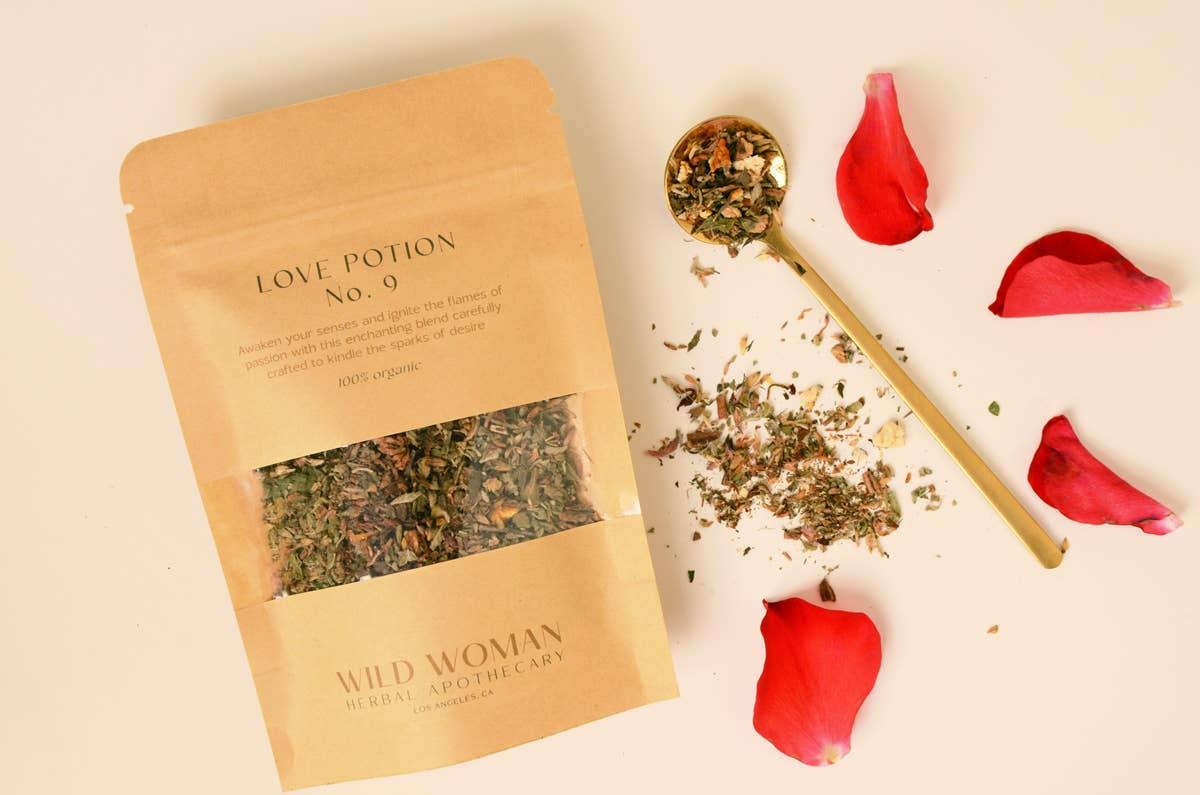
Love Potion Tea

a warming ritual for presence, connection, and the senses

Sale price$20.00

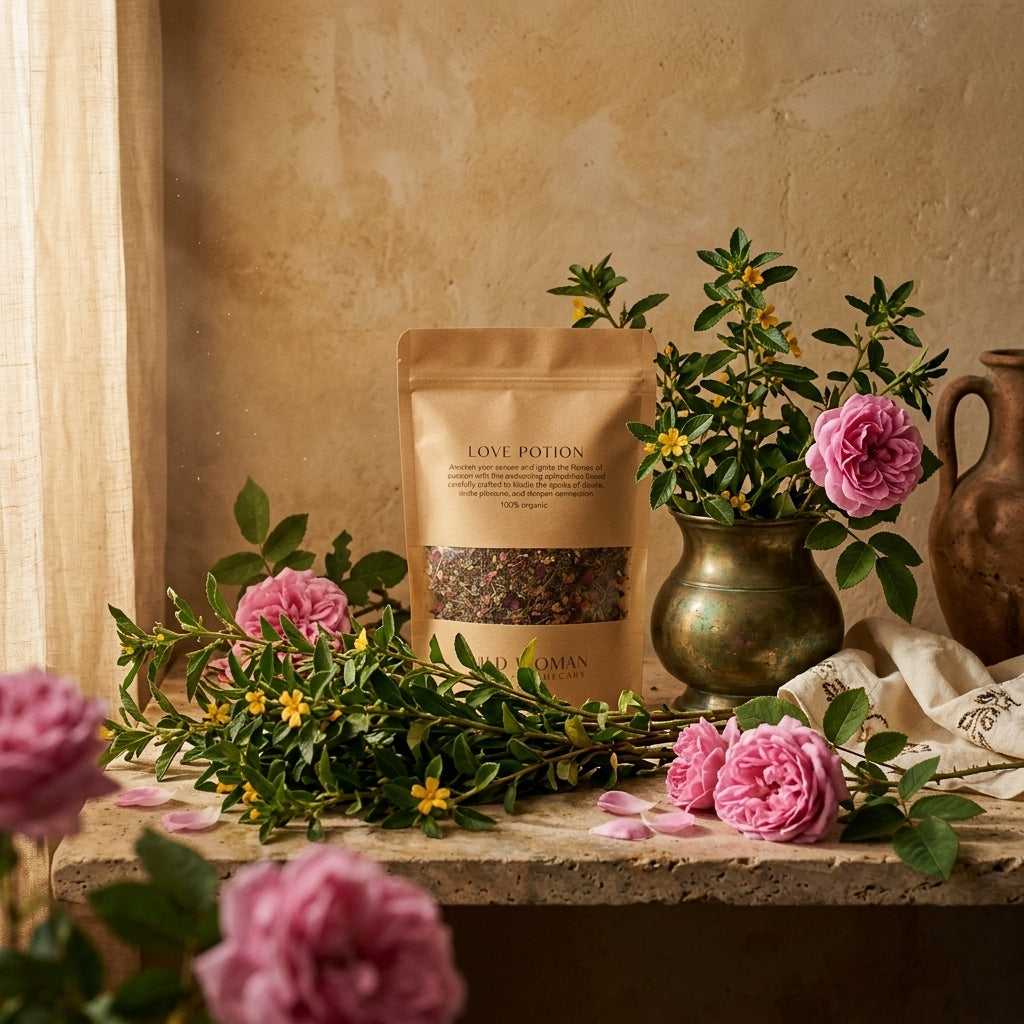
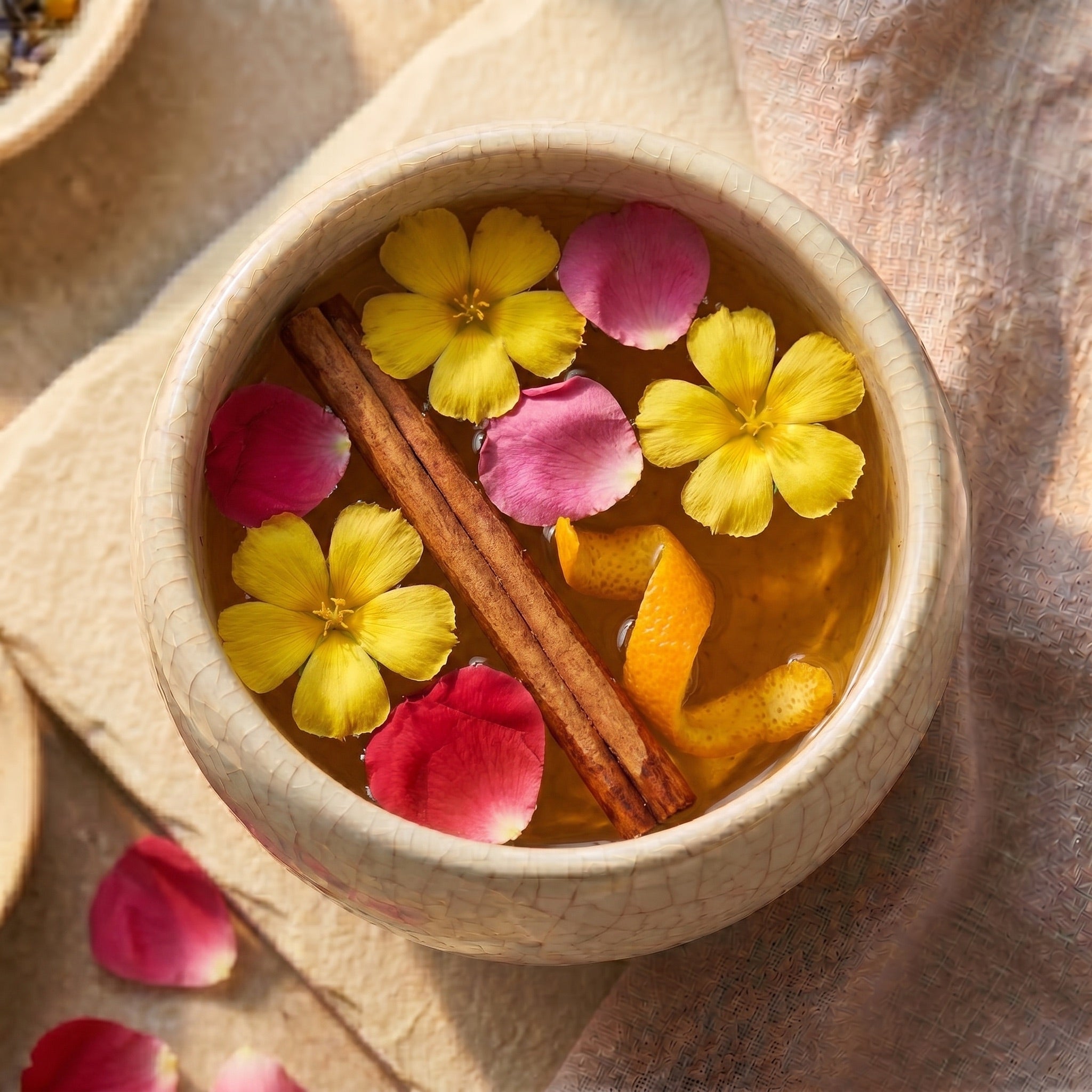
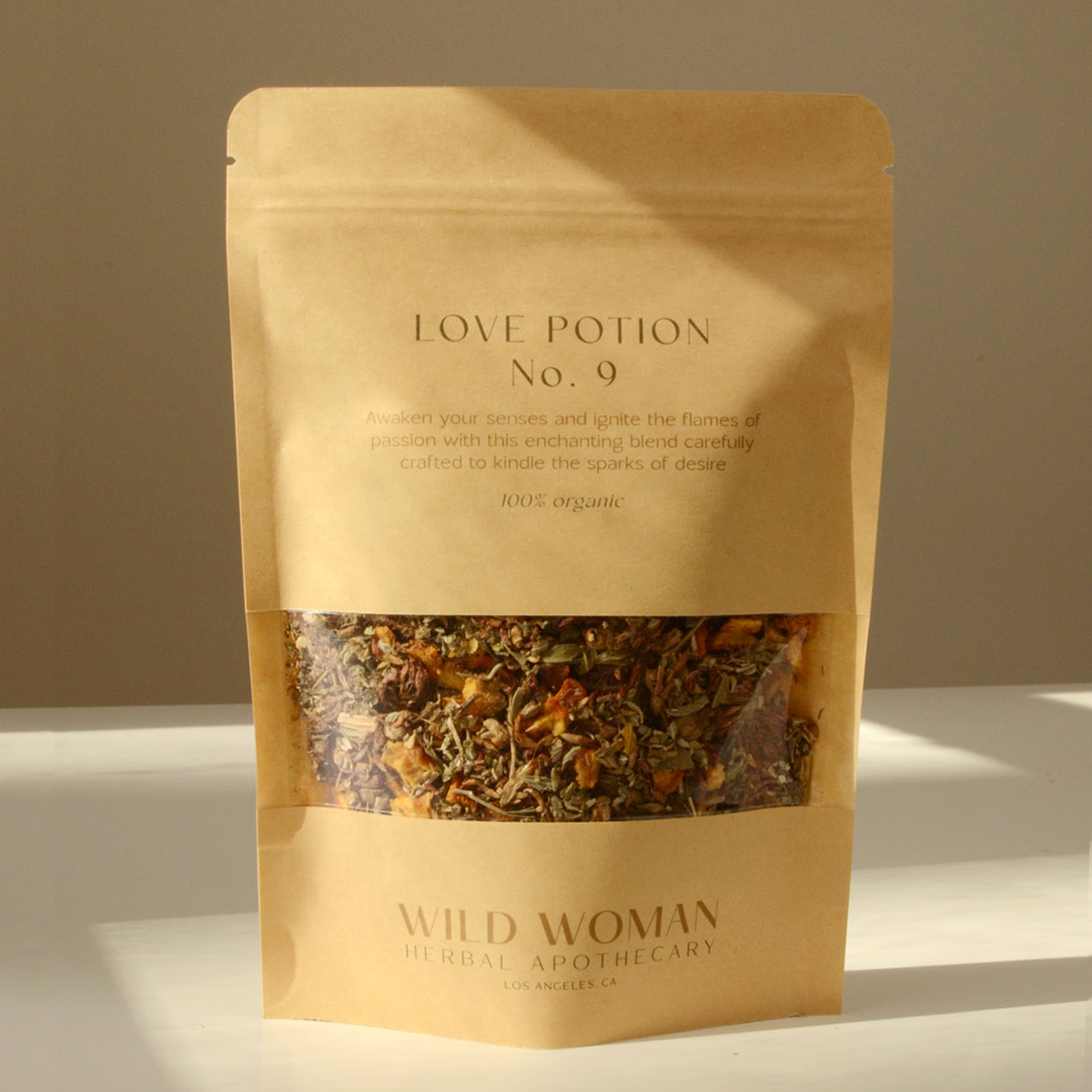
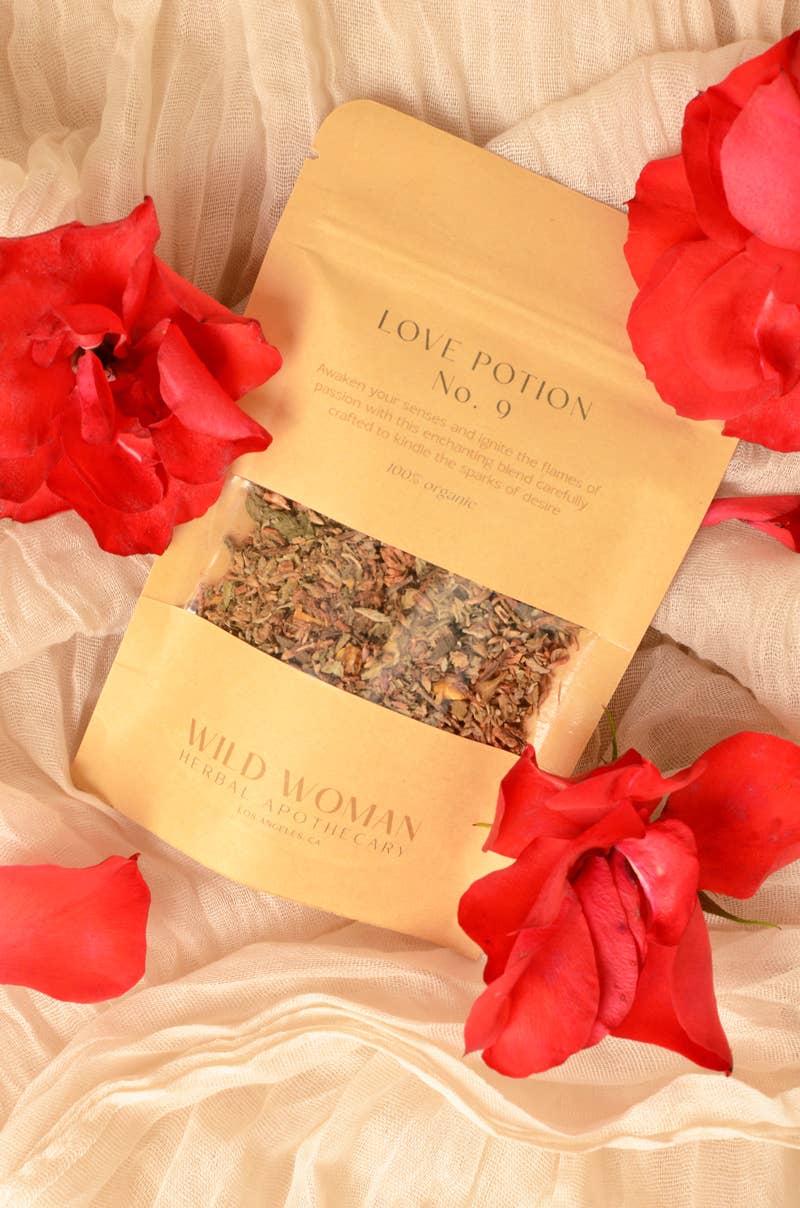
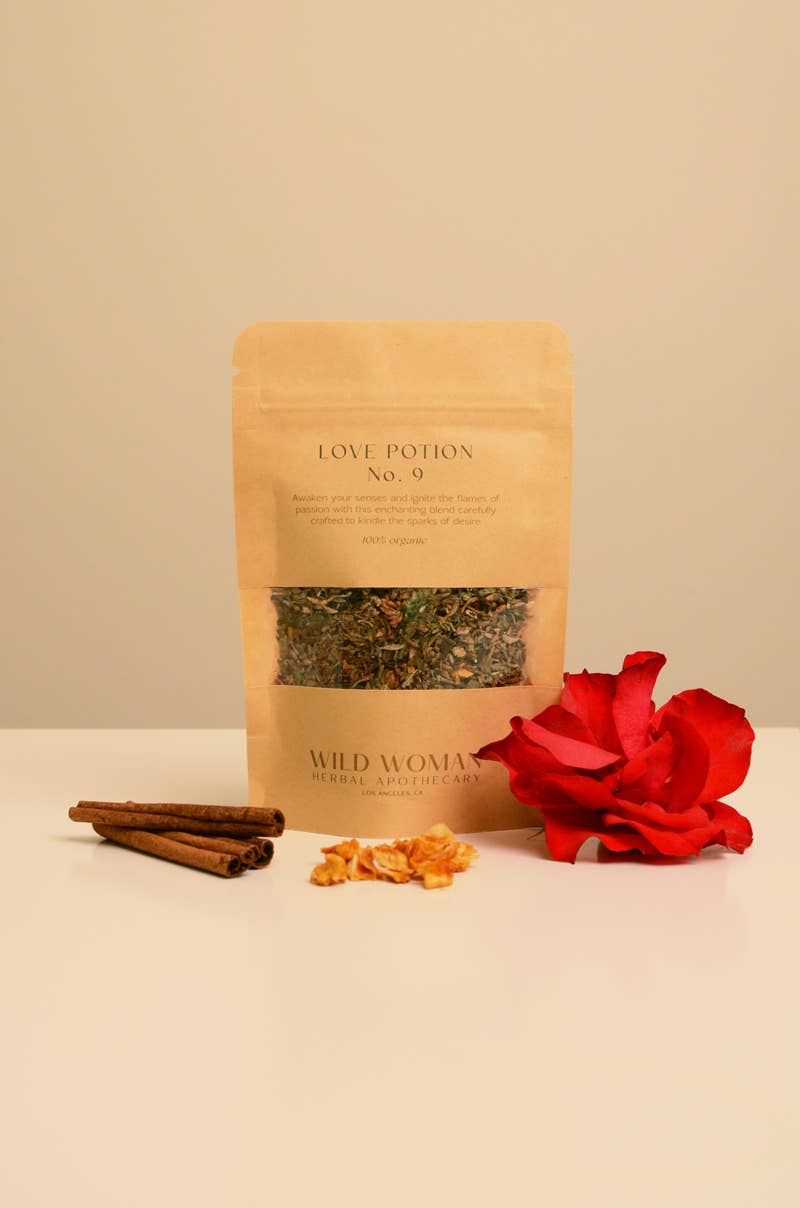
Love Potion is an aphrodisiac herbal tea made for slowing down. Damiana (Turnera diffusa), rose, and cinnamon meet orange peel in a warming, aromatic blend rooted in the long human tradition of gathering around something beautiful and letting the plants do the rest. Steep it slowly. It was made to be savored.

warm · spiced · earthy · citrus-bright · lingering

Love Potion Tea
Love Potion Tea Sale price$20.00

Love Potion

PRODUCT DETAILS

The Plants

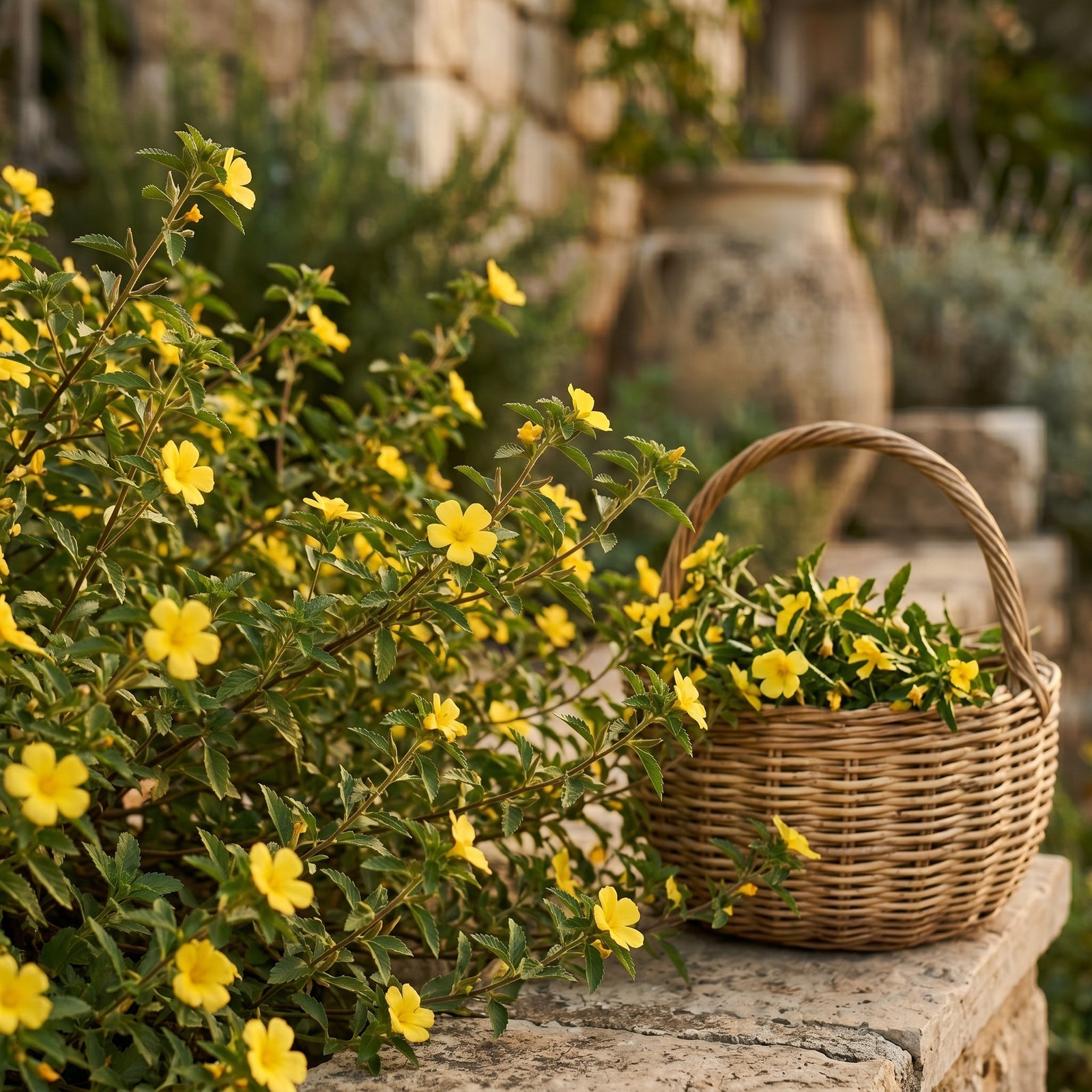
Damiana has been the opening note of this formula from the beginning. It grows in the highlands of Mexico and along the Baja coast, a small aromatic shrub with yellow flowers and leaves that smell faintly resinous, almost wild. The Aztec and Mayan peoples knew this plant. They brewed it, traded it, named it. What they understood about damiana was not complex: it brings you into your body, quiets the thinking mind, and opens the senses to what is actually here.

Rose softens the interior. Cinnamon warms it. The two work together the way warmth and tenderness always work: one would be too much without the other, but together they create the conditions where connection becomes possible. True Ceylon cinnamon (Cinnamomum verum) has been used in traditional medicine and ceremonial contexts across cultures for centuries, valued for the heat it brings to the body and the awareness it brings to the senses. Rose (Rosa spp.) has been the heart plant of the botanical canon since before herbalism was written down.

Orange peel brightens the cup with citrus lift. Licorice root draws everything into sweetness and balance. Red clover adds a soft, nourishing quality that rounds the blend and keeps it grounded. Together these six plants make something that tastes like an evening worth having.

Tasting Notes

Tasting Notes

warming · earthy · spiced · faintly sweet · bright citrus finish

Ritual Moment

Ritual Moment

Evening · before conversation · a slow night in

Pairs with

Pairs with

Candlelight · drawn bath · low music · unhurried conversation

Energetics

Energetics

Warming from within · invoking presence
Tasting Notes

Tasting Notes

warming · earthy · spiced · faintly sweet · bright citrus finish

Ritual Moment

Ritual Moment

Evening · before conversation · a slow night in

Pairs with

Pairs with

Candlelight · drawn bath · low music · unhurried conversation

Energetics

Energetics

Warming from within · invoking presence
Damiana

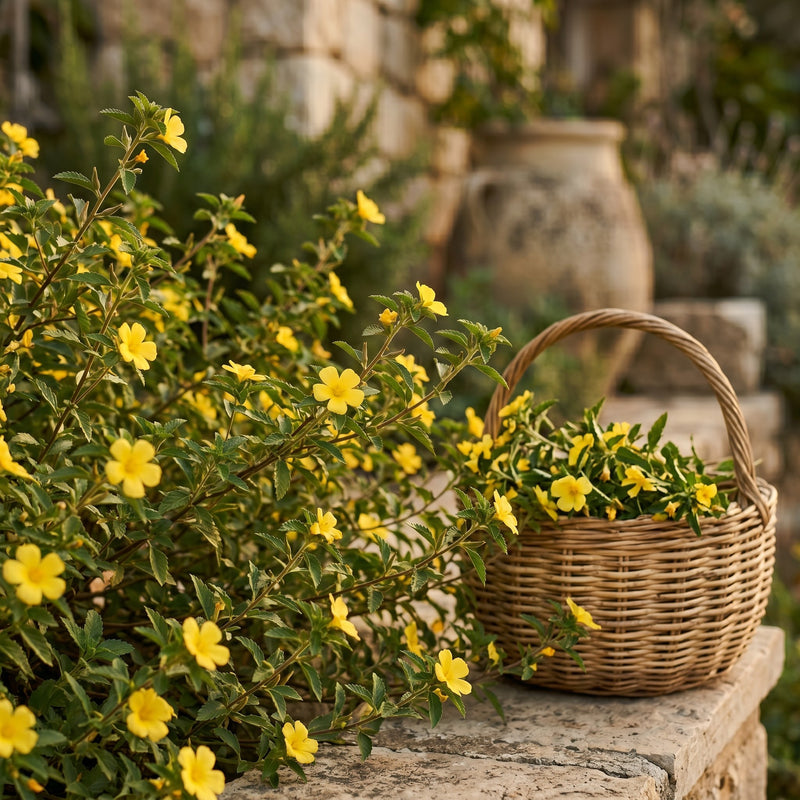
Damiana grows in the dry, sun-drenched highlands of the Mexican interior and along the Baja coast. It is a small, hardy shrub with aromatic serrated leaves and small bright yellow flowers that appear in the warmth of summer. I first encountered it through the Aztec and Mayan traditions, where it was used in ceremonial and social settings as a tea meant to slow the mind and invite the senses fully into the present moment. The Guaycura people of Baja are credited as among the first to use it this way, brewing it into infusions that were shared, not rushed. What strikes me most about damiana, working with it in the studio, is how it changes the quality of a room. Something eases. The thinking quiets. The body, which has been running all day, finally stops and notices where it is.

Red Clover

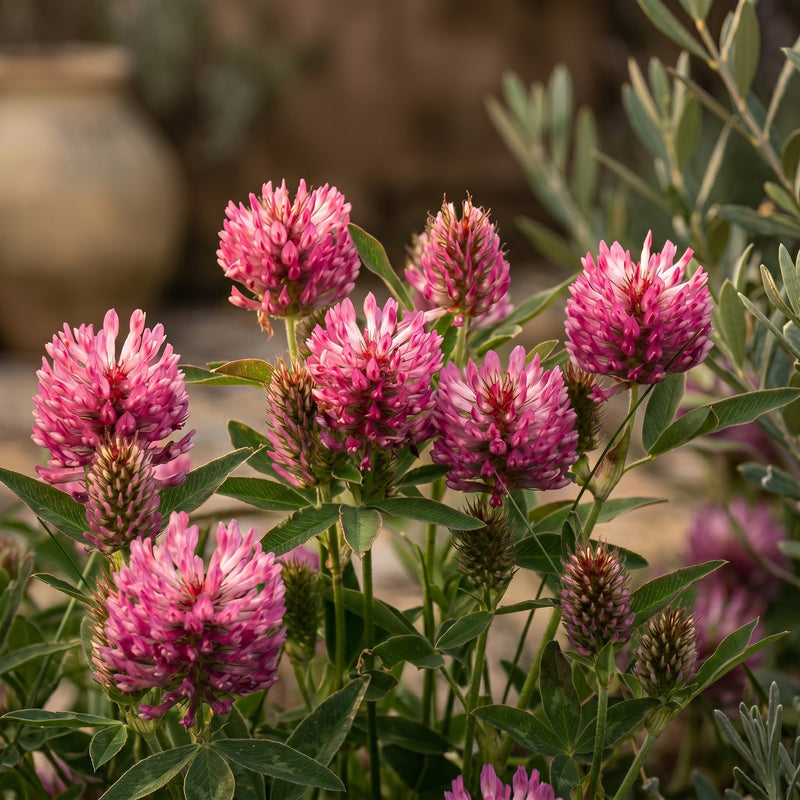
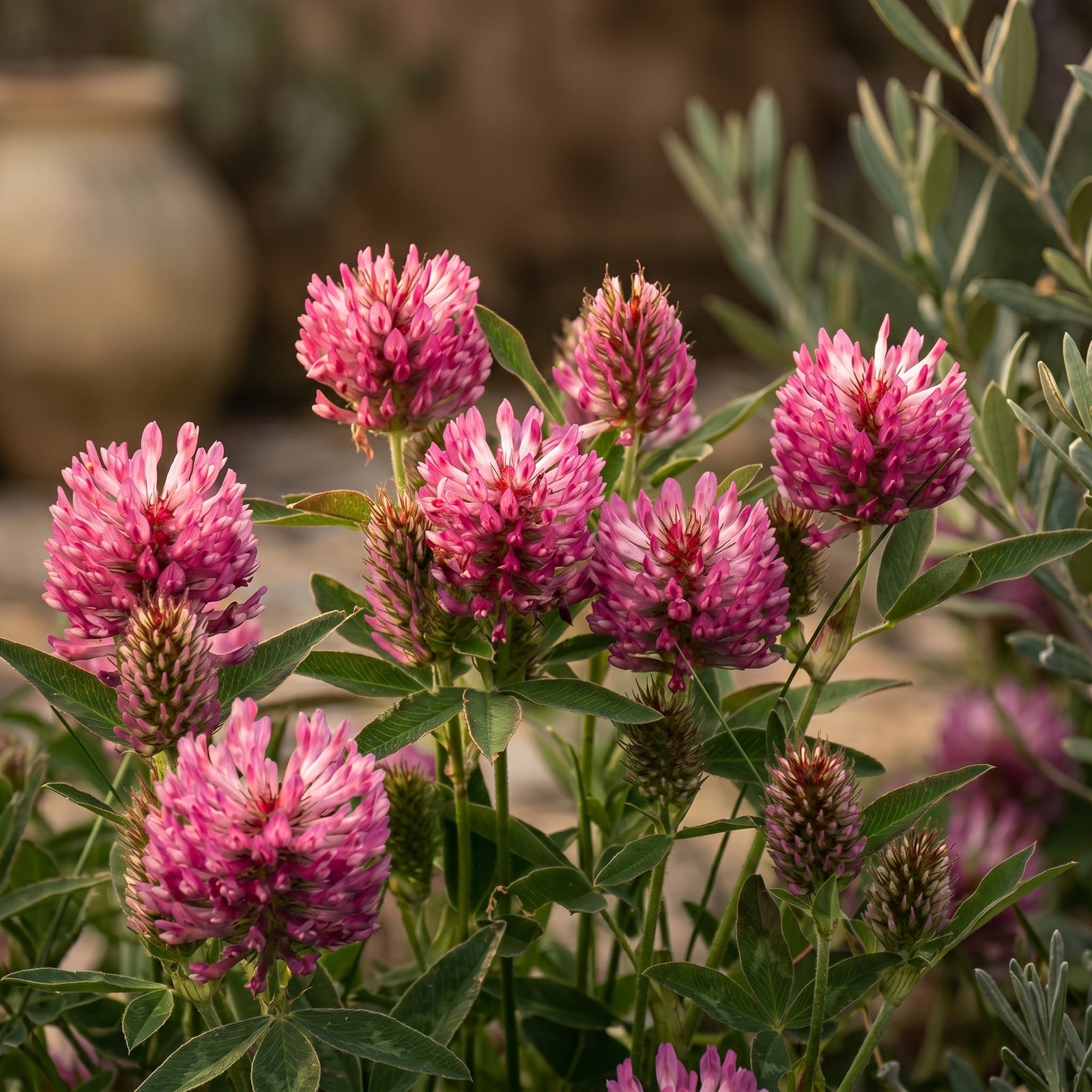
Red clover blooms in meadows across Europe and North America, its rosy pink flower heads rising above a sea of summer green. It is one of those plants that feels genuinely feminine to me: soft and open, unhurried, drawing bees and light to itself without effort. Traditionally, red clover flowers have been used as a gentle nourishing botanical, valued for their mild, warming quality and the sense of ease they impart to a formula. In this blend, red clover does something quiet and necessary. It softens the edges. Where damiana brings presence and cinnamon brings heat, red clover brings a kind of opening, the interior equivalent of a room filling slowly with warm light. I chose it because connection often begins not with intensity but with this quality of gentleness first.

Rose Petals

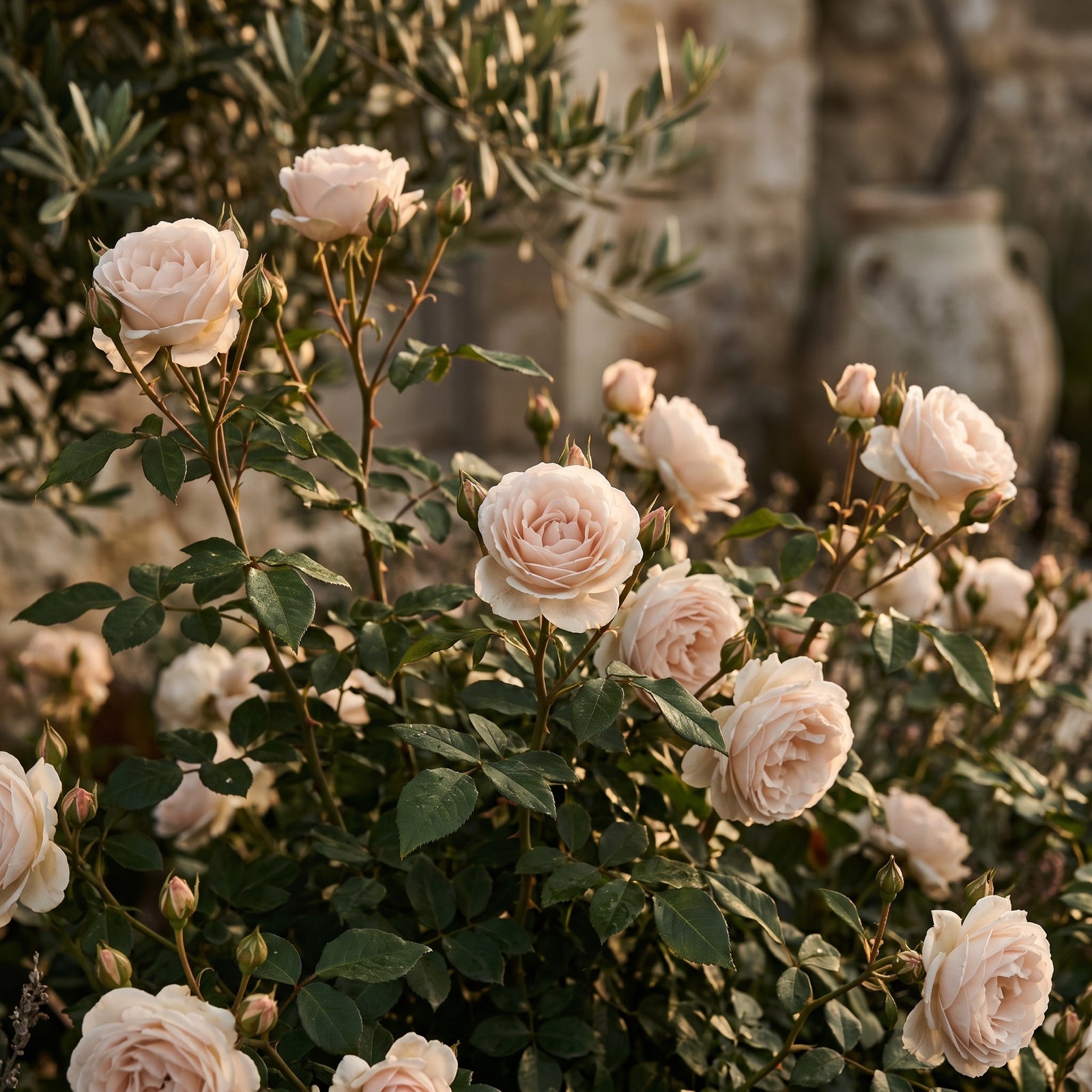
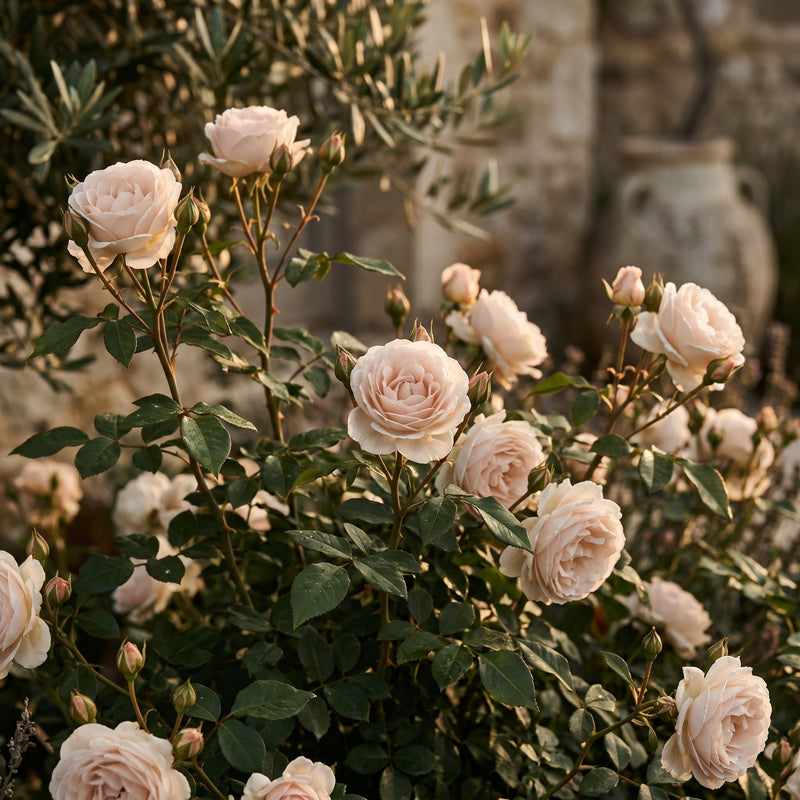
There is no plant more universally associated with love, and yet most people have never used rose as medicine. They have never tasted it in a tea or held its dried petals and understood what an herbalist knows about this flower. Rose is the heart plant of the botanical canon. Its tradition as an emotional softener, a heart-opener, a botanical that eases the interior landscape and makes connection feel less effortful, is documented across Ayurvedic, Persian, European, and Chinese herbal systems. In Love Potion, rose is present not as a symbol but as medicine: its actual quality in the body, which is softening, slightly cooling, deeply aromatic. When you smell the dried petals in the cup before the water goes in, something opens. That is what rose does. It prepares the ground.

Cinnamon

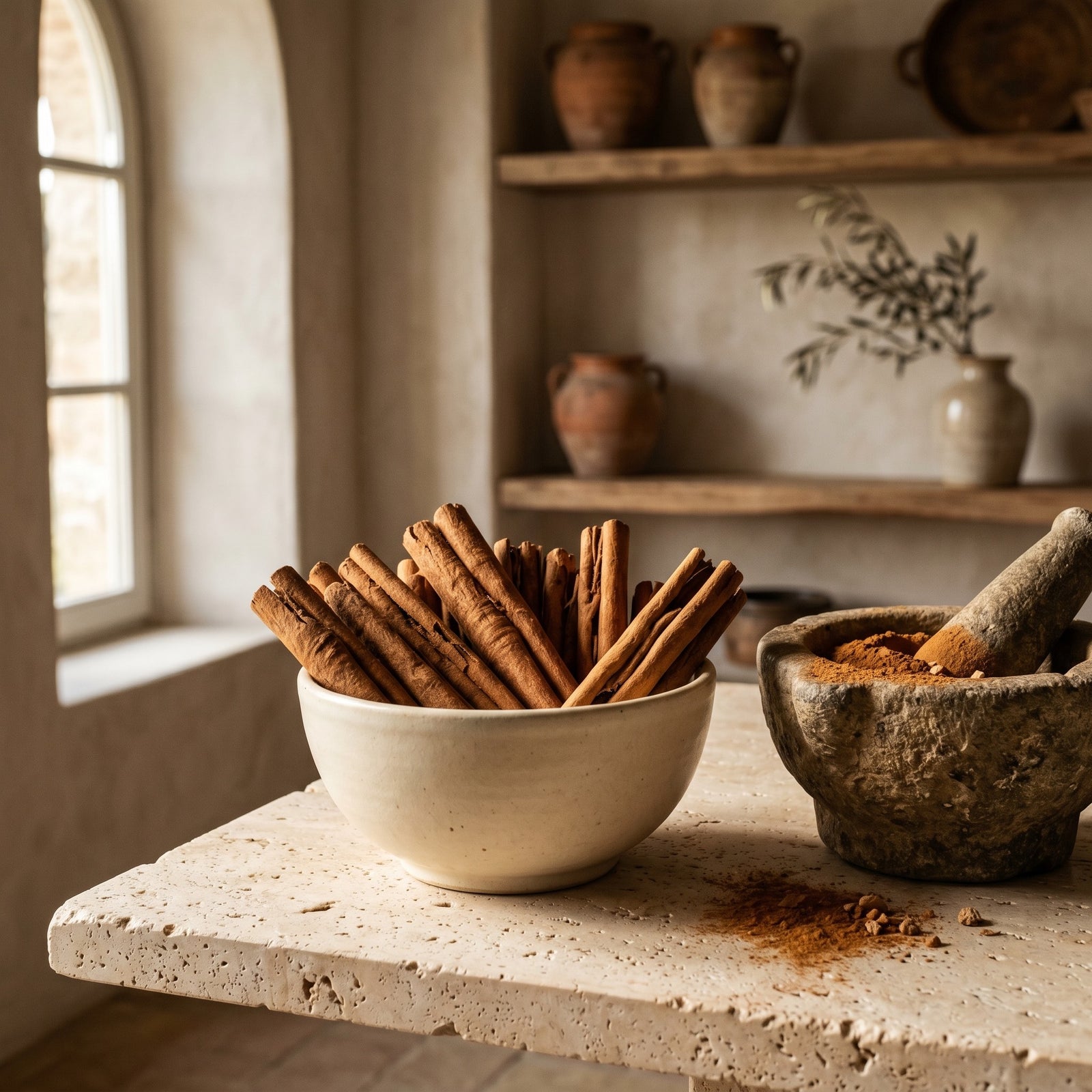
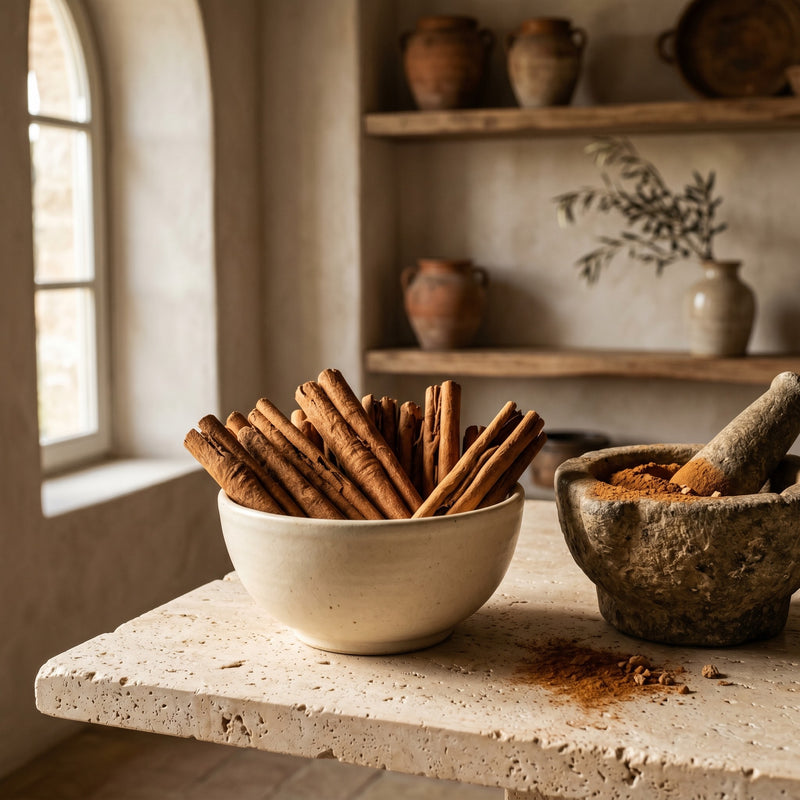
This is true Ceylon cinnamon, Cinnamomum verum, the variety called "true" cinnamon because it is. Thinner-barked and more nuanced than the cassia cinnamon most people know from grocery stores, it has been traded and prized across cultures for thousands of years, appearing in Egyptian, Ayurvedic, and Chinese herbal traditions as a warming, activating spice. What cinnamon does in the body is bring warmth outward: to the extremities, to the surface, to the skin. It awakens. In this formula, it is the element that makes the tea feel alive on the tongue, that warms the chest on the way down and stays there. Warmth is not incidental to connection. The body opens when it is warm.

Damiana

Damiana grows in the dry, sun-drenched highlands of the Mexican interior and along the Baja coast. It is a small, hardy shrub with aromatic serrated leaves and small bright yellow flowers that appear in the warmth of summer. I first encountered it through the Aztec and Mayan traditions, where it was used in ceremonial and social settings as a tea meant to slow the mind and invite the senses fully into the present moment. The Guaycura people of Baja are credited as among the first to use it this way, brewing it into infusions that were shared, not rushed. What strikes me most about damiana, working with it in the studio, is how it changes the quality of a room. Something eases. The thinking quiets. The body, which has been running all day, finally stops and notices where it is.

Red Clover

Red clover blooms in meadows across Europe and North America, its rosy pink flower heads rising above a sea of summer green. It is one of those plants that feels genuinely feminine to me: soft and open, unhurried, drawing bees and light to itself without effort. Traditionally, red clover flowers have been used as a gentle nourishing botanical, valued for their mild, warming quality and the sense of ease they impart to a formula. In this blend, red clover does something quiet and necessary. It softens the edges. Where damiana brings presence and cinnamon brings heat, red clover brings a kind of opening, the interior equivalent of a room filling slowly with warm light. I chose it because connection often begins not with intensity but with this quality of gentleness first.

Rose Petals

There is no plant more universally associated with love, and yet most people have never used rose as medicine. They have never tasted it in a tea or held its dried petals and understood what an herbalist knows about this flower. Rose is the heart plant of the botanical canon. Its tradition as an emotional softener, a heart-opener, a botanical that eases the interior landscape and makes connection feel less effortful, is documented across Ayurvedic, Persian, European, and Chinese herbal systems. In Love Potion, rose is present not as a symbol but as medicine: its actual quality in the body, which is softening, slightly cooling, deeply aromatic. When you smell the dried petals in the cup before the water goes in, something opens. That is what rose does. It prepares the ground.

Cinnamon

This is true Ceylon cinnamon, Cinnamomum verum, the variety called "true" cinnamon because it is. Thinner-barked and more nuanced than the cassia cinnamon most people know from grocery stores, it has been traded and prized across cultures for thousands of years, appearing in Egyptian, Ayurvedic, and Chinese herbal traditions as a warming, activating spice. What cinnamon does in the body is bring warmth outward: to the extremities, to the surface, to the skin. It awakens. In this formula, it is the element that makes the tea feel alive on the tongue, that warms the chest on the way down and stays there. Warmth is not incidental to connection. The body opens when it is warm.

Rooted in Lineage. Made with Reverence.

Every formula in this apothecary is made in small batches in Los Angeles, using herbs that are organically grown or seasonally wildcrafted whenever possible. We work with plants at the peak of their potency — harvested in the right season, prepared slowly, and handled with the same reverence we hope you bring to using them.

This is medicine in the oldest sense of the word: plant wisdom, carefully tended, passed forward with care.

Jasmine's Note

My grandmother didn't call it herbalism. She just knew things — which plants to reach for, which roots to dry, what the earth offered when the body asked. She learned it from her father, who kept a garden in Biloxi and understood plants the way some people understand people. That knowledge passed to her, and quietly, to me.

I didn't fully understand what I'd inherited until my own body started asking questions that medicine couldn't answer. Hormonal chaos, long seasons of depression, the particular exhaustion of feeling disconnected from yourself. I remembered the whisperings. I turned back toward the plants. Everything in this apothecary came from that turning — things I made for myself first, and then for the women in my life who needed the same. I offer them to you the way my grandmother offered what she knew: as a hand extended, as something real.

-Jasmine

Frequently Asked Questions

A Note on Plant Medicine

Plants are powerful — and like any potent thing, they deserve to be used with care and knowledge. These formulas are crafted with intention, but they are not a substitute for medical guidance. Before beginning a new herbal practice, we encourage you to speak with your healthcare provider, especially if you are pregnant, nursing, trying to conceive, managing a health condition, or taking prescription medication. Wild Woman products are not intended to diagnose, treat, cure, or prevent any disease.