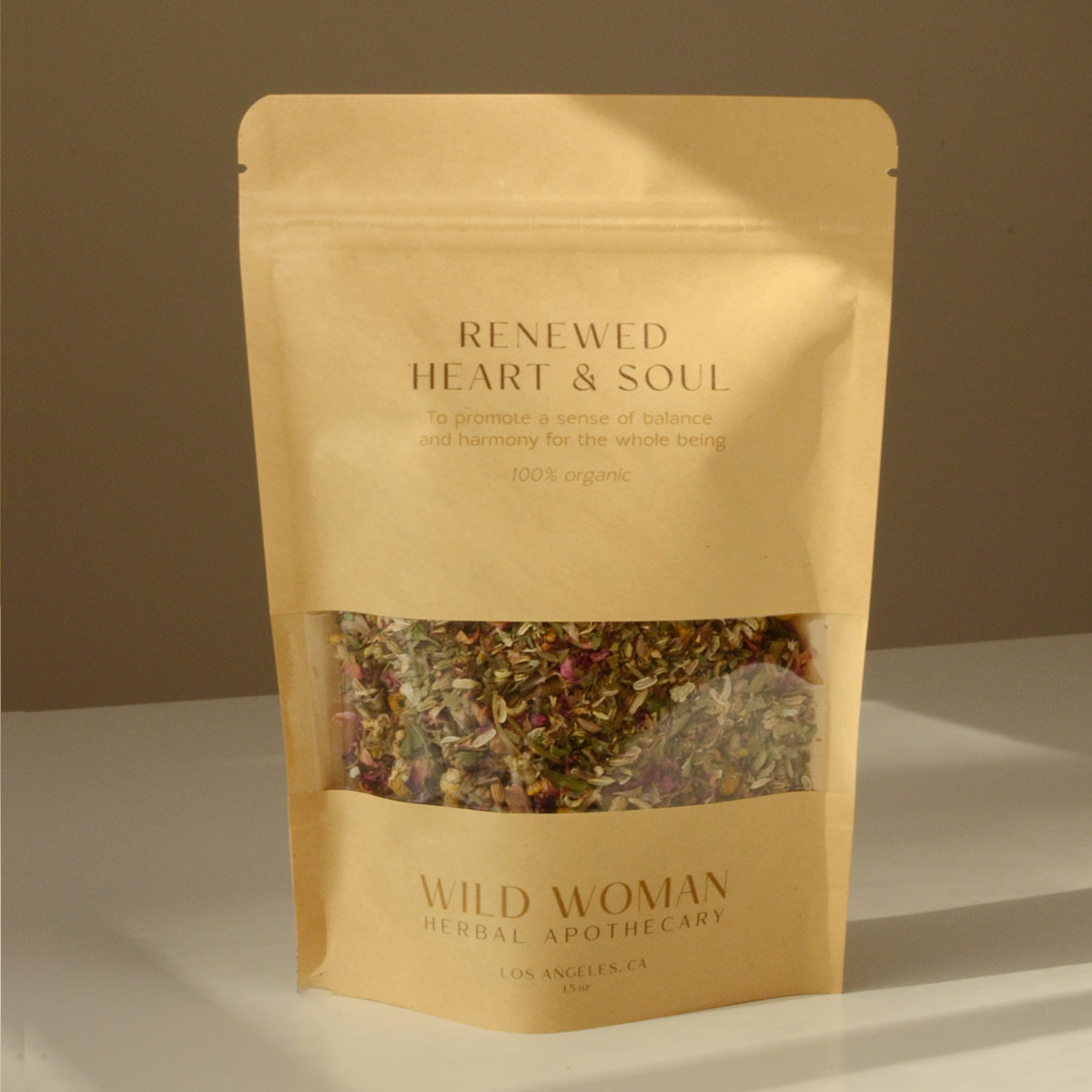
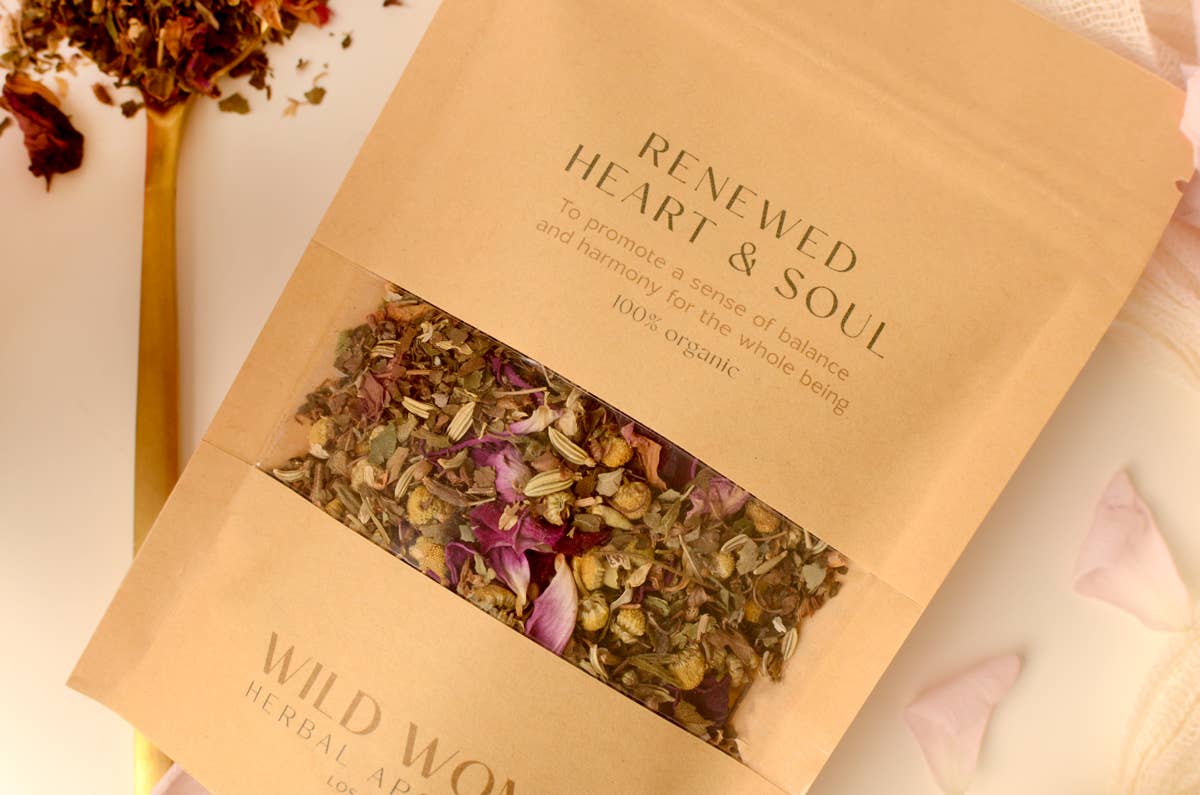
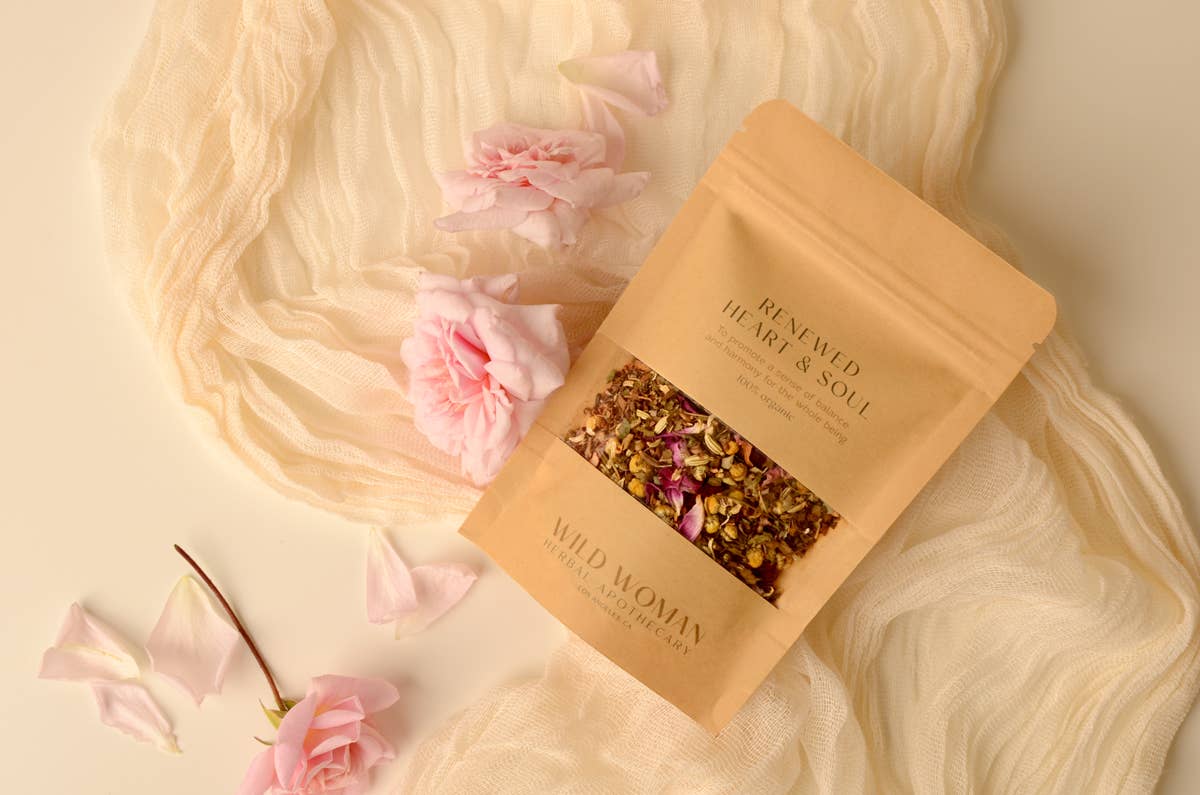
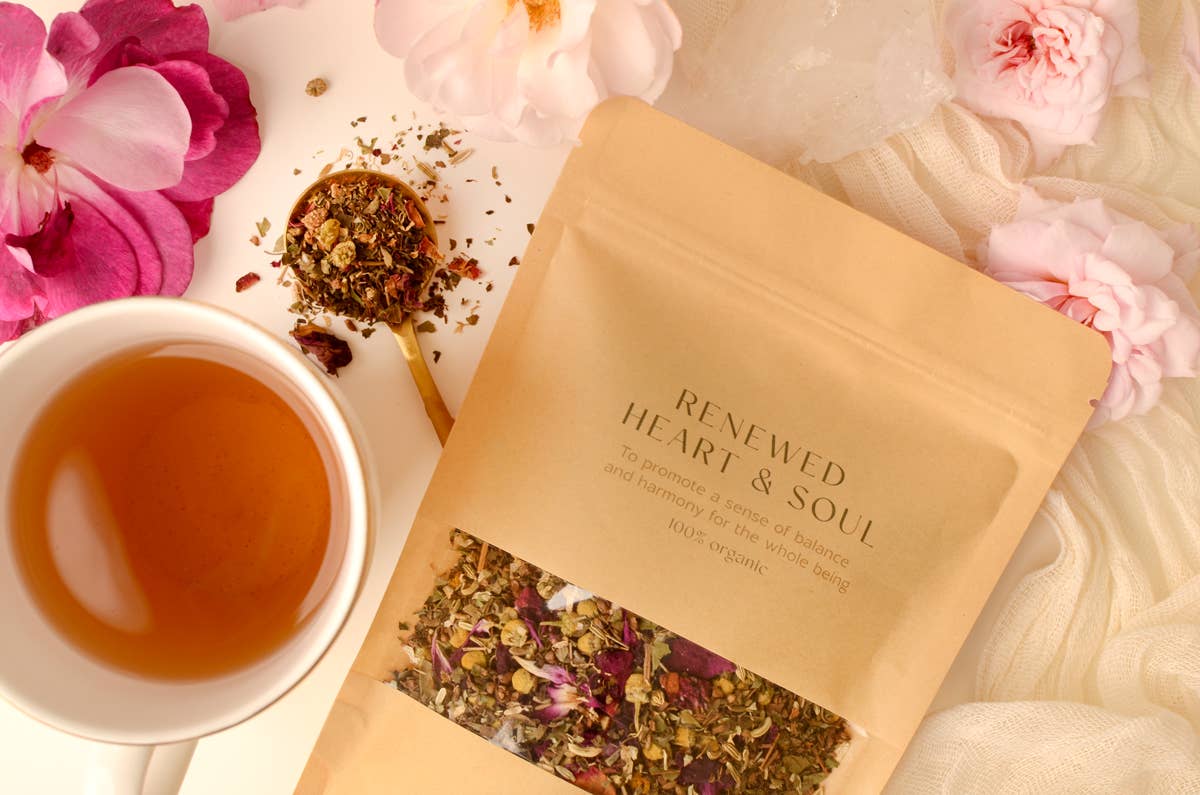


Renewed Heart & Soul Tea
Calming loose leaf tea for emotional balance
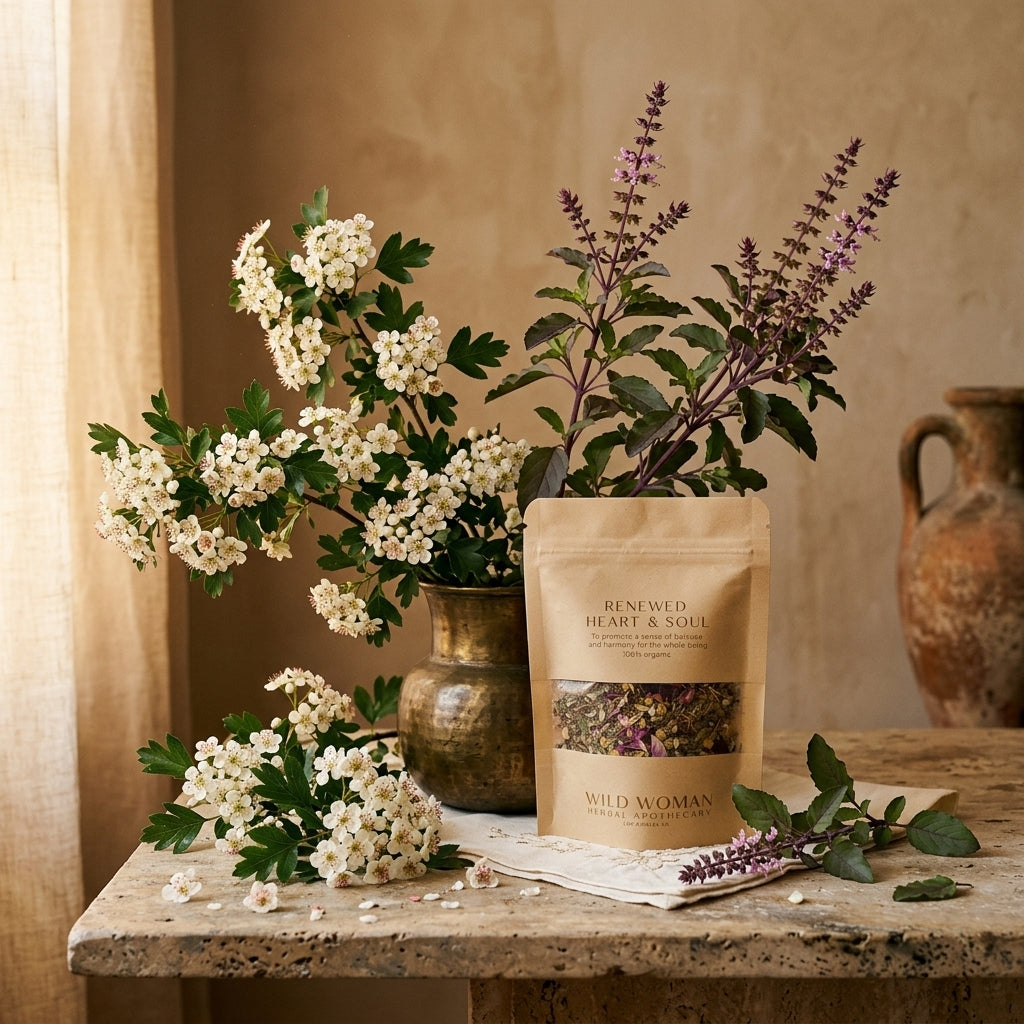
Some seasons ask the body to carry more than it can quietly hold, and this calming tea for emotional balance was made for exactly those times. Tulsi, rose, chamomile, hawthorn, and fennel — herbs gathered from traditions across centuries of women who knew what it meant to need steadiness from the inside out. This is the cup you come back to throughout the day, a practice of returning to yourself.
soft floral · lightly sweet · warming · heartward · slow

Choose options


Renewed Heart & Soul
PRODUCT DETAILS
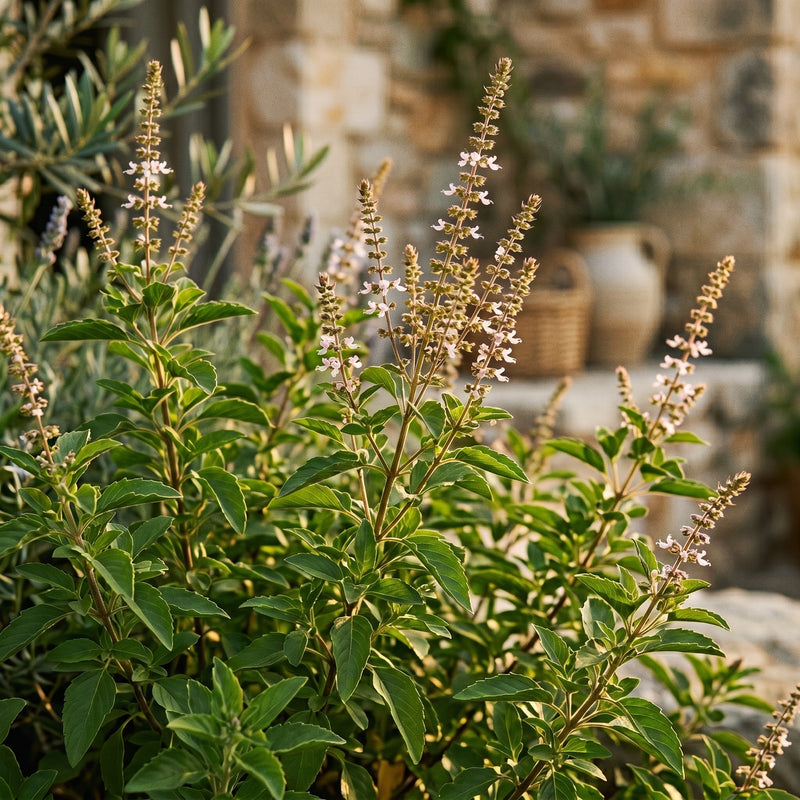
Tulsi has been grown in the doorways of Indian homes for thousands of years, not as decoration but as daily medicine. The aerial parts carry a warmth that is both physically and emotionally perceptible — a slight peppery sweetness on the tongue, and something quieter that settles in the chest. In Ayurvedic tradition, tulsi is considered a sattvic herb, one that supports clarity and a sense of being rooted inside oneself. I reach for it when I need the nervous system not just calmed, but centered.
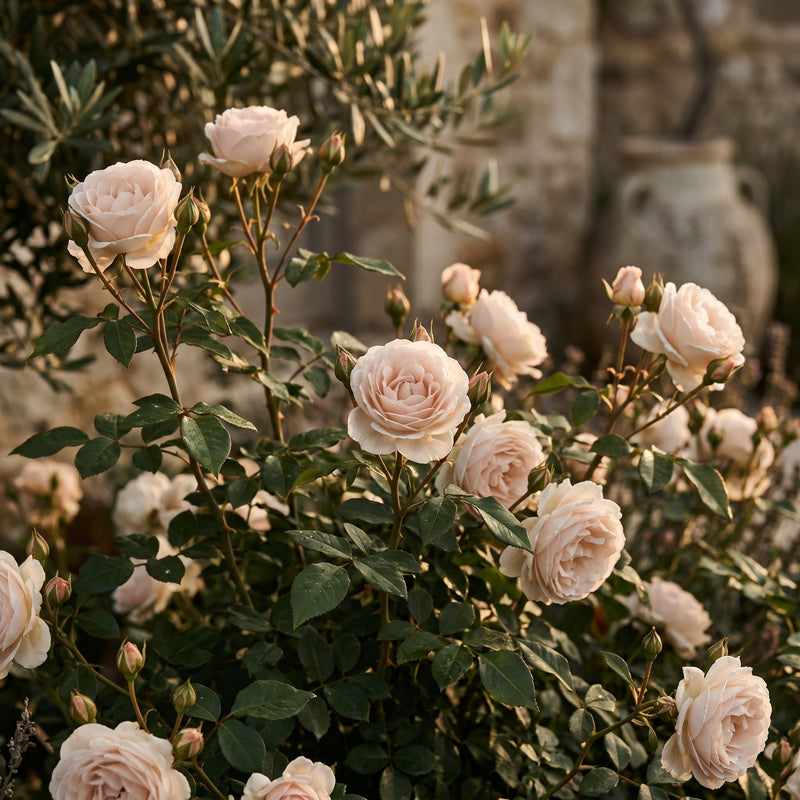
Rose is the heart's oldest botanical companion. The flowers arrive in this blend not as fragrance or sweetness alone, but as medicine for the emotional body — for the moments when life has been abrasive, when the inner landscape needs something that remembers tenderness. The tradition of rose as heart medicine spans Persian, Ayurvedic, and Western herbal lineages; it has been offered to women across centuries with a knowledge that the emotional heart and the physical heart are not separate systems. In a blend designed to be returned to all day, rose is what makes each cup feel like a small act of care.
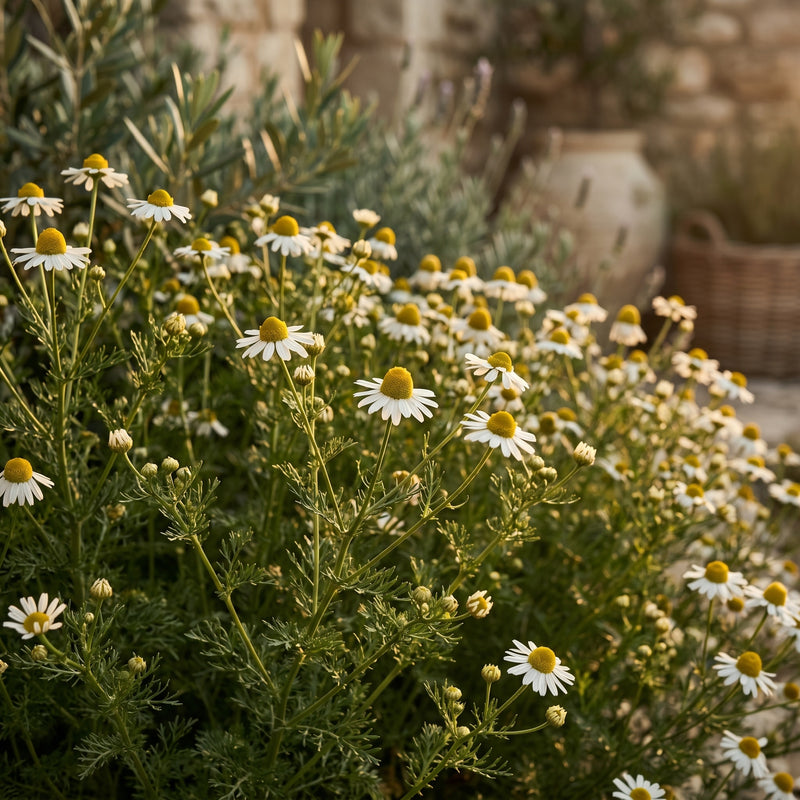
Chamomile (Matricaria chamomilla) is the most familiar plant in this formula and perhaps the most underestimated. Most people know chamomile as a bedtime herb, but chamomile for emotional ease is a different conversation entirely. There is something in its gentle volatile oils that speaks to the body's holding patterns — the tension we store without naming it, the accumulated weight of a day that has asked a lot. Chamomile in this blend is not sedating. It is softening.
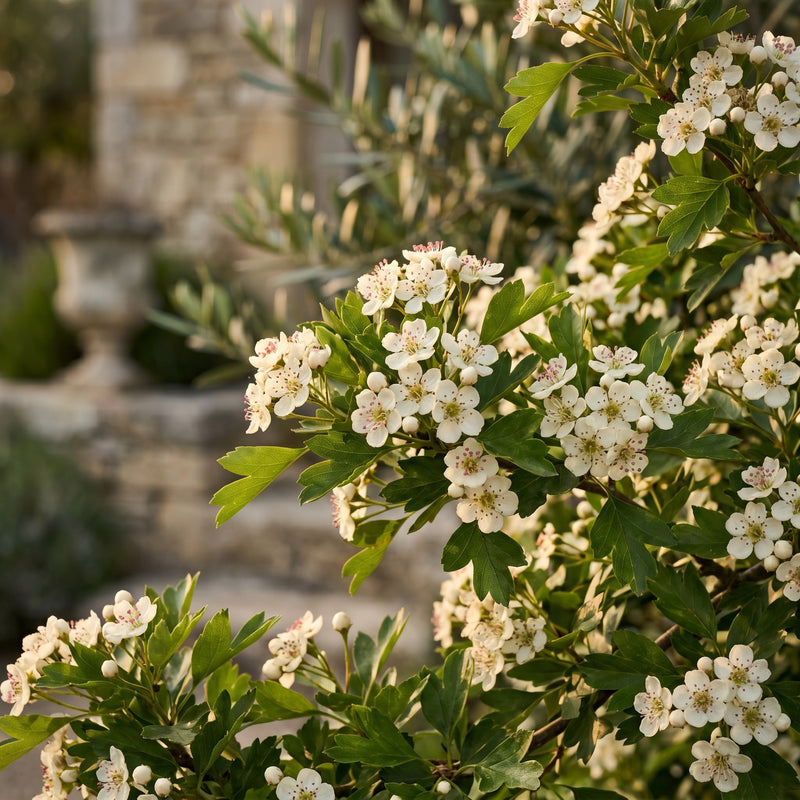
Hawthorn (Crataegus spp.) brings its quiet steadiness to the heart-centered herbs that surround it. The aerial parts — leaves, flowers, and the young growth the plant puts forward in spring — have been associated in Celtic and European herbal traditions with the threshold, with times of change and transition. This is not a grief herb in this formula. It is a steadiness herb, the botanical equivalent of a hand placed on the shoulder during an emotionally heavy season. It supports the kind of heart that is still open and still working, just in need of a little more ground beneath it.
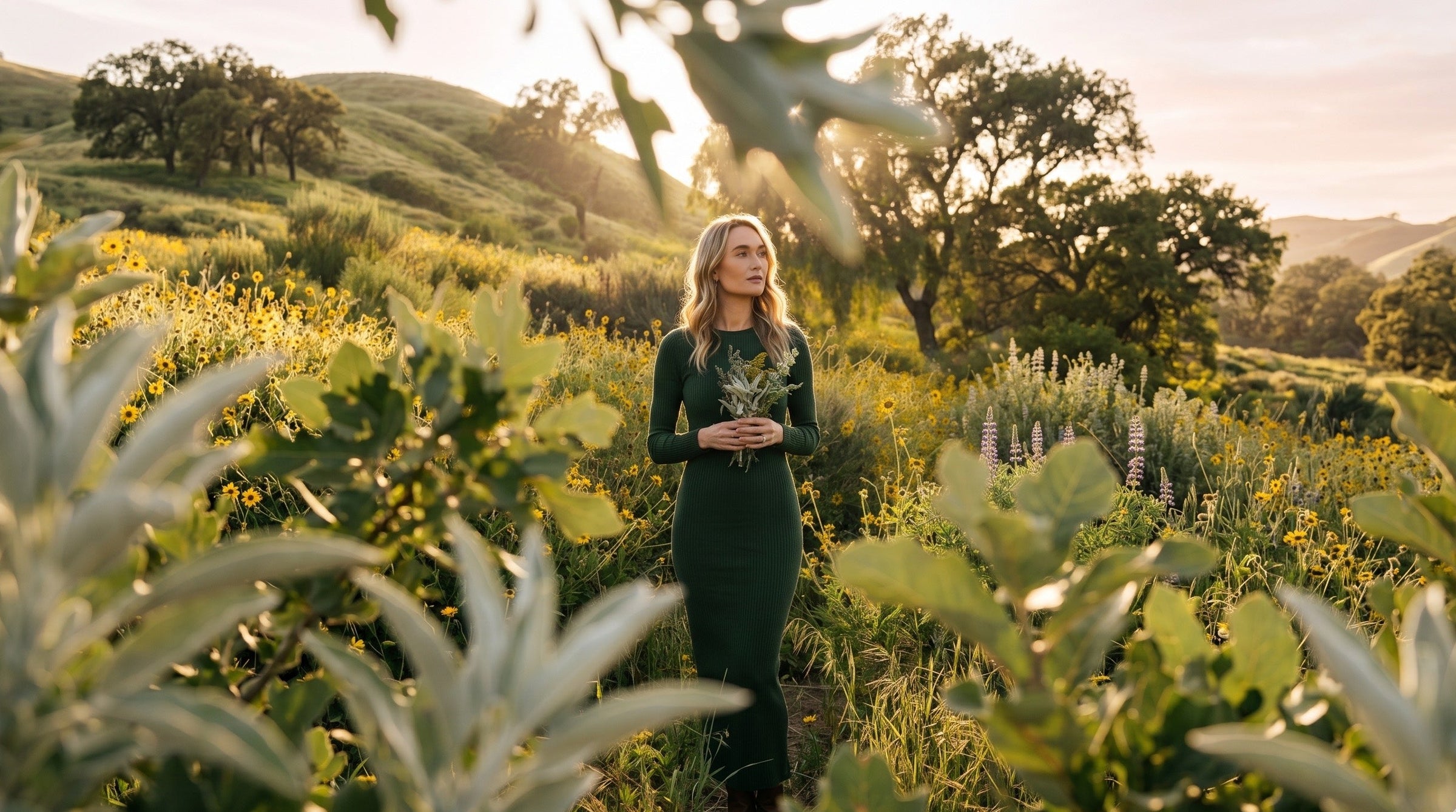
Renewed Heart & Soul is blended in small batches in Los Angeles by Jasmine Simone, an herbalist who has spent years formulating with the plants women have historically turned to when life feels emotionally full. Every herb in this blend is USDA certified organic or responsibly wildcrafted, sourced from growers and harvesters who share Wild Woman's commitment to reciprocity with the earth. There are no fillers, no artificial flavors, and no shortcuts — only the plants, prepared with the care this work deserves.
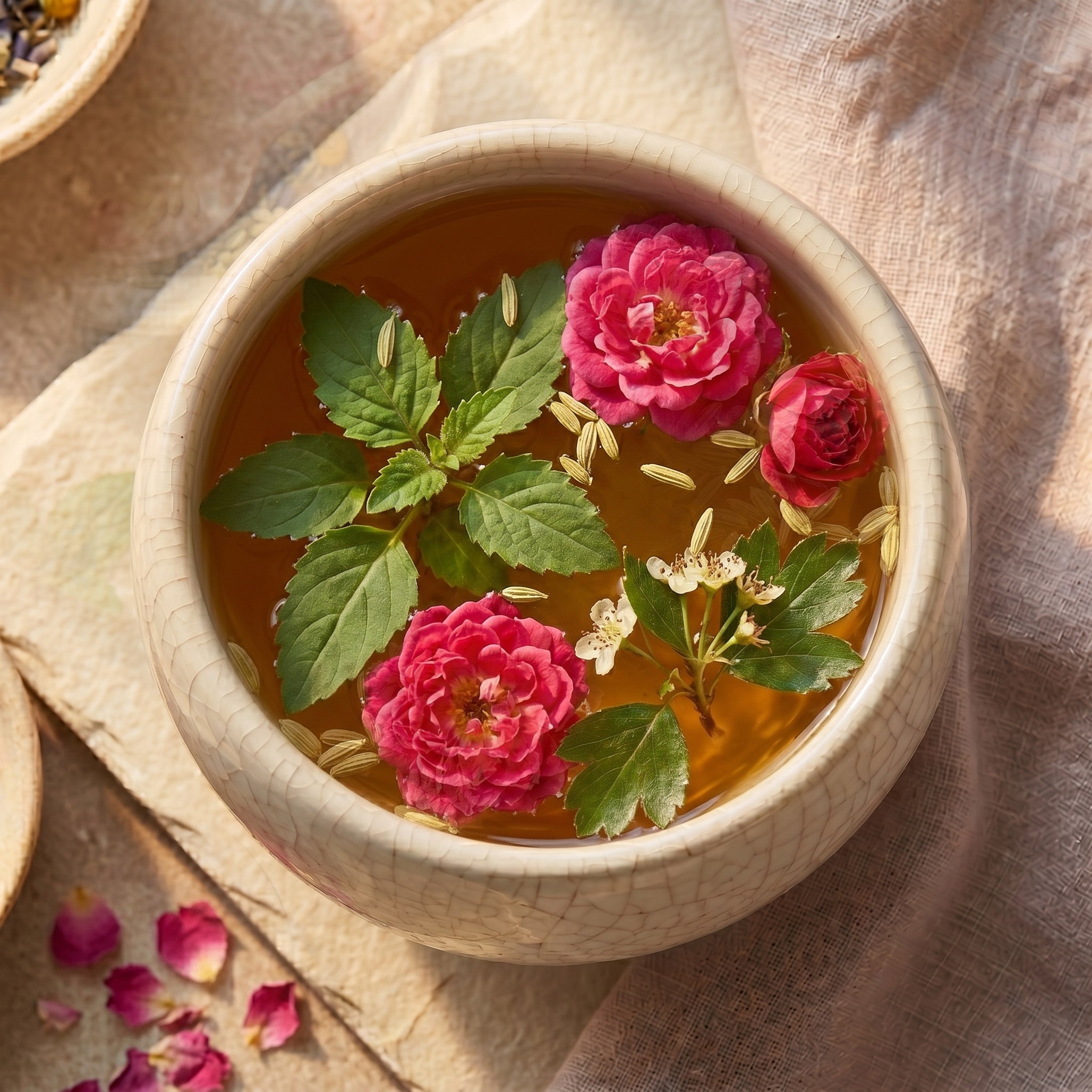
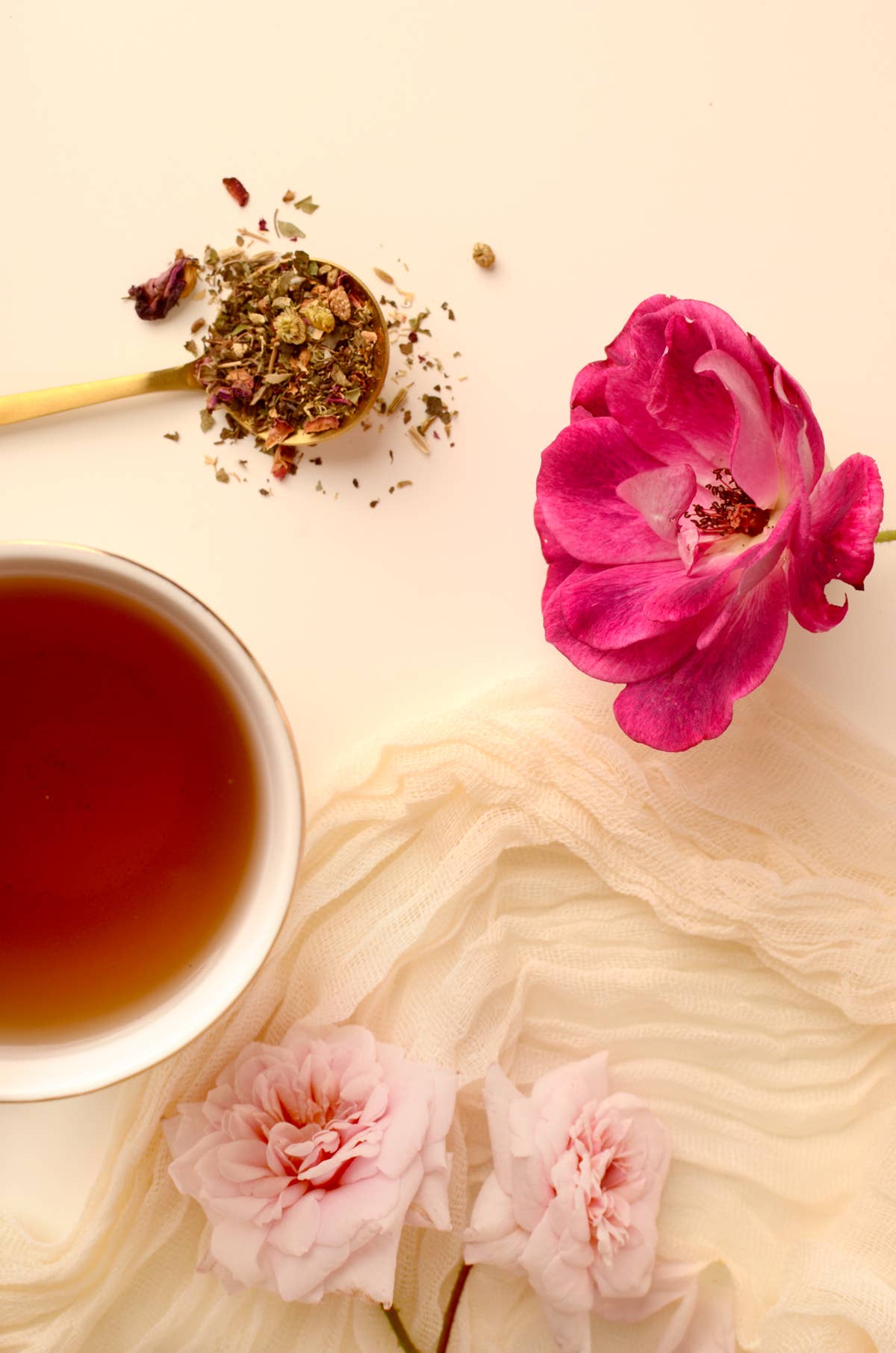
Measure one generous teaspoon of loose leaf tea per eight ounces of water just off the boil. Steep covered for five to seven minutes — covering the cup holds the aromatic oils that carry so much of the plant's character. This is a blend made for returning to throughout the day, not a single-cup ritual. A morning cup to begin with intention, another mid-afternoon when the emotional weight of the day has accumulated, a final cup in the quiet before evening begins.
Tulsi Holy Basil (Ocimum tenuiflorum) aerial parts · Rose (Rosa spp.) flowers · Chamomile Flower (Matricaria chamomilla) · Fennel Seed (Foeniculum vulgare) · Hawthorn (Crataegus spp.) aerial parts
All herbs are USDA certified organic or responsibly wildcrafted. Full plant profiles below.
The Plants
Tulsi has been grown in the doorways of Indian homes for thousands of years, not as decoration but as daily medicine. The aerial parts carry a warmth that is both physically and emotionally perceptible — a slight peppery sweetness on the tongue, and something quieter that settles in the chest. In Ayurvedic tradition, tulsi is considered a sattvic herb, one that supports clarity and a sense of being rooted inside oneself. I reach for it when I need the nervous system not just calmed, but centered.
Rose is the heart's oldest botanical companion. The flowers arrive in this blend not as fragrance or sweetness alone, but as medicine for the emotional body — for the moments when life has been abrasive, when the inner landscape needs something that remembers tenderness. The tradition of rose as heart medicine spans Persian, Ayurvedic, and Western herbal lineages; it has been offered to women across centuries with a knowledge that the emotional heart and the physical heart are not separate systems. In a blend designed to be returned to all day, rose is what makes each cup feel like a small act of care.
Chamomile (Matricaria chamomilla) is the most familiar plant in this formula and perhaps the most underestimated. Most people know chamomile as a bedtime herb, but chamomile for emotional ease is a different conversation entirely. There is something in its gentle volatile oils that speaks to the body's holding patterns — the tension we store without naming it, the accumulated weight of a day that has asked a lot. Chamomile in this blend is not sedating. It is softening.
Hawthorn (Crataegus spp.) brings its quiet steadiness to the heart-centered herbs that surround it. The aerial parts — leaves, flowers, and the young growth the plant puts forward in spring — have been associated in Celtic and European herbal traditions with the threshold, with times of change and transition. This is not a grief herb in this formula. It is a steadiness herb, the botanical equivalent of a hand placed on the shoulder during an emotionally heavy season. It supports the kind of heart that is still open and still working, just in need of a little more ground beneath it.
The Lineage
Renewed Heart & Soul is blended in small batches in Los Angeles by Jasmine Simone, an herbalist who has spent years formulating with the plants women have historically turned to when life feels emotionally full. Every herb in this blend is USDA certified organic or responsibly wildcrafted, sourced from growers and harvesters who share Wild Woman's commitment to reciprocity with the earth. There are no fillers, no artificial flavors, and no shortcuts — only the plants, prepared with the care this work deserves.
The Practice
Measure one generous teaspoon of loose leaf tea per eight ounces of water just off the boil. Steep covered for five to seven minutes — covering the cup holds the aromatic oils that carry so much of the plant's character. This is a blend made for returning to throughout the day, not a single-cup ritual. A morning cup to begin with intention, another mid-afternoon when the emotional weight of the day has accumulated, a final cup in the quiet before evening begins.
The Formula
Tulsi Holy Basil (Ocimum tenuiflorum) aerial parts · Rose (Rosa spp.) flowers · Chamomile Flower (Matricaria chamomilla) · Fennel Seed (Foeniculum vulgare) · Hawthorn (Crataegus spp.) aerial parts
All herbs are USDA certified organic or responsibly wildcrafted. Full plant profiles below.
Tasting Notes
Soft floral · lightly sweet · apple warmth · fennel finish
Ritual Moment
Morning · mid-afternoon · whenever the day accumulates
Season of Life
Emotionally full seasons · times of transition
Energetics
Heart-opening · softening
Tasting Notes
Soft floral · lightly sweet · apple warmth · fennel finish
Ritual Moment
Morning · mid-afternoon · whenever the day accumulates
Season of Life
Emotionally full seasons · times of transition
Energetics
Heart-opening · softening

Tulsi (Holy Basil)
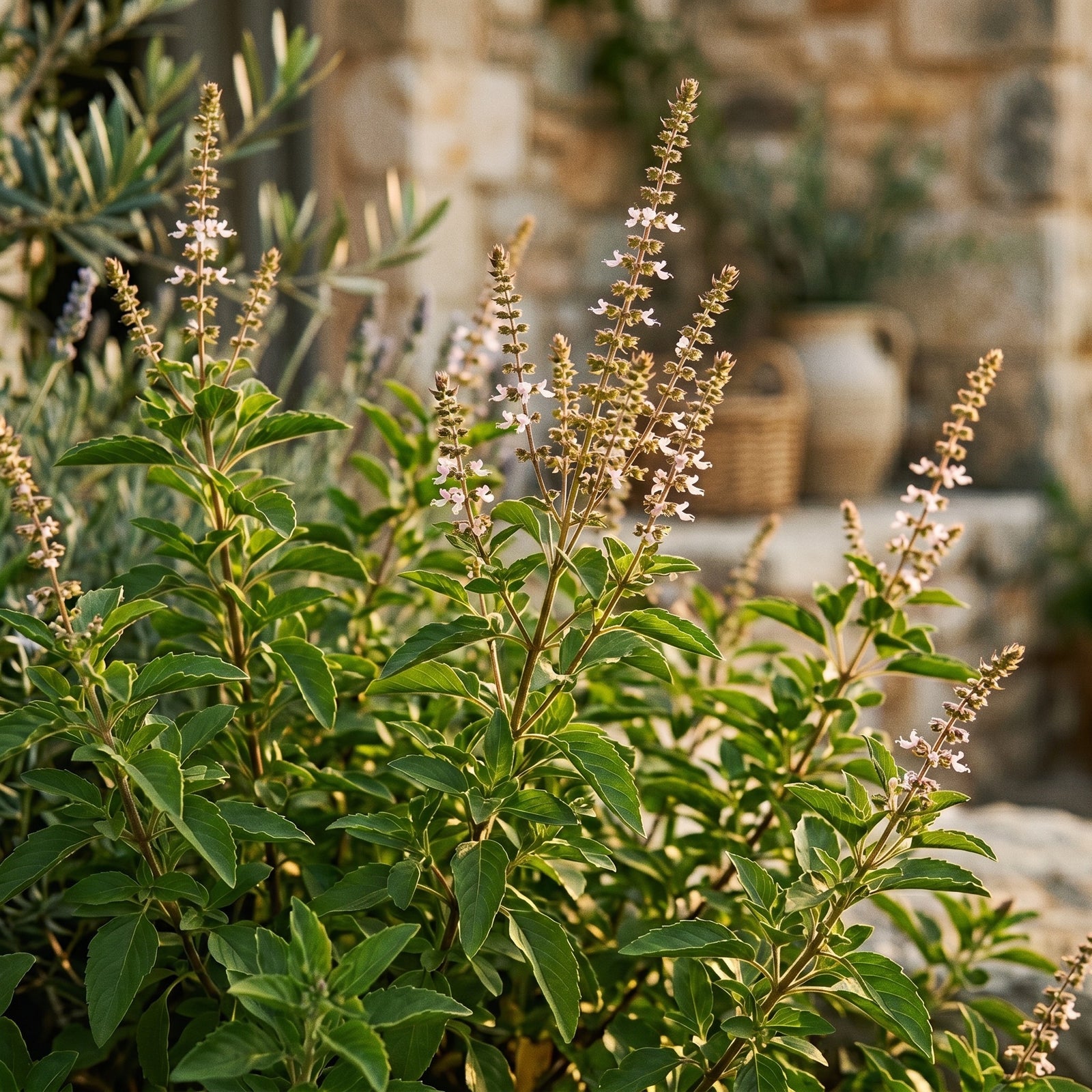
Tulsi grows in abundance across the Indian subcontinent, and I first encountered it not as an herb in a bag but as a living plant — fragrant, generous, reaching toward the sun the way plants do when they belong somewhere. The aerial parts carry a flavor that is simultaneously warming and clarifying, with a slight peppery note beneath the sweetness. In Ayurveda, tulsi is a tonic herb for the whole person — body, mind, and emotional life — with a particular tradition of use during times of stress and overwhelm. When life is full, I think of tulsi not as the herb that takes the edge off, but as the one that brings you back to the middle of yourself.
Rose
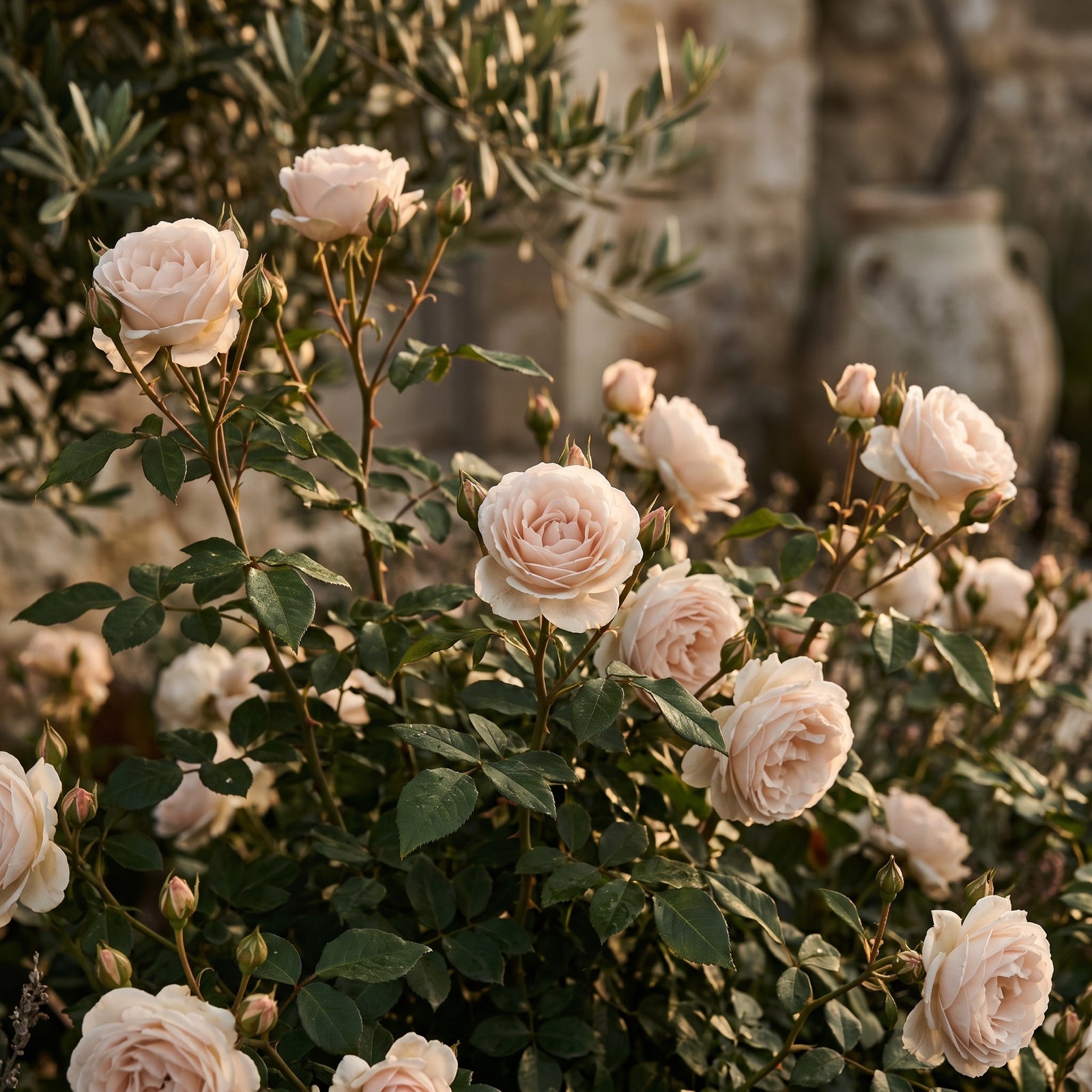
The rose in this formula is not ornamental. It is the oldest continuously used heart-centered botanical in the Western and Eastern herbal traditions alike, offered to women across cultures with a quiet understanding that the emotional heart needs tending as much as the physical one. The flowers bring a softness to this blend that is immediately perceptible — in the scent, in the flavor, in something felt rather than named. I work with rose whenever I formulate for emotional seasons that ask for gentleness rather than resolution, for the moments when what the body most needs is permission to be in its feelings without being overwhelmed by them.
Hawthorn
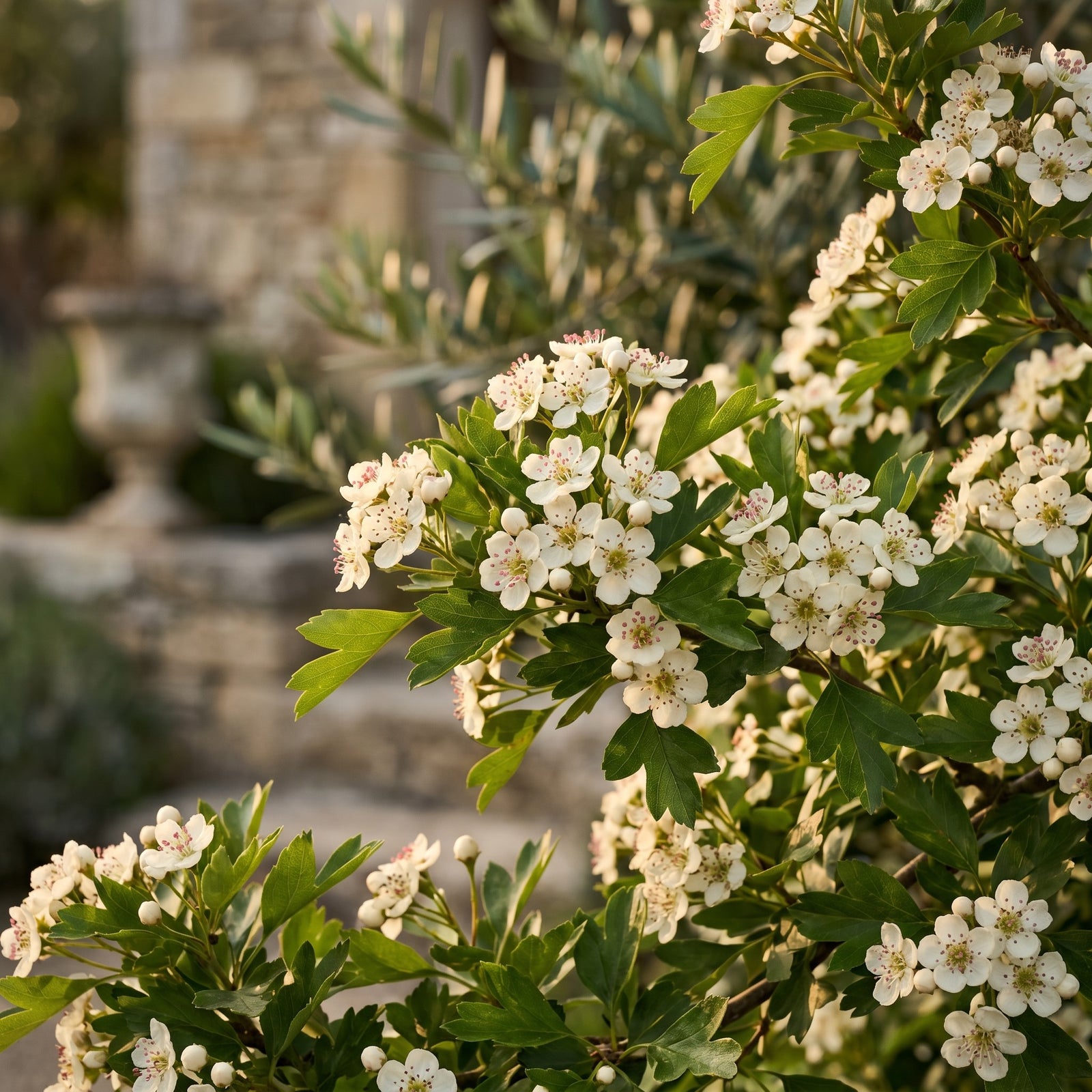
Hawthorn is a tree of thresholds. In Celtic and European folk tradition, the hawthorn stood at the borders between worlds, between seasons, between what was and what is coming. The aerial parts — the leaves, the flowers, the young green growth — carry this quality into formulation: a steadying, protective, quietly supportive presence that belongs at times of emotional transition and change. This is not the hawthorn of acute grief or loss. This is the hawthorn of everyday heart support, of keeping the heart open and grounded through the seasons that require more of us than usual. I add it to this blend for the woman who is still showing up, still present, just carrying something heavier than she'd like.
Chamomile
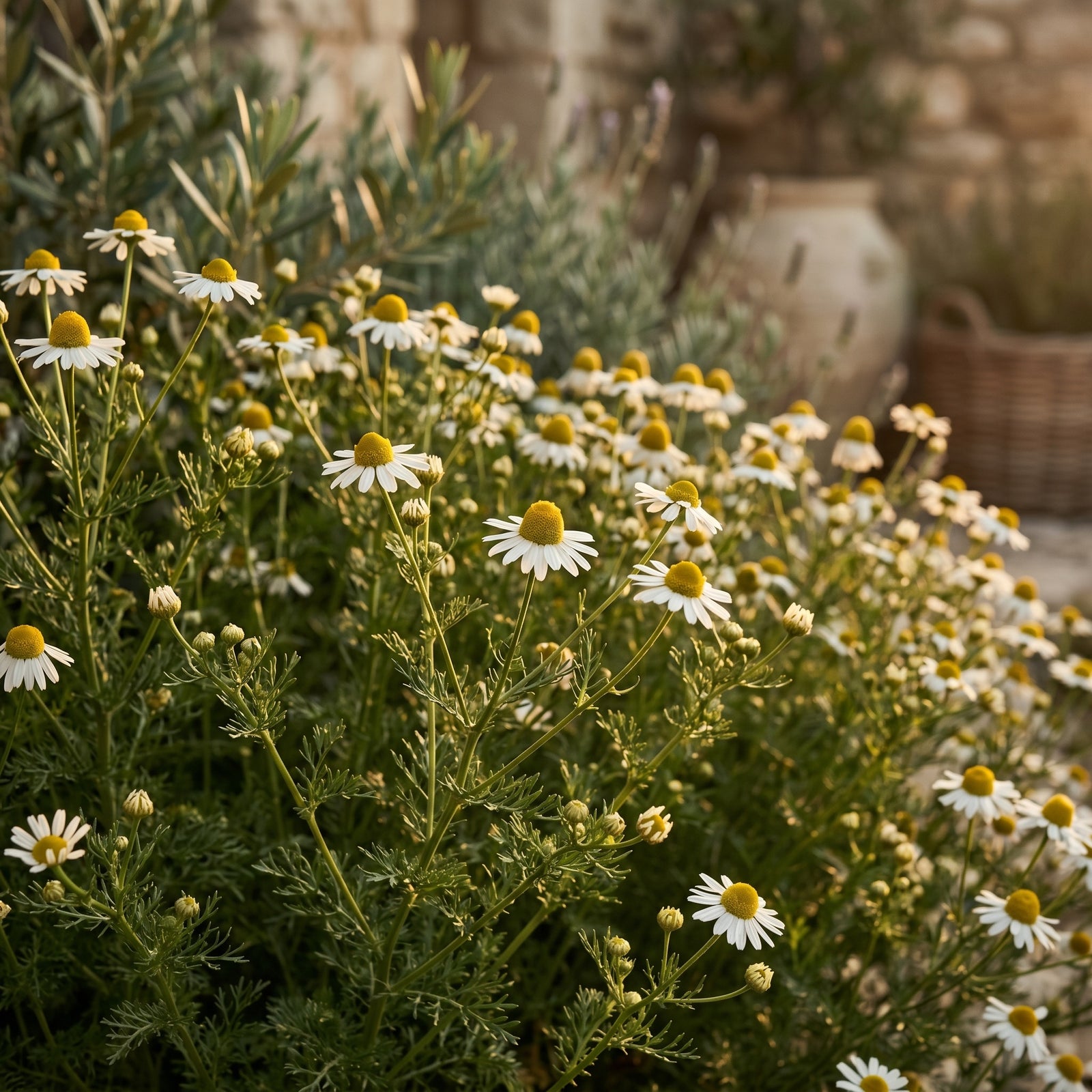
Chamomile is deceptive in its gentleness. It grows as a small, cheerful wildflower across European meadows and roadsides, and it has been offered for tension, for nervous system ease, for the body's habit of holding more than it should, for well over two thousand years. In this blend, chamomile does not sedate — it releases. There is something in its volatile oils, in the apple-like sweetness of a freshly opened flower, that speaks to the body's capacity to soften without disappearing. I use chamomile in emotional formulas when what I want is not quiet, but ease.

Tulsi (Holy Basil)
Tulsi grows in abundance across the Indian subcontinent, and I first encountered it not as an herb in a bag but as a living plant — fragrant, generous, reaching toward the sun the way plants do when they belong somewhere. The aerial parts carry a flavor that is simultaneously warming and clarifying, with a slight peppery note beneath the sweetness. In Ayurveda, tulsi is a tonic herb for the whole person — body, mind, and emotional life — with a particular tradition of use during times of stress and overwhelm. When life is full, I think of tulsi not as the herb that takes the edge off, but as the one that brings you back to the middle of yourself.

Rose
The rose in this formula is not ornamental. It is the oldest continuously used heart-centered botanical in the Western and Eastern herbal traditions alike, offered to women across cultures with a quiet understanding that the emotional heart needs tending as much as the physical one. The flowers bring a softness to this blend that is immediately perceptible — in the scent, in the flavor, in something felt rather than named. I work with rose whenever I formulate for emotional seasons that ask for gentleness rather than resolution, for the moments when what the body most needs is permission to be in its feelings without being overwhelmed by them.

Hawthorn
Hawthorn is a tree of thresholds. In Celtic and European folk tradition, the hawthorn stood at the borders between worlds, between seasons, between what was and what is coming. The aerial parts — the leaves, the flowers, the young green growth — carry this quality into formulation: a steadying, protective, quietly supportive presence that belongs at times of emotional transition and change. This is not the hawthorn of acute grief or loss. This is the hawthorn of everyday heart support, of keeping the heart open and grounded through the seasons that require more of us than usual. I add it to this blend for the woman who is still showing up, still present, just carrying something heavier than she'd like.

Chamomile
Chamomile is deceptive in its gentleness. It grows as a small, cheerful wildflower across European meadows and roadsides, and it has been offered for tension, for nervous system ease, for the body's habit of holding more than it should, for well over two thousand years. In this blend, chamomile does not sedate — it releases. There is something in its volatile oils, in the apple-like sweetness of a freshly opened flower, that speaks to the body's capacity to soften without disappearing. I use chamomile in emotional formulas when what I want is not quiet, but ease.

Rooted in Lineage. Made with Reverence.
This is medicine in the oldest sense of the word: plant wisdom, carefully tended, passed forward with care.

Jasmine's Note
I didn't fully understand what I'd inherited until my own body started asking questions that medicine couldn't answer. Hormonal chaos, long seasons of depression, the particular exhaustion of feeling disconnected from yourself. I remembered the whisperings. I turned back toward the plants. Everything in this apothecary came from that turning — things I made for myself first, and then for the women in my life who needed the same. I offer them to you the way my grandmother offered what she knew: as a hand extended, as something real.
-Jasmine
Frequently Asked Questions
What is a calming tea for emotional balance, and how does Renewed Heart & Soul work?
Renewed Heart & Soul is a calming tea for emotional balance made from five botanicals — tulsi, rose, chamomile, hawthorn, and fennel — that have been used in herbal traditions for centuries to support the body during emotionally heavy or transitional seasons. The blend is designed to be returned to throughout the day rather than taken as a single dose: each cup creates a small ritual of pause and presence. Rather than forcing an emotional shift, these plants support the body's own capacity to soften, steady, and return to center.
What is tulsi good for emotionally, and why is it in this formula?
Tulsi Holy Basil (Ocimum tenuiflorum) is considered a sattvic herb in Ayurvedic tradition — one that supports a quality of clarity, warmth, and inner groundedness. It has been used for centuries in India and across South and Southeast Asian herbal traditions during times of stress, transition, and emotional fullness. In this formula, tulsi is the heart of the blend: a plant that supports the nervous system's capacity for calm without sedating, while bringing a warming quality that feels both grounding and centering. It is the plant I reach for when I need to return to myself.
What is hawthorn used for in herbal medicine?
Hawthorn (Crataegus spp.) has one of the longest traditions of use as a heart-centered botanical in Western and Celtic herbalism. The aerial parts — leaves, flowers, and young growth — have been associated with steadiness, resilience, and the support of the emotional heart during times of transition and change. In Renewed Heart & Soul, hawthorn plays a secondary but meaningful role: it brings a quality of groundedness to the surrounding floral herbs, the botanical equivalent of a steady hand during a season that asks more than usual. It is not a sedative or an acute-support herb here — it is the quiet, reliable presence in a formula designed for daily return.
How is this tea different from other calming herbal teas for stress?
Most calming teas in this category are formulated for a single moment — usually evening, as a precursor to sleep. Renewed Heart & Soul is formulated differently: it is an all-day blend, mild enough to return to throughout the day without the sedating quality that makes an evening tea unsuitable for mid-afternoon use. The formula also draws from a heart-centered herbal tradition rather than a sleep-support tradition — tulsi, rose, and hawthorn are not the classic bedtime herbs. They belong to the broader herbal conversation about emotional steadiness and the nervous system's capacity for calm during emotionally full seasons of life, not just at the close of the day.
Can I drink this tea every day?
Yes — Renewed Heart & Soul is formulated for daily use, including multiple cups throughout the day. All five botanicals in the blend are in the gentle, food-grade category of herbs: tulsi, rose, chamomile, fennel, and hawthorn are all herbs with long traditions of regular, consistent use across many cultures. This is not a high-dose concentrated formula. It is an everyday ritual tea, designed to support the body's natural balance and emotional ease over time through consistent, slow practice. As with any new herbal practice, we always recommend checking with your healthcare provider before beginning, especially if you are pregnant, nursing, or taking prescription medications.
Who makes this, and where?
Renewed Heart & Soul is formulated and blended in small batches in Los Angeles, California, by Jasmine Simone — a clinical herbalist, visual artist, and the founder of Wild Woman Herbal Apothecary. Jasmine formulates every Wild Woman blend herself, drawing on years of clinical practice and a deep working knowledge of the plants she works with. Each batch is prepared by hand using USDA certified organic and responsibly wildcrafted herbs sourced from growers who share Wild Woman's values. Wild Woman Herbal Apothecary does not use wholesale pre-made blends or contract manufacturers.
Is this tea safe during pregnancy or while breastfeeding?
Tulsi, chamomile, rose, and hawthorn are all herbs that appear in traditional prenatal and postnatal herbal traditions, though the evidence base and traditional guidance varies by herb, trimester, and individual health context. Fennel seed is generally considered appropriate in culinary amounts but should be discussed with your provider at higher therapeutic doses. As with any herbal practice during pregnancy or nursing, we always recommend checking with your healthcare provider before beginning, so the recommendation can be tailored to your specific situation and health history.
A Note on Plant Medicine
Plants are powerful — and like any potent thing, they deserve to be used with care and knowledge. These formulas are crafted with intention, but they are not a substitute for medical guidance. Before beginning a new herbal practice, we encourage you to speak with your healthcare provider, especially if you are pregnant, nursing, trying to conceive, managing a health condition, or taking prescription medication. Wild Woman products are not intended to diagnose, treat, cure, or prevent any disease.
Stay close to the apothecary
THE LETTER
Herbal rituals for every season of womanhood
Sent four times a year, when the season turns. Plant wisdom, notes from the bench, and first word on small batches. No promotions, no urgency.
SMALL BATCH
Made by hand in our Los Angeles apothecary
WILDCRAFTED & ORGANIC
Herbs gathered seasonally or grown by farmers we trust
CRAFTED SLOWLY
Each formula prepared slowly, never faster than the plants allow
ROOTED IN LINEAGE
In the tradition of the women who have come before us