



Smooth Cycle Tincture
botanical blend for cramp & cycle support
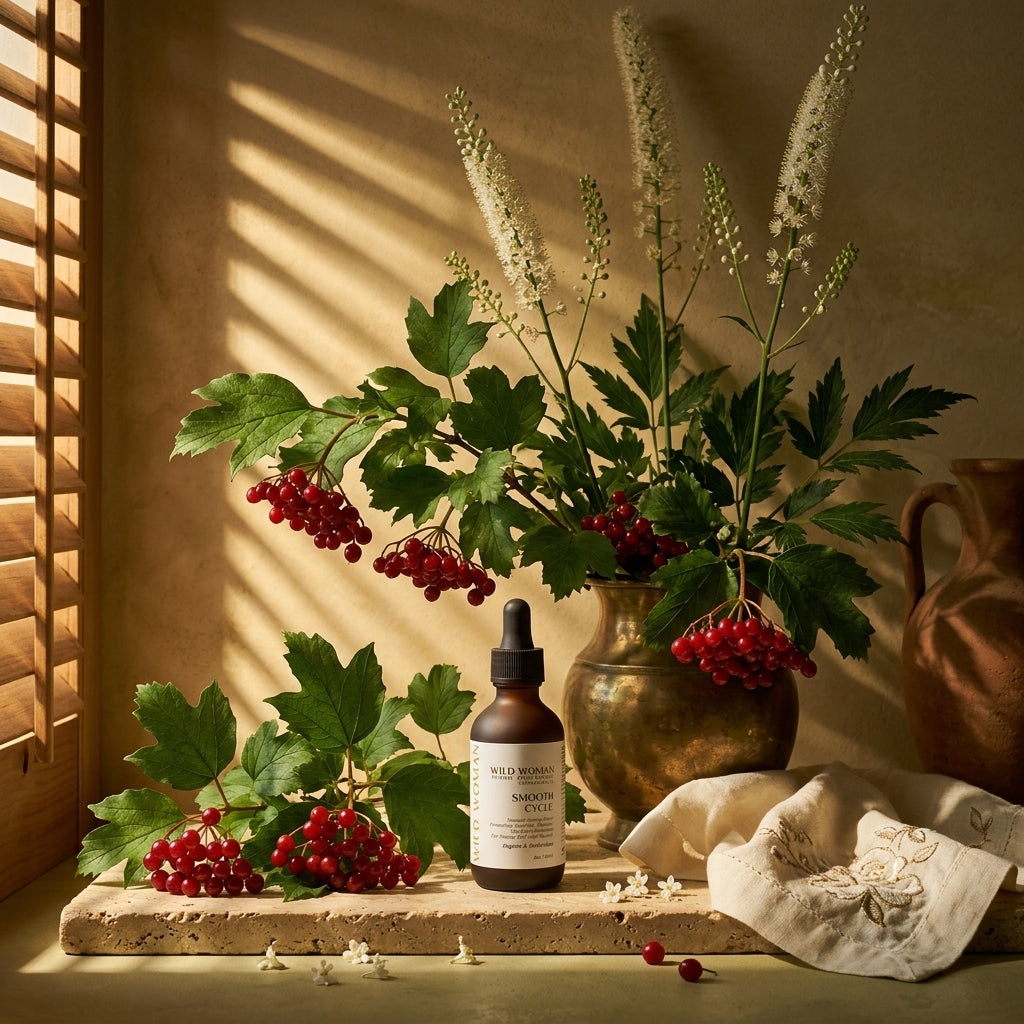
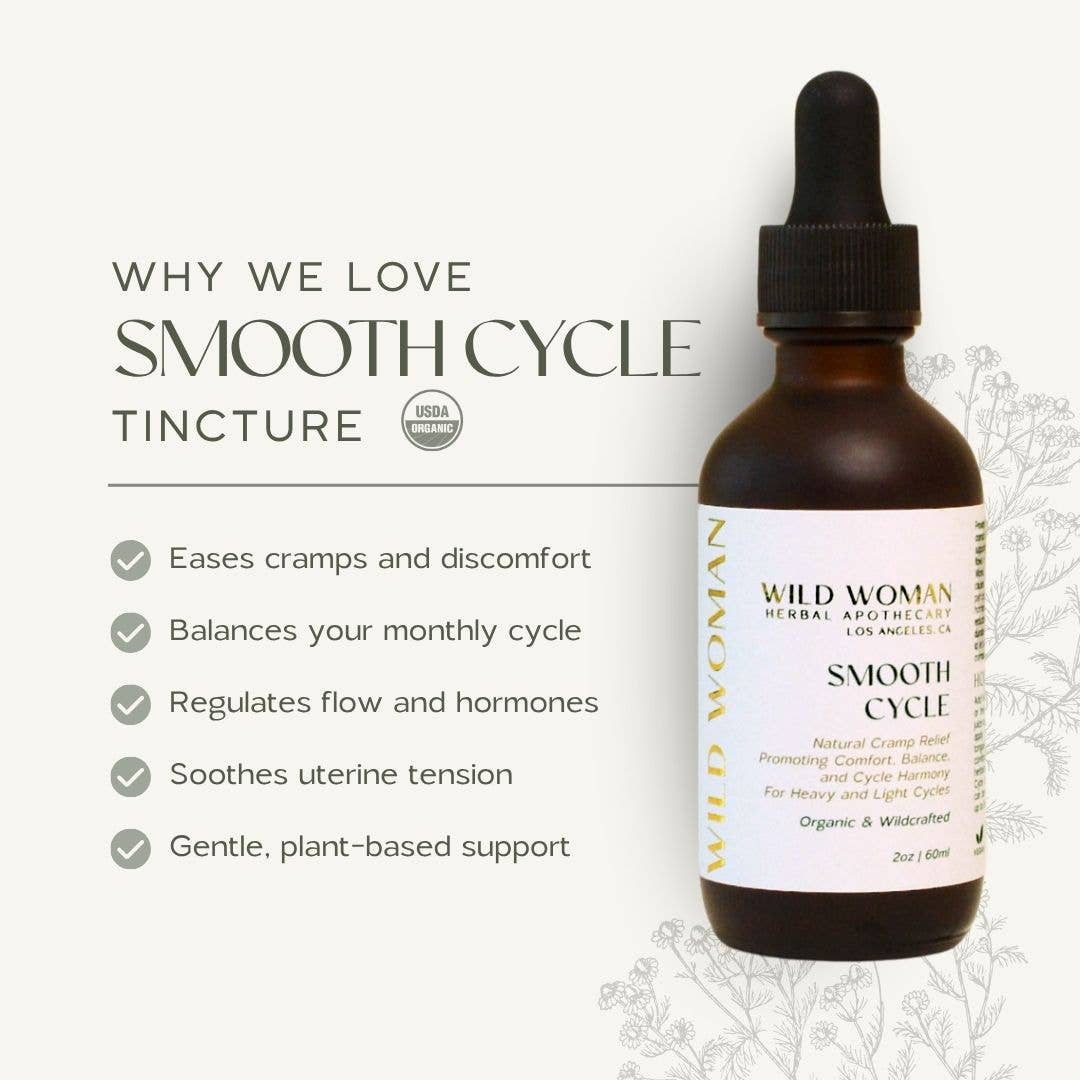
Some months, the body braces before it can soften. We experience this as a tightening in the lower belly, a heaviness that settles in before the blood comes. This herbal tincture for period cramps was made for those days, gathering the plants women have turned to across generations when the cycle asks more than feels bearable. Cramp Bark. Wild Yam. Black Cohosh. Jamaican Dogwood. Ginger. A warming, rooted formula for the body that longs to release.
warming · earthy and slightly bitter · ginger rising through the base · made for the days before bleeding begins

Choose options


Smooth Cycle
PRODUCT DETAILS
This formula was built around a single question: what does the body need to remember how to soften?
Not to be numbed — to soften. There is a difference. Cramp Bark (Viburnum opulus) speaks directly to the smooth muscle of the uterus, the place where the cycle's grip tends to live. Jamaican Dogwood (Piscidia piscipula) works alongside it, addressing the quality of deep, radiating tension that can make it hard to move through the day. Wild Yam (Dioscorea villosa) has been honored in women's herbal traditions for centuries for its particular affinity with the uterine system and the hormonal rhythms of the cycle. Black Cohosh (Actaea racemosa) carries a long lineage of use in women's medicine, specifically for the kind of cyclical heaviness that arrives in the days before and during bleeding.
Ginger (Zingiber officinale) roots the formula in warmth. It is the plant that brings circulation where stagnation has settled, and it gives the formula its characteristic heat — the feeling of a hand pressed gently against the low belly.
Together these five plants do something that none of them could accomplish alone. They address tension at multiple layers: the muscle, the circulation, the nervous system's learned habit of holding. This is not a formula for the woman who wants to push through. It is a formula for the woman who is ready to be held.
Every plant in this formula was chosen the way women have always chosen medicine — not from a catalog, but from knowledge carried forward through generations of practice. The Cramp Bark and Wild Yam are USDA Certified Organic. The Jamaican Dogwood is ethically wildcrafted. All five botanicals are tinctured in small batches in Los Angeles using organic sugarcane extract and vegetable glycerin as the extraction base.
Nothing is rushed. Nothing is outsourced. The formula you hold is made the same way Jasmine makes medicine for her own body.
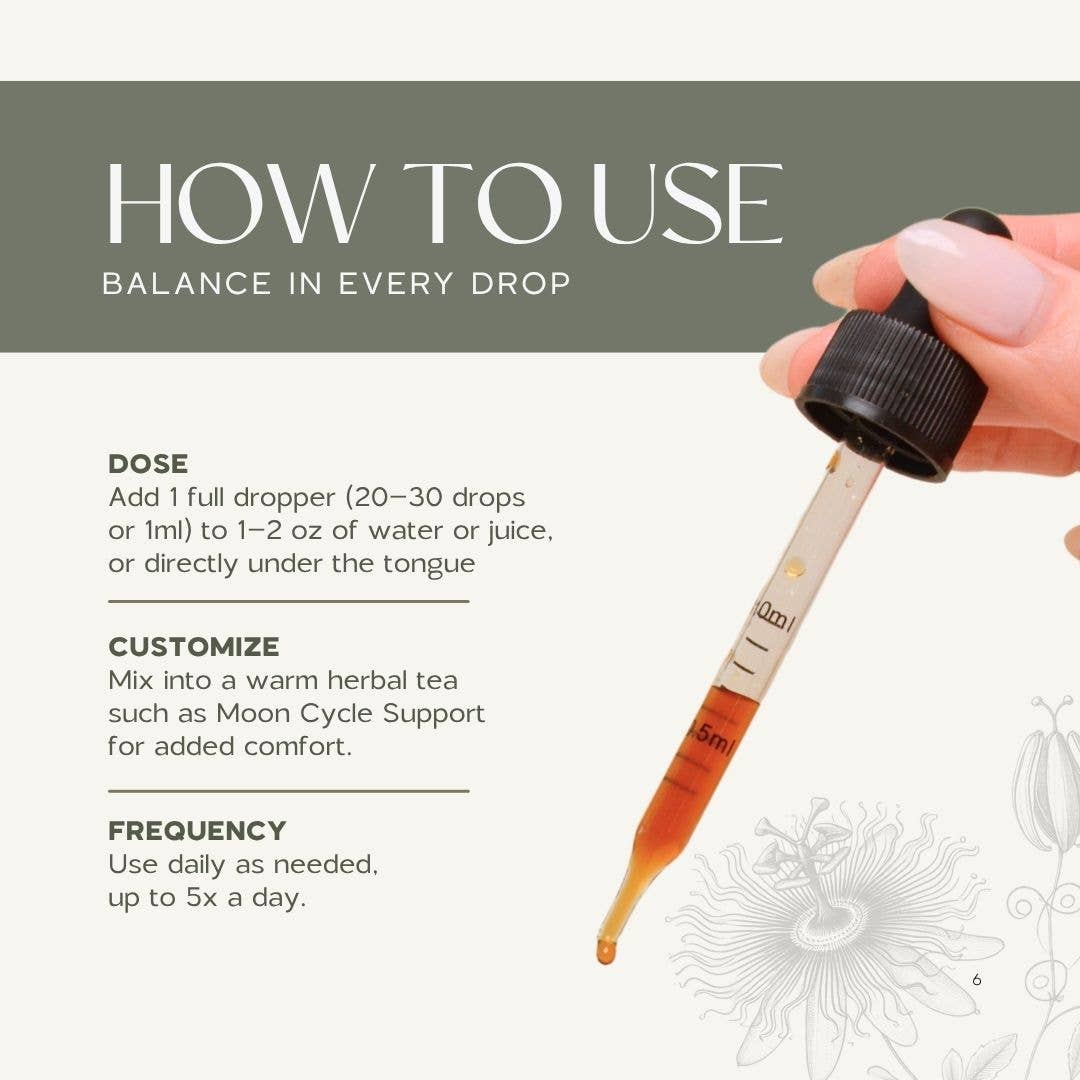
Begin a day or two before bleeding starts, when the first heaviness arrives. Add 30 drops to a small glass of water or directly under the tongue — the warmth of the ginger will make itself known either way. Repeat every two to three hours as needed during the days your body is asking the most. On the difficult evenings, a second dose before sleep is welcome. This is not a task to manage — it is the beginning of an agreement with your body.
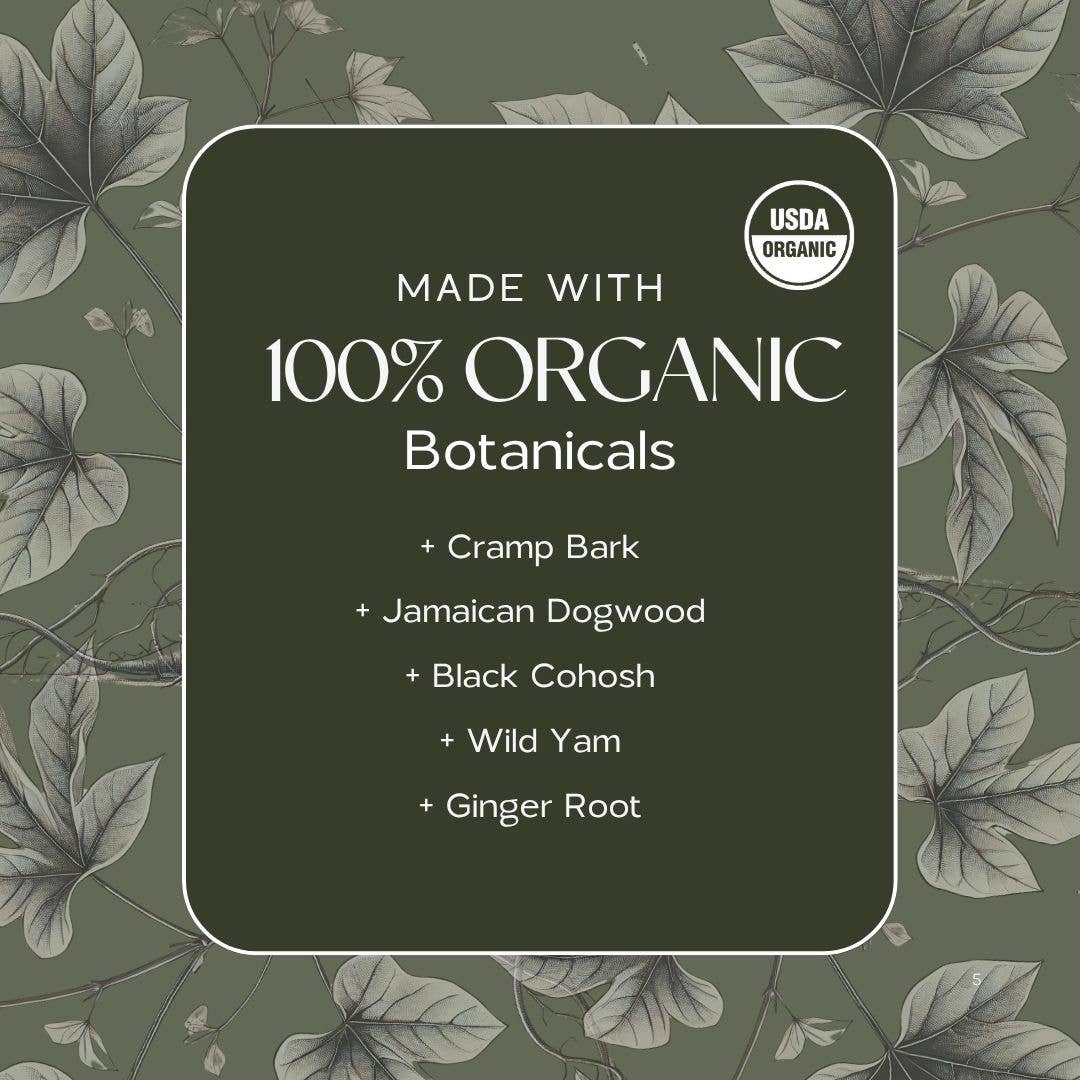
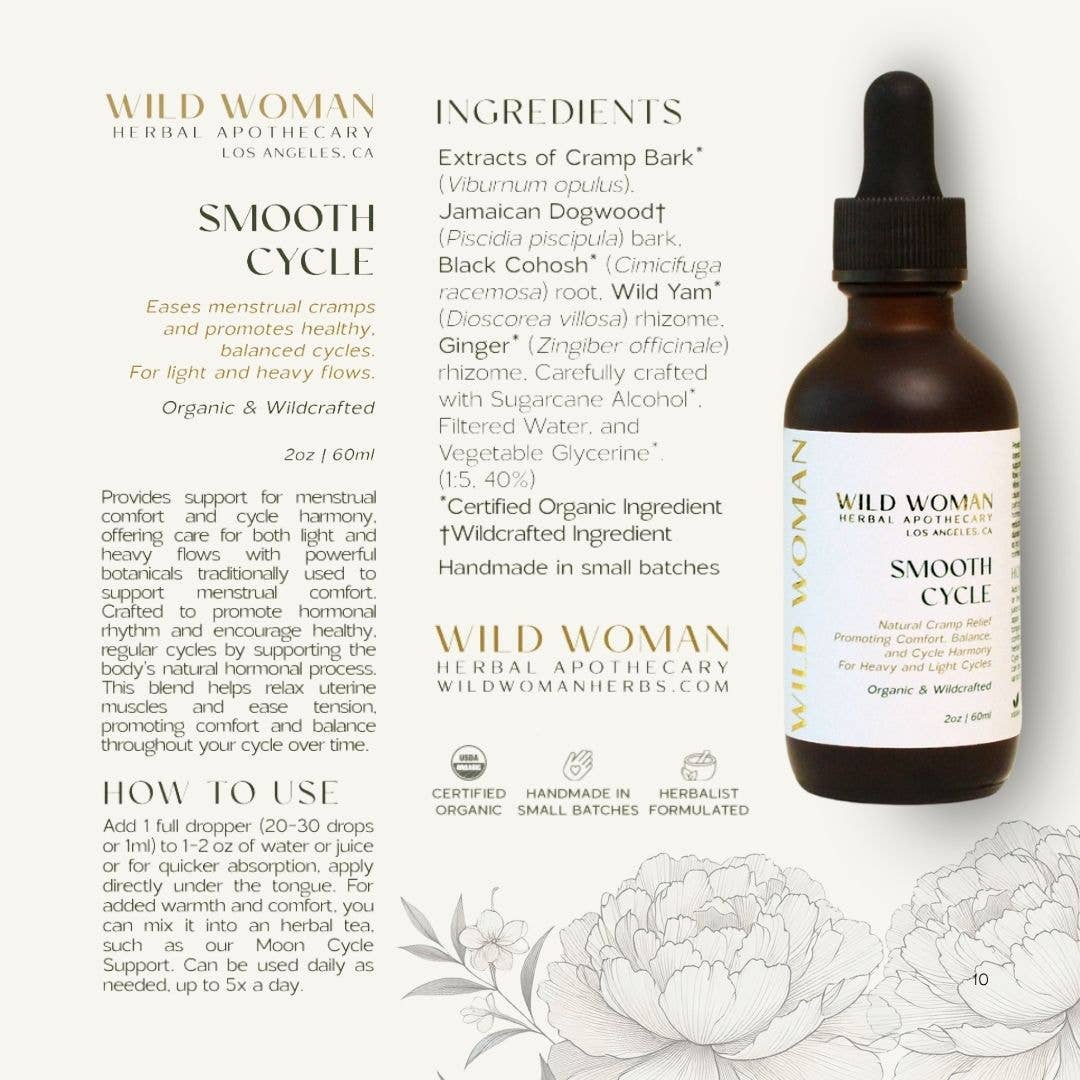
Cramp Bark (Viburnum opulus) · Black Cohosh (Actaea racemosa) root · Wild Yam (Dioscorea villosa) root · Jamaican Dogwood (Piscidia piscipula) bark · Ginger (Zingiber officinale) root · Organic sugarcane extract · Organic vegetable glycerin · Filtered water
Cramp Bark, Black Cohosh, Wild Yam, and Ginger are USDA Certified Organic. Jamaican Dogwood is ethically wildcrafted. Full plant stories below.
The Plants
This formula was built around a single question: what does the body need to remember how to soften?
Not to be numbed — to soften. There is a difference. Cramp Bark (Viburnum opulus) speaks directly to the smooth muscle of the uterus, the place where the cycle's grip tends to live. Jamaican Dogwood (Piscidia piscipula) works alongside it, addressing the quality of deep, radiating tension that can make it hard to move through the day. Wild Yam (Dioscorea villosa) has been honored in women's herbal traditions for centuries for its particular affinity with the uterine system and the hormonal rhythms of the cycle. Black Cohosh (Actaea racemosa) carries a long lineage of use in women's medicine, specifically for the kind of cyclical heaviness that arrives in the days before and during bleeding.
Ginger (Zingiber officinale) roots the formula in warmth. It is the plant that brings circulation where stagnation has settled, and it gives the formula its characteristic heat — the feeling of a hand pressed gently against the low belly.
Together these five plants do something that none of them could accomplish alone. They address tension at multiple layers: the muscle, the circulation, the nervous system's learned habit of holding. This is not a formula for the woman who wants to push through. It is a formula for the woman who is ready to be held.
The Lineage
Every plant in this formula was chosen the way women have always chosen medicine — not from a catalog, but from knowledge carried forward through generations of practice. The Cramp Bark and Wild Yam are USDA Certified Organic. The Jamaican Dogwood is ethically wildcrafted. All five botanicals are tinctured in small batches in Los Angeles using organic sugarcane extract and vegetable glycerin as the extraction base.
Nothing is rushed. Nothing is outsourced. The formula you hold is made the same way Jasmine makes medicine for her own body.
The Practice
Begin a day or two before bleeding starts, when the first heaviness arrives. Add 30 drops to a small glass of water or directly under the tongue — the warmth of the ginger will make itself known either way. Repeat every two to three hours as needed during the days your body is asking the most. On the difficult evenings, a second dose before sleep is welcome. This is not a task to manage — it is the beginning of an agreement with your body.
The Formula
Cramp Bark (Viburnum opulus) · Black Cohosh (Actaea racemosa) root · Wild Yam (Dioscorea villosa) root · Jamaican Dogwood (Piscidia piscipula) bark · Ginger (Zingiber officinale) root · Organic sugarcane extract · Organic vegetable glycerin · Filtered water
Cramp Bark, Black Cohosh, Wild Yam, and Ginger are USDA Certified Organic. Jamaican Dogwood is ethically wildcrafted. Full plant stories below.
Tasting Notes
Warming · earthy
Pairs With
Castor oil pack · warm bath · gentle rest
Energetics
Release • Acceptance • Flow
Season of life
The days before and during bleeding
Tasting Notes
Warming · earthy
Pairs With
Castor oil pack · warm bath · gentle rest
Energetics
Release • Acceptance • Flow
Season of life
The days before and during bleeding

Cramp Bark
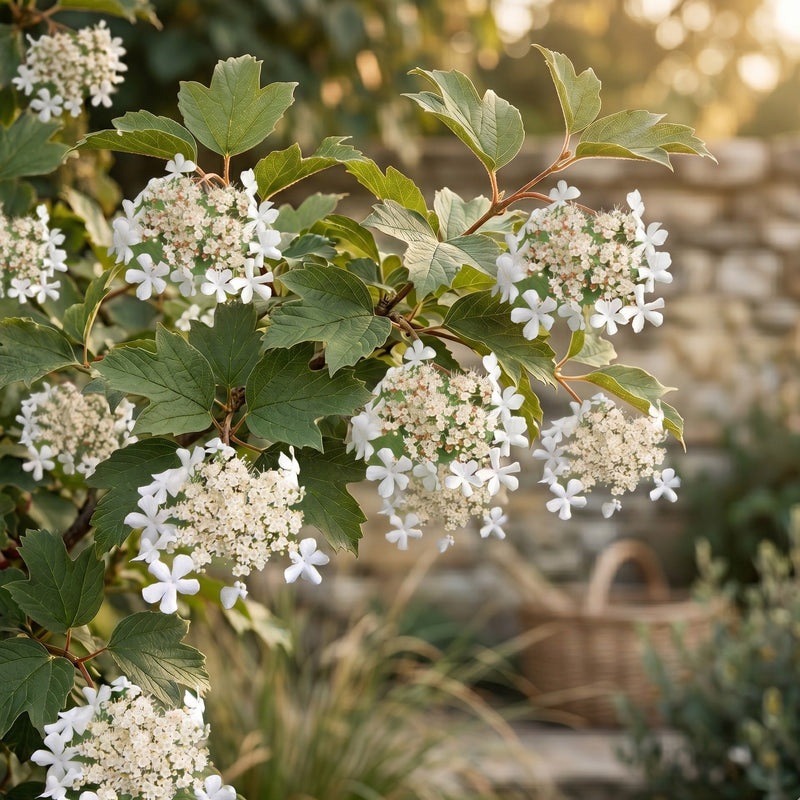
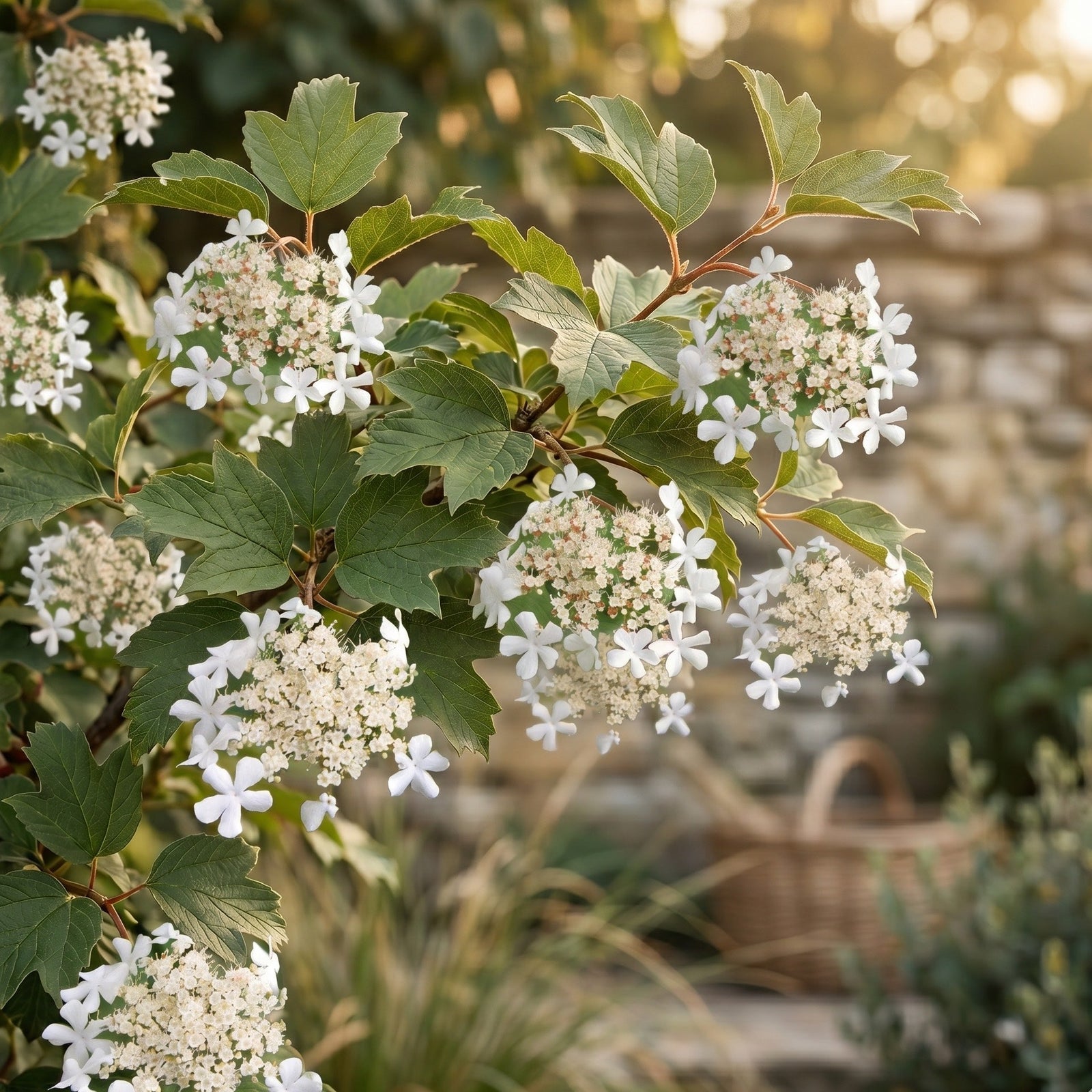
Cramp Bark grows at the edge of things — woodland margins, riverbanks, the quiet borders between one landscape and another. It is a plant that has always known something about thresholds, and women have understood this intuitively for a very long time. In the North American and European herbal traditions, Cramp Bark (Viburnum opulus) is one of the first plants a woman's hand reaches for when the cycle tightens beyond what feels manageable. It works on the smooth muscle of the uterus the way warmth works on a clenched fist — not forcing, not overriding, simply reminding the body that release is possible. I think of it as the most honest plant in this formula. It does exactly what its name says, and it has been doing it for centuries.
Jamaican Dogwood
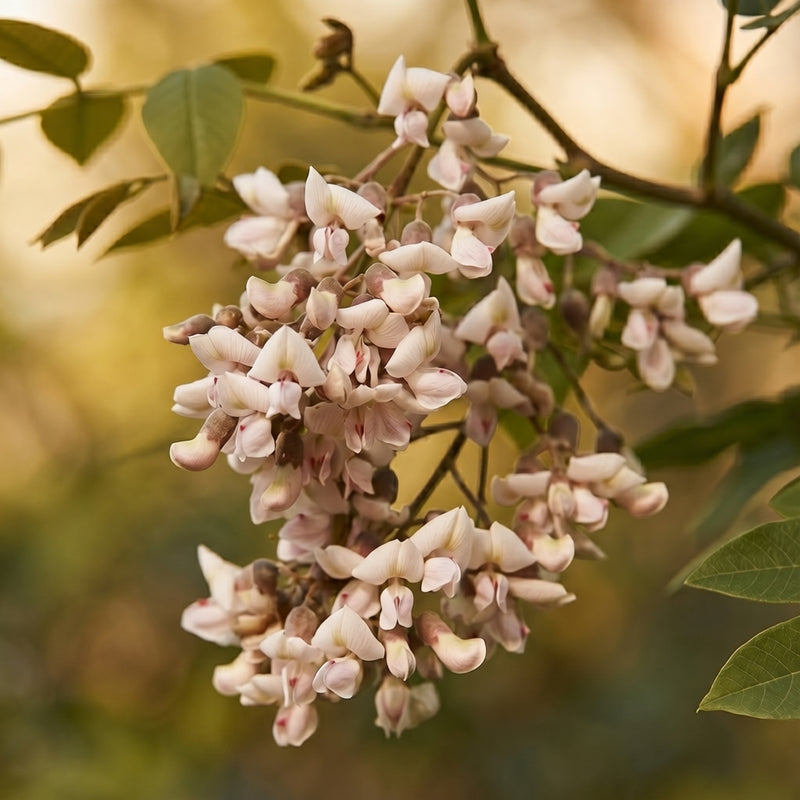
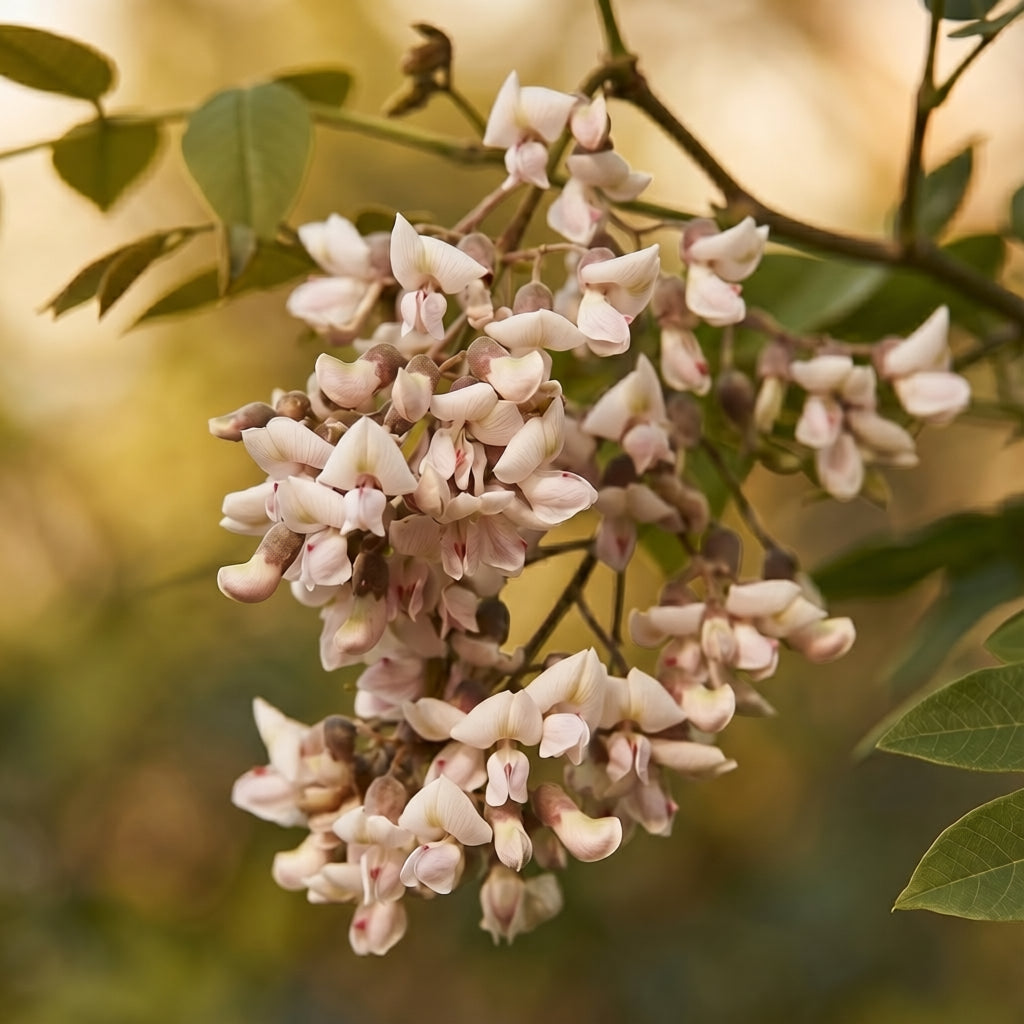
Jamaican Dogwood (Piscidia piscipula) is not a plant most women know by name, but their bodies would recognize what it offers. It grows along the coastal edges of the Caribbean and Gulf of Mexico, a flowering tree with a long history of use in traditional medicine for the kind of pain that radiates, that travels, that settles into the lower back and hips and refuses to be reasoned with. In women's herbalism it has been used specifically for the deeper, more diffuse tension of the menstrual cycle — the ache that sits beneath the cramping, in the place where the uterus connects to everything else. I include it in this formula because Cramp Bark alone addresses the center, but Jamaican Dogwood addresses the surrounding territory. Together they cover the whole landscape of what a difficult cycle can feel like in the body.
Wild Yam
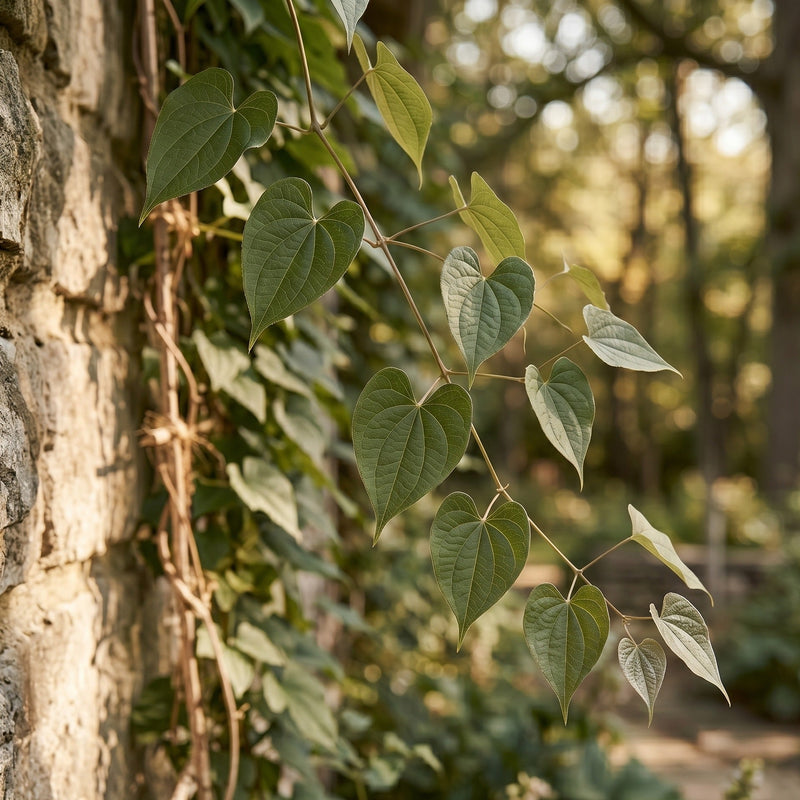
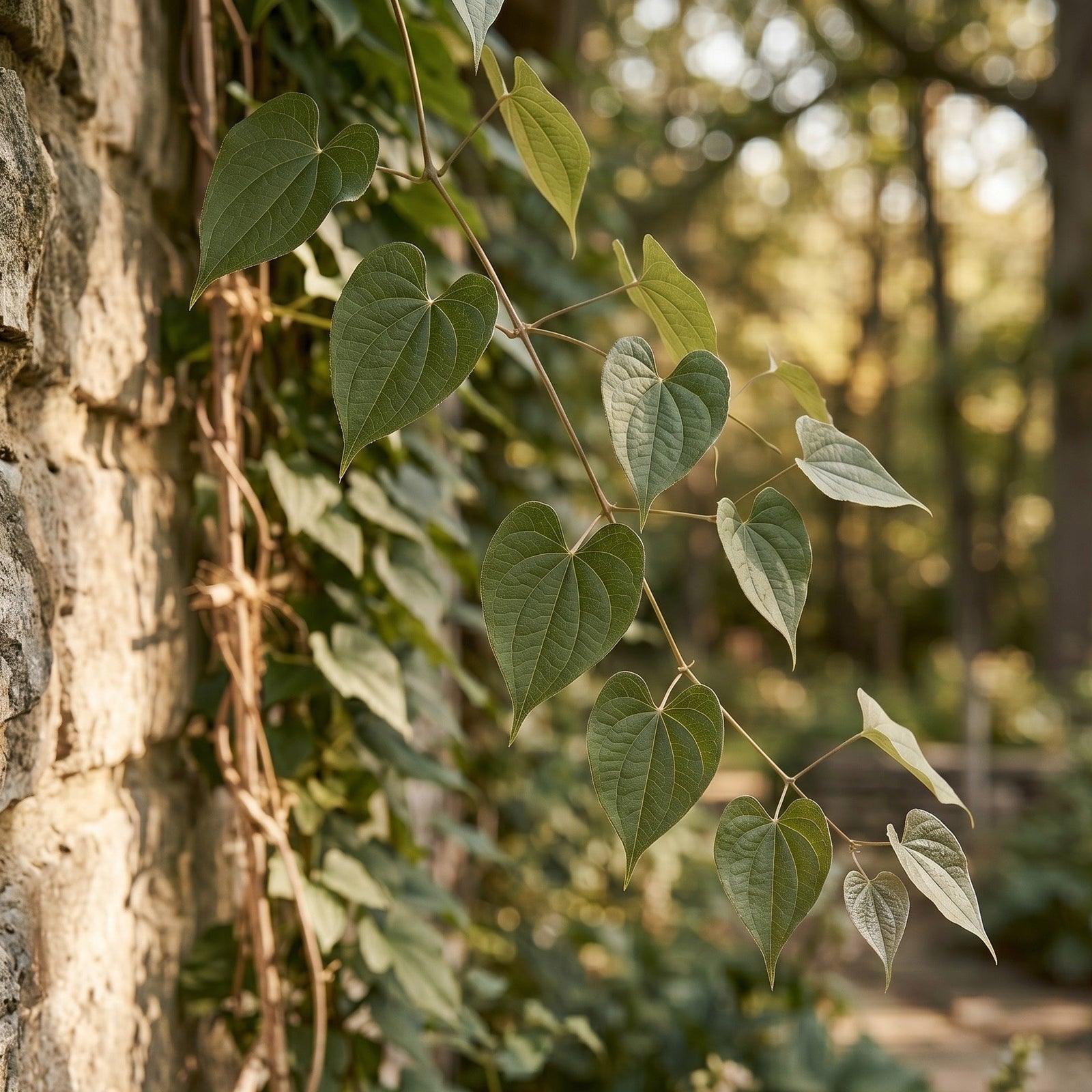
Wild Yam (Dioscorea villosa) has been part of women's herbal traditions in North America since long before it had a clinical name or a supplement category. It grows in the eastern woodlands, a vine that climbs slowly and quietly toward the light, and there is something in that quality — patient, persistent, deeply rooted — that speaks to what it does in the body. Women have worked with Wild Yam for centuries to support the uterine system and the hormonal rhythms of the cycle, particularly in the premenstrual days when the body is preparing to release. It does not act quickly or dramatically. It works the way most good plant medicine works — steadily, over time, in the background of a practice rather than at the center of a crisis. In this formula it provides the deeper, slower support that makes the other plants' work more lasting.
Ginger
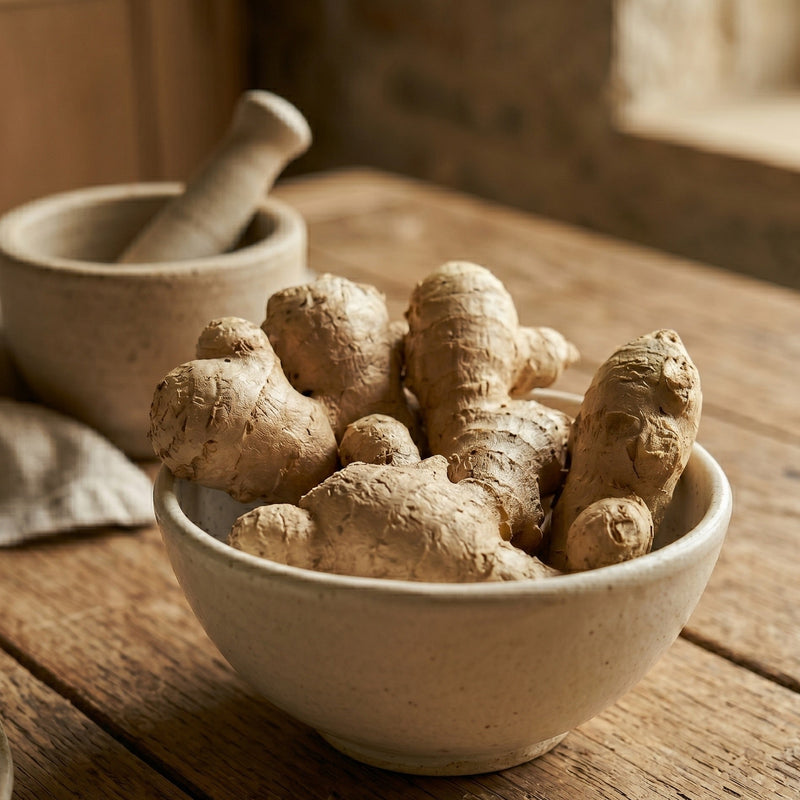
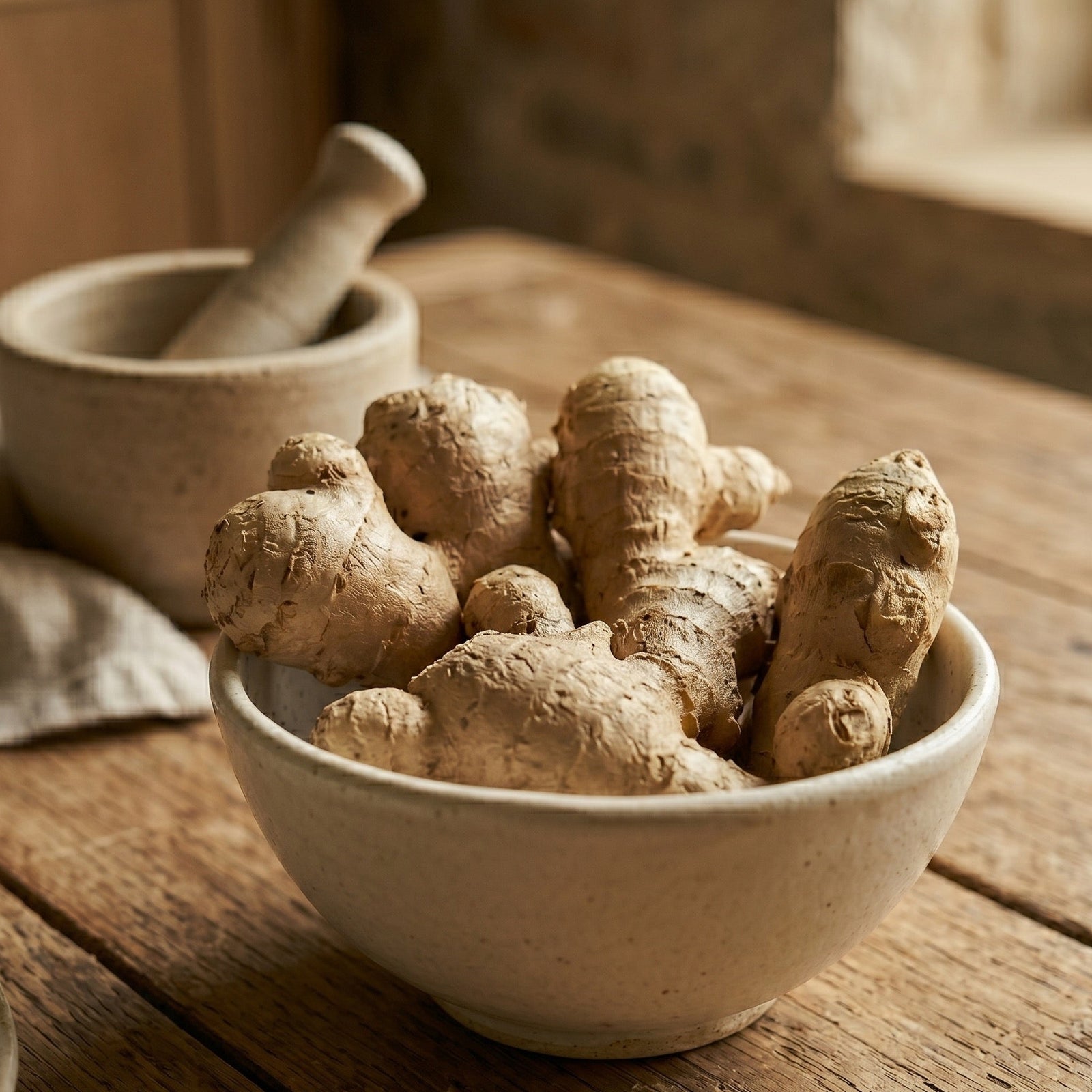
Ginger (Zingiber officinale) is the plant that brings the formula to life. Every culture that has worked with plants has worked with ginger — it is one of the oldest and most universally understood roots in the world's herbal traditions, and what it understands is circulation. Where there is cold, ginger brings warmth. Where there is stagnation, ginger brings movement. In the context of the menstrual cycle, this matters deeply: many women experience their cramps as a kind of cold, stuck, contracted quality in the pelvis, and ginger addresses that quality directly. It also gives Smooth Cycle its characteristic warmth on the tongue — that first gentle heat that tells the body something is coming to help.

Cramp Bark
Cramp Bark grows at the edge of things — woodland margins, riverbanks, the quiet borders between one landscape and another. It is a plant that has always known something about thresholds, and women have understood this intuitively for a very long time. In the North American and European herbal traditions, Cramp Bark (Viburnum opulus) is one of the first plants a woman's hand reaches for when the cycle tightens beyond what feels manageable. It works on the smooth muscle of the uterus the way warmth works on a clenched fist — not forcing, not overriding, simply reminding the body that release is possible. I think of it as the most honest plant in this formula. It does exactly what its name says, and it has been doing it for centuries.

Jamaican Dogwood
Jamaican Dogwood (Piscidia piscipula) is not a plant most women know by name, but their bodies would recognize what it offers. It grows along the coastal edges of the Caribbean and Gulf of Mexico, a flowering tree with a long history of use in traditional medicine for the kind of pain that radiates, that travels, that settles into the lower back and hips and refuses to be reasoned with. In women's herbalism it has been used specifically for the deeper, more diffuse tension of the menstrual cycle — the ache that sits beneath the cramping, in the place where the uterus connects to everything else. I include it in this formula because Cramp Bark alone addresses the center, but Jamaican Dogwood addresses the surrounding territory. Together they cover the whole landscape of what a difficult cycle can feel like in the body.

Wild Yam
Wild Yam (Dioscorea villosa) has been part of women's herbal traditions in North America since long before it had a clinical name or a supplement category. It grows in the eastern woodlands, a vine that climbs slowly and quietly toward the light, and there is something in that quality — patient, persistent, deeply rooted — that speaks to what it does in the body. Women have worked with Wild Yam for centuries to support the uterine system and the hormonal rhythms of the cycle, particularly in the premenstrual days when the body is preparing to release. It does not act quickly or dramatically. It works the way most good plant medicine works — steadily, over time, in the background of a practice rather than at the center of a crisis. In this formula it provides the deeper, slower support that makes the other plants' work more lasting.

Ginger
Ginger (Zingiber officinale) is the plant that brings the formula to life. Every culture that has worked with plants has worked with ginger — it is one of the oldest and most universally understood roots in the world's herbal traditions, and what it understands is circulation. Where there is cold, ginger brings warmth. Where there is stagnation, ginger brings movement. In the context of the menstrual cycle, this matters deeply: many women experience their cramps as a kind of cold, stuck, contracted quality in the pelvis, and ginger addresses that quality directly. It also gives Smooth Cycle its characteristic warmth on the tongue — that first gentle heat that tells the body something is coming to help.
The Ritual
Practices that support the plants

Honor Yourself
Release what is not serving

Pull a card from your favorite deck and sit with this question: what am I being asked to release this cycle? Set it face-up where you'll see it for the next few days. If cards aren't your practice, light a single candle, write one sentence about what you're ready to let go of, and sit with it quietly for a few minutes.

Return to your Body
Open the bowl
Come into Supta Baddha Konasana — lie on your back, bring the soles of your feet together, and let the knees fall open toward the floor. Place a folded blanket or bolster under each knee if the inner thighs need support. Rest both hands on the low belly and breathe slowly into that space: inhale for four counts, exhale for six. This is a posture of deliberate opening in the place where the body most wants to contract. Stay for five minutes. The hips know what to do when you stop asking them to hold.

Remember the Earth
Feel the season turn

Step outside tonight, even for two minutes, and feel whatever season is moving through. Notice the quality of the air — whether it is contracting toward cold or softening toward warmth — and let yourself be in that same rhythm of release and return. The moon is somewhere in its cycle, the earth is somewhere in its own turning, and the Cramp Bark and Wild Yam you are working with grew inside that same unfolding. You are not separate from any of it. You never were.

Rooted in Lineage. Made with Reverence.
This is medicine in the oldest sense of the word: plant wisdom, carefully tended, passed forward with care.

Jasmine's Note
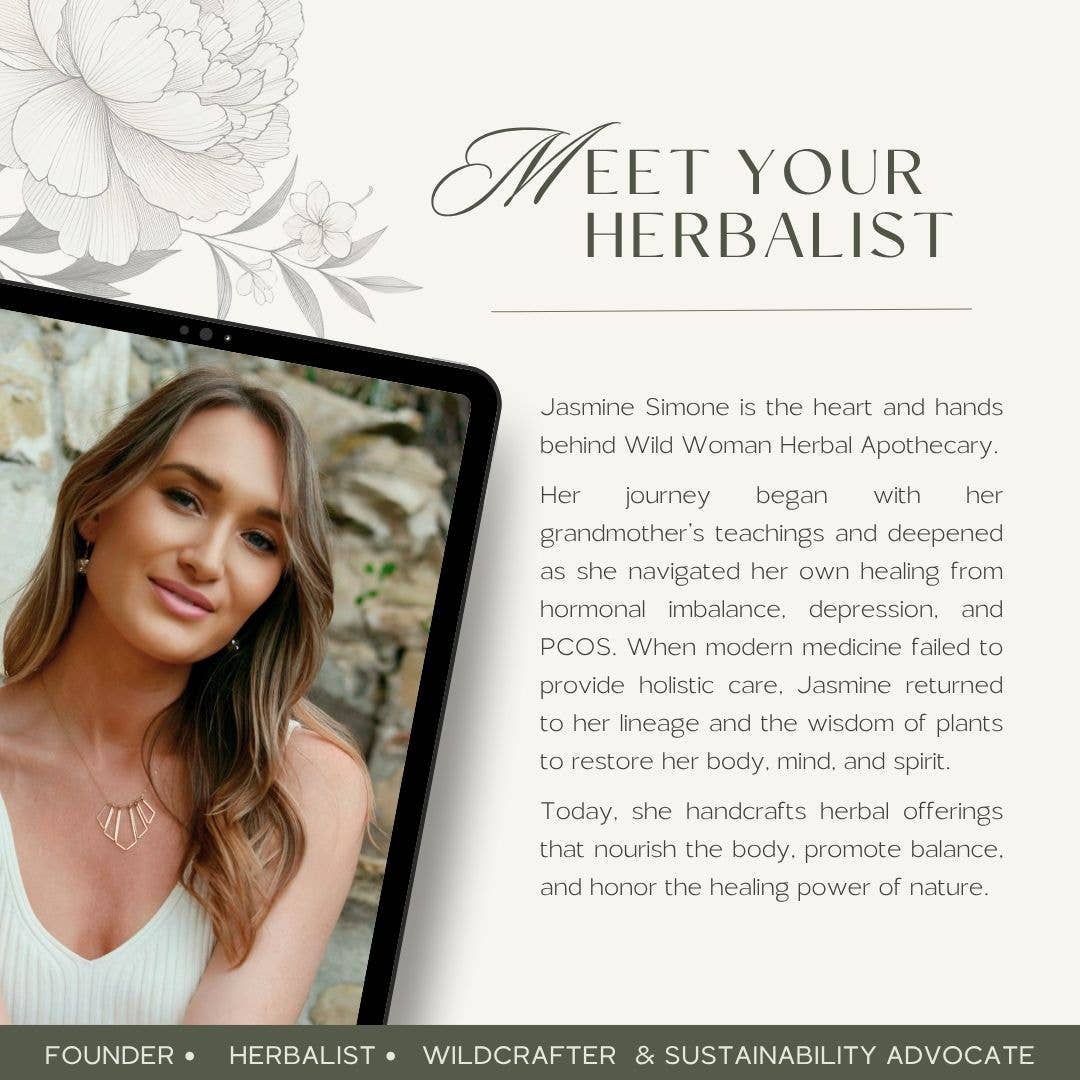
I didn't fully understand what I'd inherited until my own body started asking questions that medicine couldn't answer. Hormonal chaos, long seasons of depression, the particular exhaustion of feeling disconnected from yourself. I remembered the whisperings. I turned back toward the plants. Everything in this apothecary came from that turning — things I made for myself first, and then for the women in my life who needed the same. I offer them to you the way my grandmother offered what she knew: as a hand extended, as something real.
-Jasmine
Frequently Asked Questions
What is the best herbal tincture for period cramps?
An herbal tincture for period cramps works differently than a capsule or tea — the liquid absorbs quickly, often within fifteen to twenty minutes, which matters when the cramping is already underway. Smooth Cycle combines five plants with a long tradition of use in women's herbalism: Cramp Bark (Viburnum opulus), which speaks directly to the smooth muscle tension of the uterine cycle; Jamaican Dogwood (Piscidia piscipula), for the deeper, radiating quality of pelvic tension; Wild Yam (Dioscorea villosa), which supports the hormonal rhythms of the cycle over time; Black Cohosh (Actaea racemosa), traditionally used for cyclical heaviness and menstrual comfort; and Ginger (Zingiber officinale), which brings warmth and circulation to the pelvic bowl. Together they address the full landscape of what a difficult period can feel like in the body — not just the acute cramping, but the heaviness, the radiating ache, the cold contracted quality that can settle in for days.
What does cramp bark do for period cramps?
Cramp Bark (Viburnum opulus) is one of the most trusted plants in the women's herbal tradition for menstrual comfort — and its name is not an accident. It works on the smooth muscle of the uterus, supporting the body's own capacity to soften and release the tension that causes cramping. Women in North American and European herbal traditions have reached for cramp bark tincture for centuries, long before the mechanism was mapped or the plant had a clinical category. In Smooth Cycle, Cramp Bark is the foundation of the formula — the plant the others are built around. For best results, begin taking it one to two days before bleeding starts rather than waiting until the cramping is already intense.
Is Wild Yam good for period cramps and hormone balance?
Wild Yam (Dioscorea villosa) has been used in women's herbal traditions in North America for centuries, particularly for its affinity with the uterine system and the hormonal rhythms of the menstrual cycle. It is most valued not for acute cramp relief — that is Cramp Bark's territory — but for the deeper, slower support of the cycle's hormonal patterns over time. Women who work with Wild Yam consistently through their cycle often find that the quality of their periods shifts gradually: less heaviness, more ease, a monthly rhythm that feels more supported. It is a plant that rewards patience and regular practice rather than in-the-moment use. In Smooth Cycle it provides this sustained undercurrent of support alongside the more immediate action of Cramp Bark and Jamaican Dogwood.
Can herbs replace ibuprofen for period cramps?
Many women reach for herbal support for period cramps because they want something that works with the body rather than overriding it — and plants like Cramp Bark (Viburnum opulus) and Ginger (Zingiber officinale) have a long, documented history of use in this territory. Ginger in particular has been studied for its support of menstrual comfort, with traditional herbalists and more recent research both pointing to its warming, circulation-supporting properties as meaningful for the kind of cold, contracted pelvic pain many women experience. That said, every woman's cycle is different, and we always recommend working with a healthcare provider to understand what is driving your cramps — especially if they are severe or have changed recently. Smooth Cycle is designed to be part of a thoughtful monthly practice of care, not an emergency replacement for medical support when something more serious may be at play.
What is Jamaican Dogwood and why is it in this formula?
Jamaican Dogwood (Piscidia piscipula) is one of the less commonly known herbs for period cramps, but it has a deep history of use in Caribbean and Central American herbal traditions for the kind of pain that radiates — the ache that travels from the uterus into the low back and hips and settles there for hours. In women's herbalism it is specifically valued for the deeper, more diffuse tension of the menstrual cycle, the layer of discomfort that sits beneath the acute cramping. Cramp Bark addresses the center; Jamaican Dogwood addresses the surrounding territory. Together they make the formula more complete than either plant could be alone. The Jamaican Dogwood in Smooth Cycle is ethically wildcrafted — chosen for its quality and sourced with the same care as every other plant in the formula.
Where are Wild Woman tinctures made, and are the herbs organic?
Every Wild Woman formula is made in small batches in Los Angeles, California. The herbs in Smooth Cycle — Cramp Bark, Black Cohosh, Wild Yam, and Ginger — are USDA Certified Organic. The Jamaican Dogwood is ethically wildcrafted. The extraction base is organic sugarcane extract and organic vegetable glycerin. Nothing is outsourced, and nothing is rushed — the formula is made the same way Jasmine makes medicine for her own body, with the same plants, the same process, and the same attention to the cycle of each botanical. This is not a supplement assembled from a catalog. It is a practice rooted in the same tradition women have relied on for generations.
Is Smooth Cycle safe to take every month, and are there any precautions?
Smooth Cycle is formulated for regular monthly use as part of a cycle-care practice — many women take it in the days before and during bleeding each month and find that the support deepens over time with consistent use. That said, some of the plants in this formula have traditional precautions worth knowing. Black Cohosh (Actaea racemosa) and Jamaican Dogwood (Piscidia piscipula) are not recommended during pregnancy, and Black Cohosh is traditionally used with care in women with a history of hormone-sensitive conditions. We always recommend checking with your healthcare provider before beginning any new herbal practice, especially if you are pregnant, nursing, taking medications, or managing an ongoing health condition. Your provider's knowledge of your specific history is something no formula can replace.
A Note on Plant Medicine
Plants are powerful — and like any potent thing, they deserve to be used with care and knowledge. These formulas are crafted with intention, but they are not a substitute for medical guidance. Before beginning a new herbal practice, we encourage you to speak with your healthcare provider, especially if you are pregnant, nursing, trying to conceive, managing a health condition, or taking prescription medication. Wild Woman products are not intended to diagnose, treat, cure, or prevent any disease.
Stay close to the apothecary
THE LETTER
Herbal rituals for every season of womanhood
Sent four times a year, when the season turns. Plant wisdom, notes from the bench, and first word on small batches. No promotions, no urgency.
SMALL BATCH
Made by hand in our Los Angeles apothecary
WILDCRAFTED & ORGANIC
Herbs gathered seasonally or grown by farmers we trust
CRAFTED SLOWLY
Each formula prepared slowly, never faster than the plants allow
ROOTED IN LINEAGE
In the tradition of the women who have come before us