Skip to content

Cart

Your cart is empty

Cold Season Support

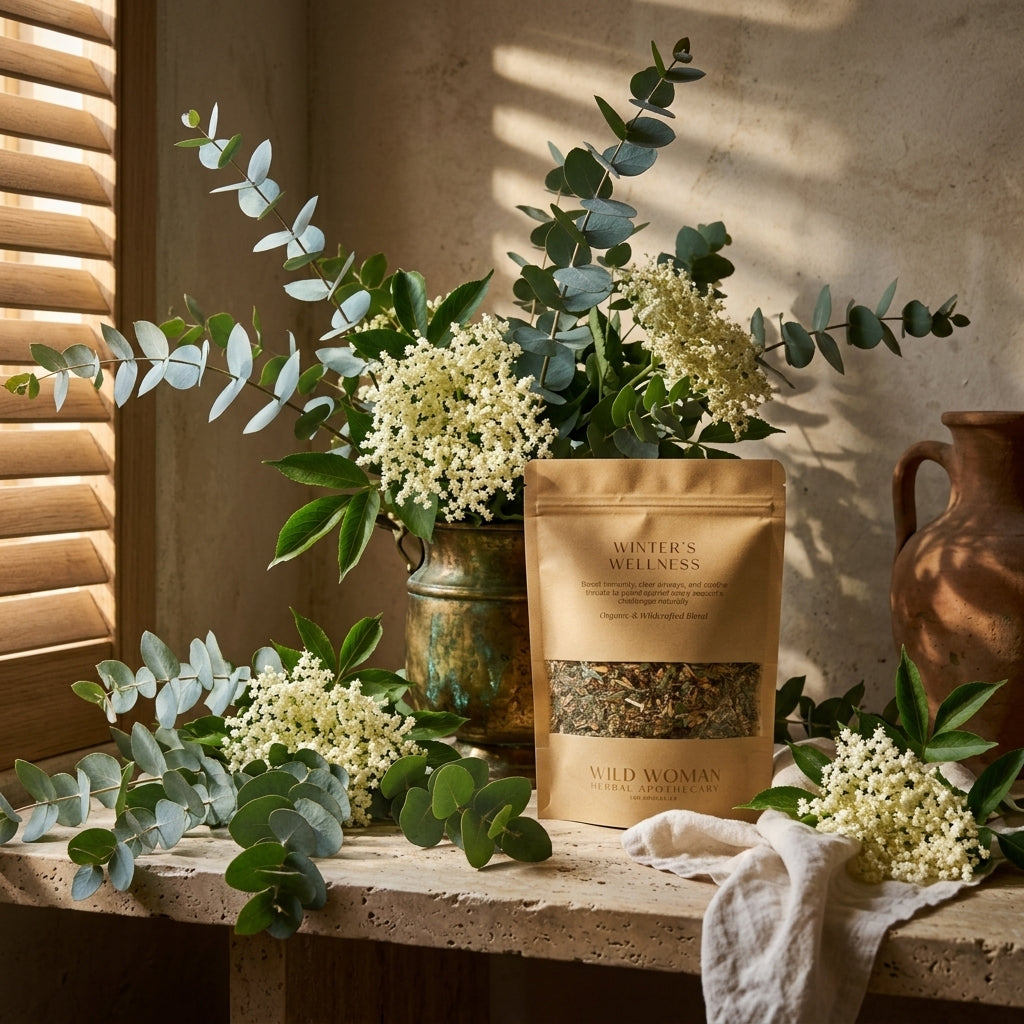
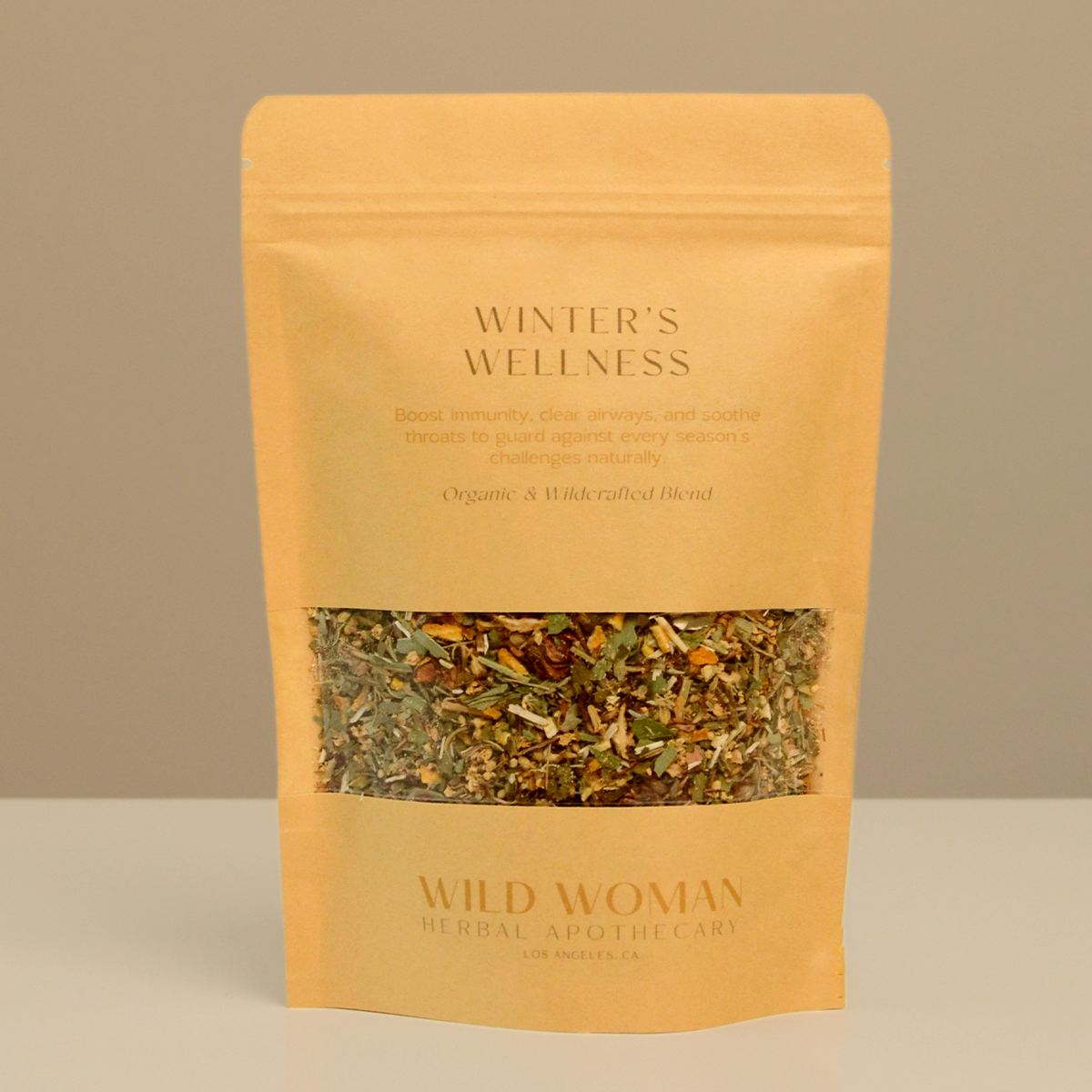
Winter’s Wellness Tea

herbal tea for respiratory support and cold season care

Sale price$20.00

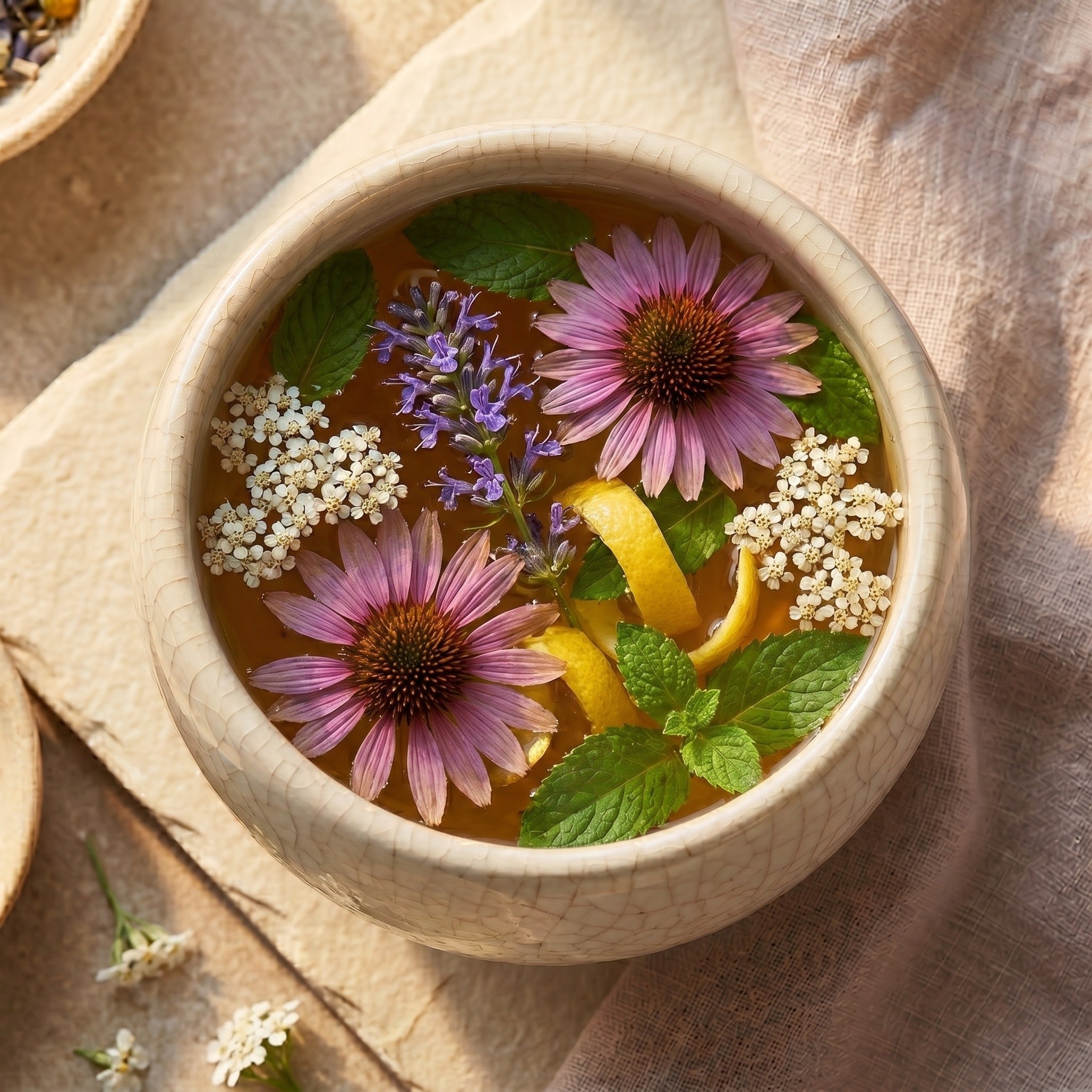
The cold moves in quietly with a heaviness in the chest, a thickness behind the eyes, the body asking to be tended. This herbal tea for respiratory support brings together nine botanicals that women have brewed during the coldest months for centuries: elderflower, eucalyptus, hyssop, echinacea, and the warming herbs that help the body find its way back to ease. Steep it slow, breathe the steam before the first sip, and let this be the ritual of the season.

minty · eucalyptus · warming · deep winter · clearing

Winter’s Wellness Tea
Winter’s Wellness Tea Sale price$20.00

Winter’s Wellness

PRODUCT DETAILS

The Plants

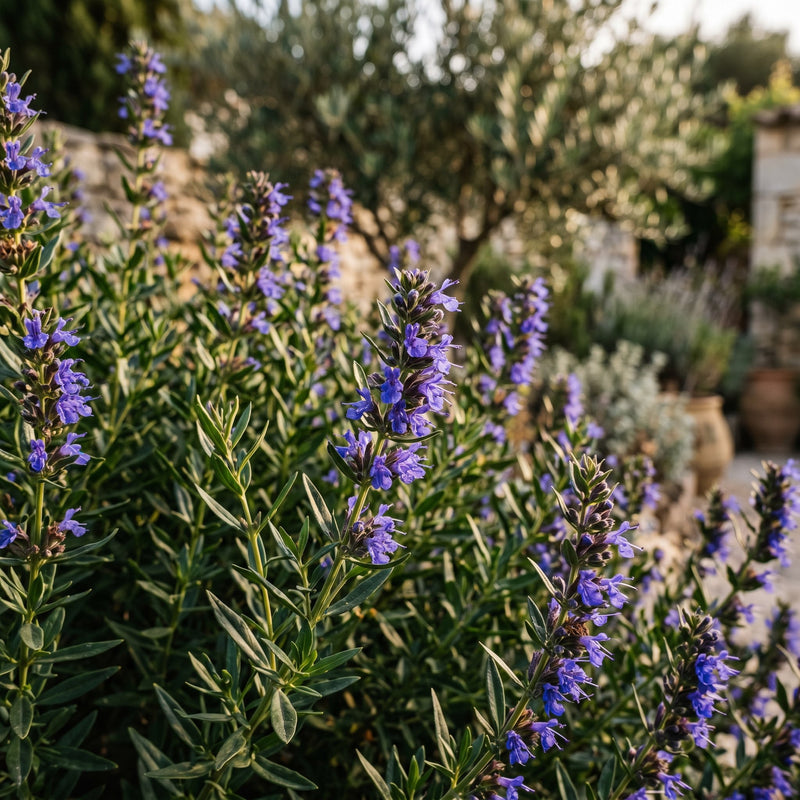
Hyssop has been growing in monastery gardens since the Middle Ages, cultivated by European herbalists specifically for the breath — for the chest, for the cold season, for the days when breathing itself feels like labor. That lineage is where this formula begins. The aromatic herbs in this blend were chosen because the body receives them before the cup even reaches the lips. Eucalyptus opens. Peppermint clears. Hyssop warms from within. Together they create something the breath recognizes and responds to before the thinking mind has caught up.

Elderflower came next. The flower of the elder tree — not the berry, the flower — has a different quality to it: softer, more yielding, with a long tradition in European folk medicine of supporting the body at the first sign of cold season vulnerability. Echinacea has been used by herbalists across North American traditions for generations, specifically for this moment when the body's natural defenses need tending. Yarrow brings warmth and circulation — the plant that moves things through rather than letting them settle in. Together these three form the formula's immune-support backbone, each working at a different point of the body's response to winter.

The citrus peels and red clover are not afterthoughts. Orange peel and lemon peel brighten what could otherwise be a heavy, medicinal blend, making it something you actually want to drink at the end of a long winter day. Red clover adds quiet nourishment. The formula was built to be tended to, not tolerated — something you reach for not because you must, but because it actually helps.

Season

Season

Winter · the cold months · travel & exposure

Pairs With

Pairs With

aromatic steam · warm blanket · honey · rest

Energetics

Energetics

Warming · clearing · opening

Tasting Notes

Tasting Notes

minty · astringent · cooling · clean herbal finish
Season

Season

Winter · the cold months · travel & exposure

Pairs With

Pairs With

aromatic steam · warm blanket · honey · rest

Energetics

Energetics

Warming · clearing · opening

Tasting Notes

Tasting Notes

minty · astringent · cooling · clean herbal finish
Eucalyptus

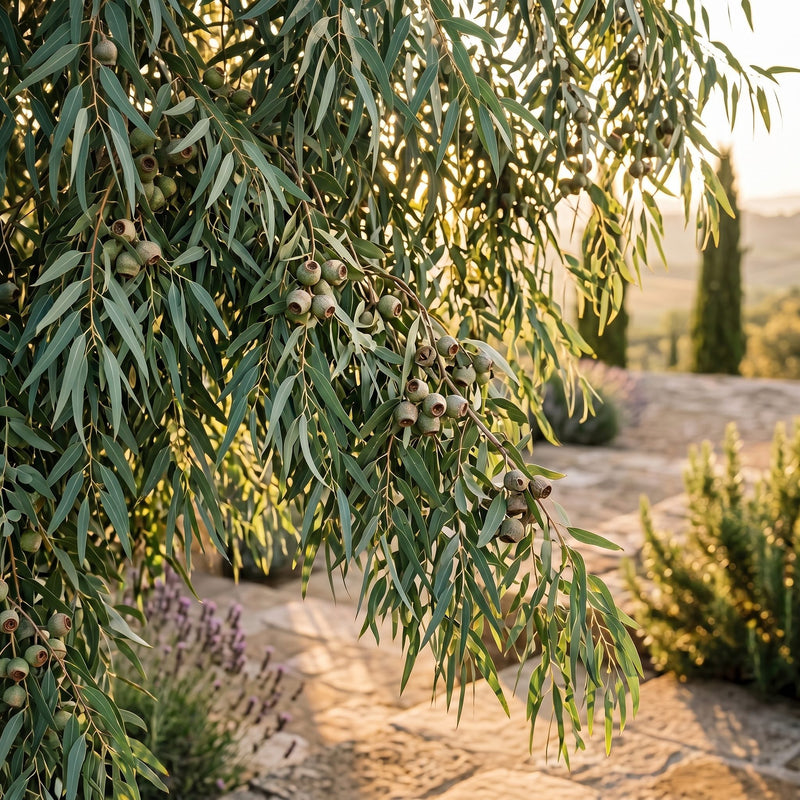
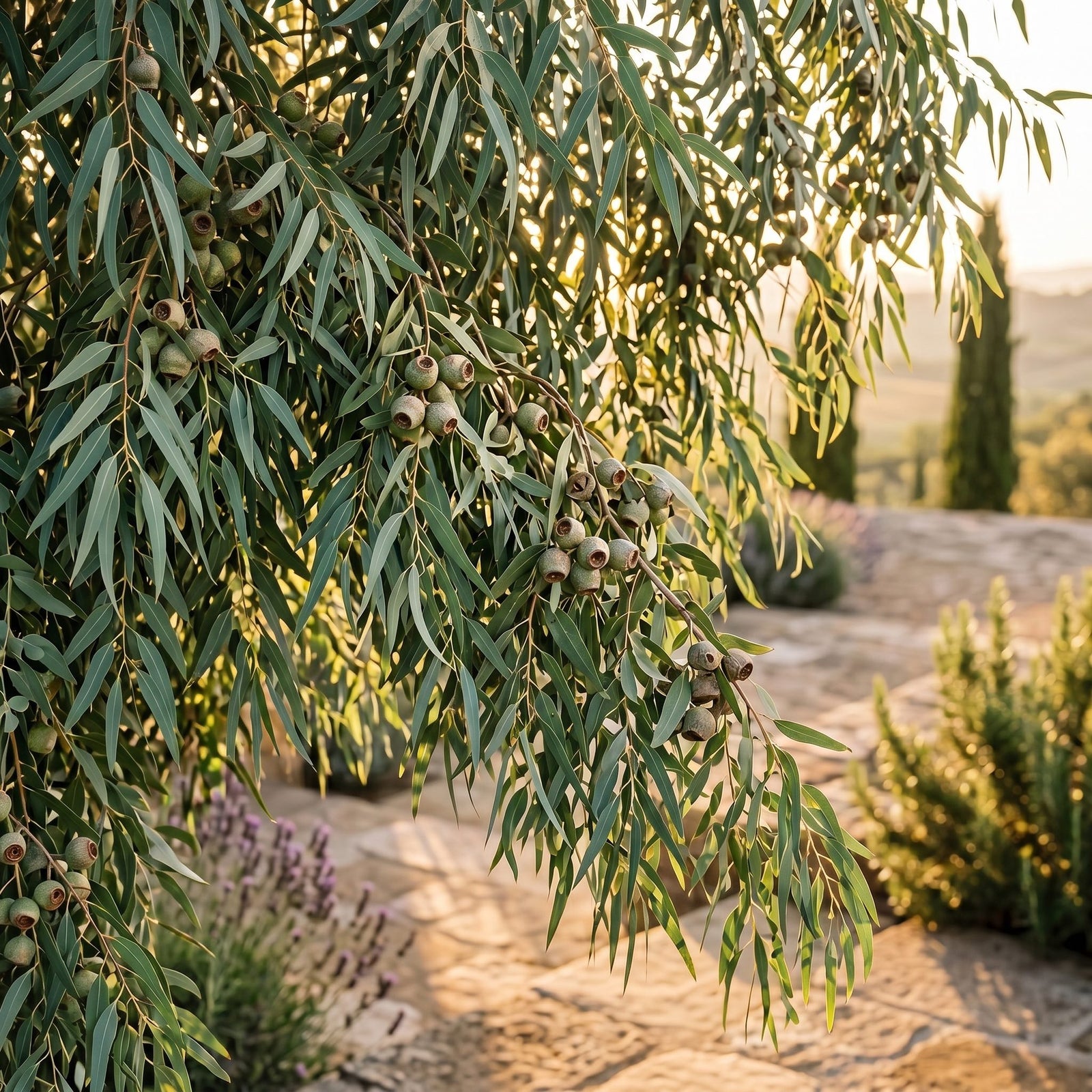
Eucalyptus globulus grows tall and fast and smells like nothing else on earth — that immediate clearing quality in the sinuses, the sense that the airways are opening before you've even consciously registered the scent. Eucalyptus has been used in traditional medicine across Australian Aboriginal traditions and in later European clinical herbalism specifically for respiratory support — for the breath, for the chest, for the aromatic compounds that help the body remember what open breathing feels like. In this formula, eucalyptus does its most important work as steam. When you lean over a bowl of this steeped tea and breathe slowly through your nose, it's the eucalyptus you feel first — and the rest of the herbs come through underneath it.

Elderflower

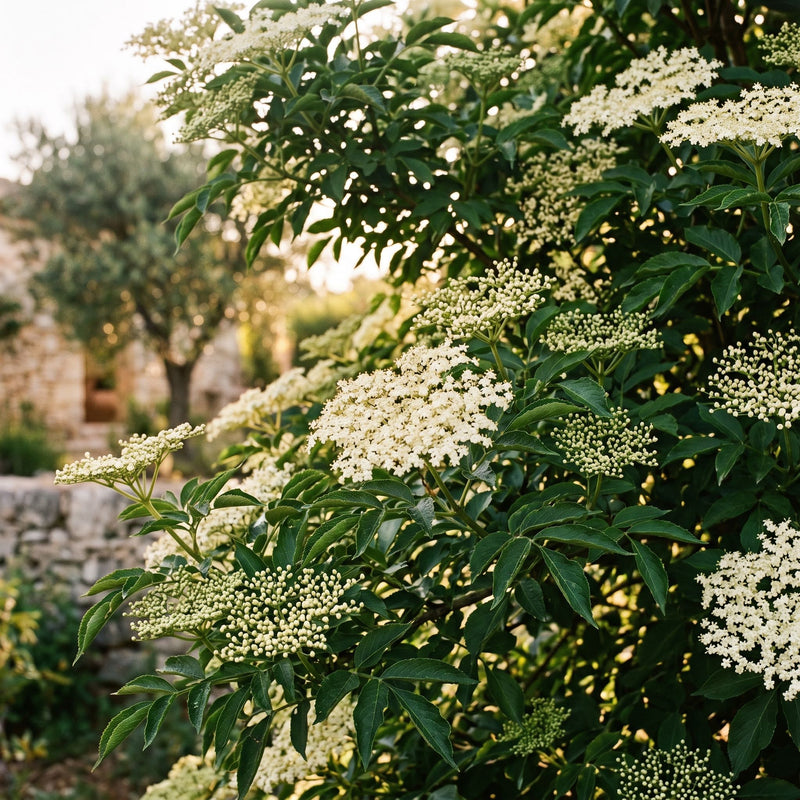
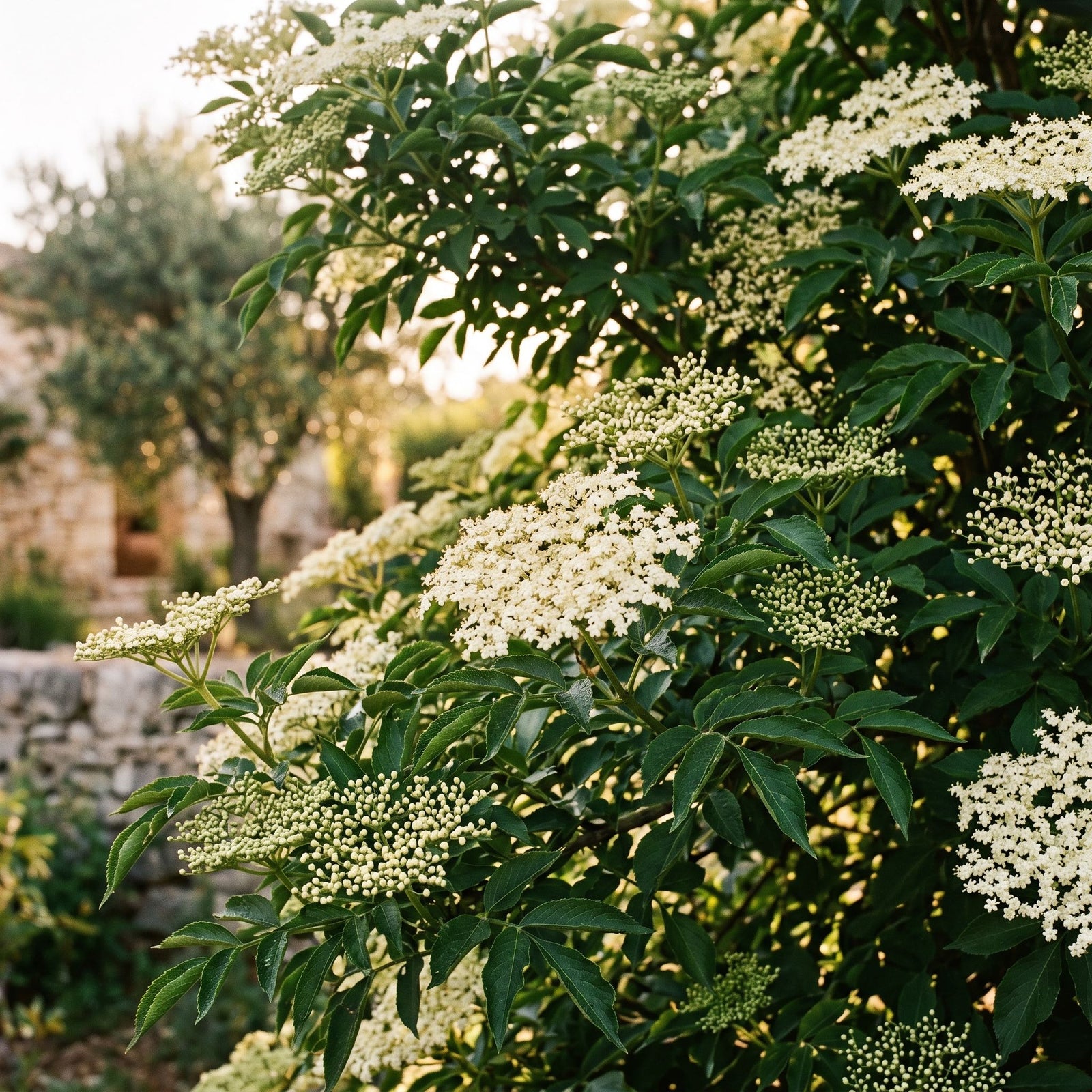
Most people know elderberry — the dark purple fruit of the elder tree that has become the go-to of the cold season wellness aisle. But the flower is a different medicine entirely. Elderflower (Sambucus canadensis) comes earlier in the season, in those first warm months before the berries form, and it carries a gentler, more yielding quality than the berry — one that traditional European herbalists reached for specifically at the first signs of seasonal vulnerability. I was drawn to elderflower over elderberry for this formula because of that quality of softness. It supports the body without pushing. It is the elder tree at its most tender, and that tenderness belongs in a winter blend.

Hyssop

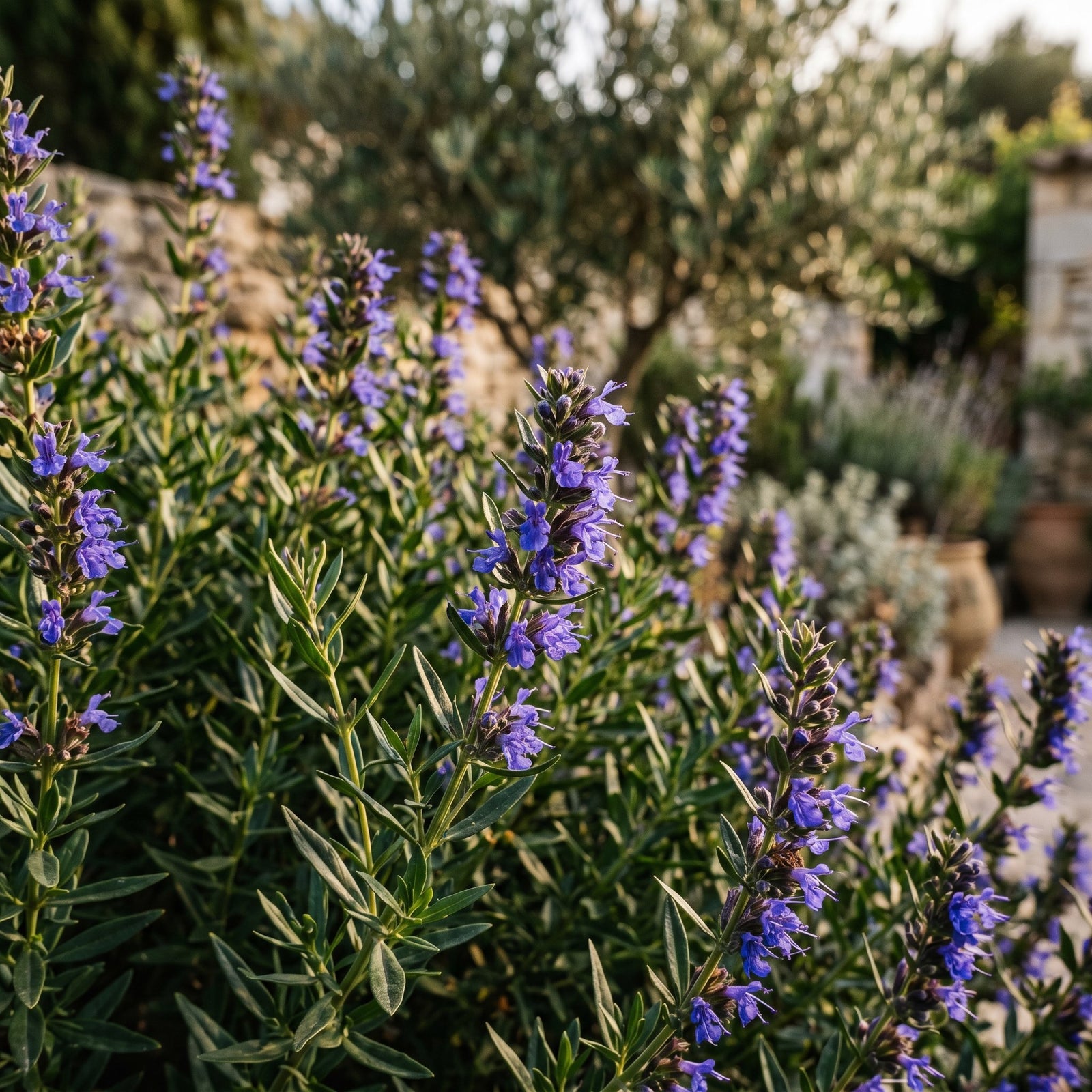
Hyssop is one of the oldest documented plants in Western herbal tradition — named in the Bible, cultivated in European monasteries, and used for centuries specifically for the chest and the breath. I came to hyssop through the European apothecary lineage: the aerial parts harvested in summer, dried slowly, then kept for the cold months when they're needed most. What strikes me every time I work with this plant is how it manages to be warming and aromatic at once — it doesn't just open the airways, it settles something deeper in the lungs. It's a plant that knows what winter asks of the body, and it has been offering this particular support for a very long time.

Echinacea

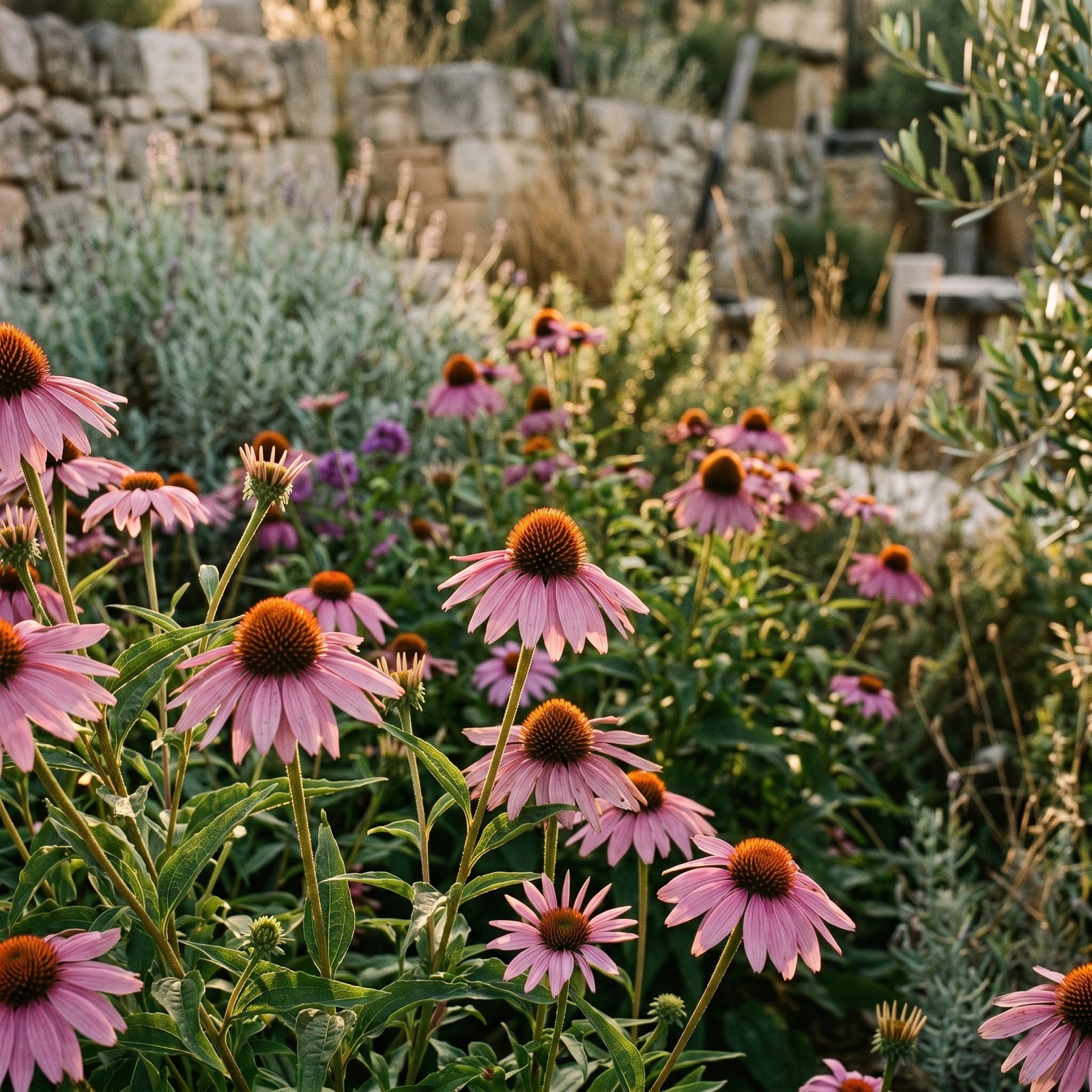
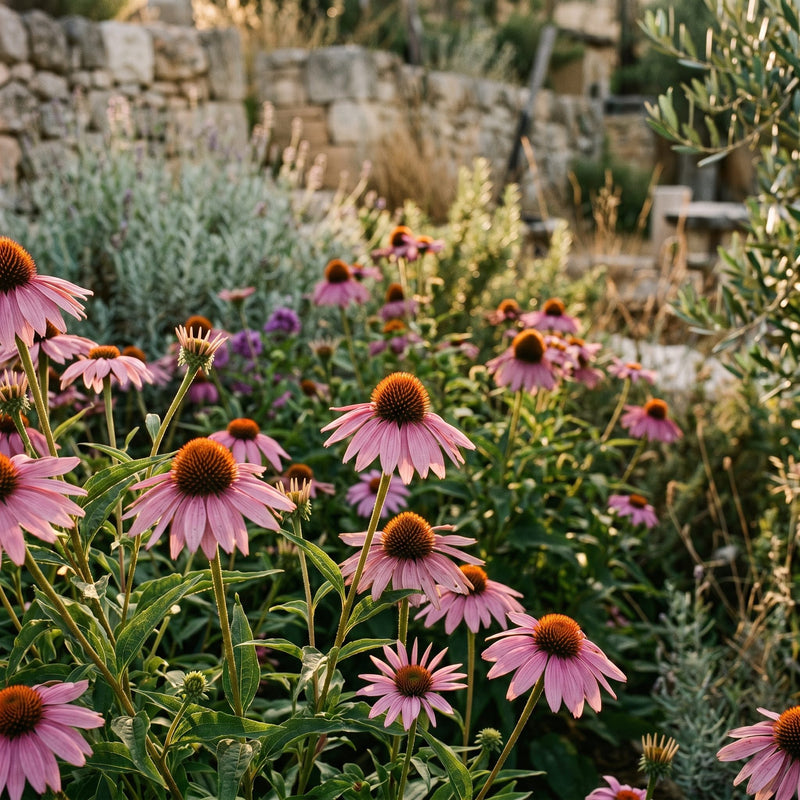
Echinacea purpurea grows in the prairies and open woodlands of North America, where it has been part of indigenous plant medicine, particularly among the Lakota, Cheyenne, and Comanche peoples, for far longer than it has been in any apothecary. The aerial parts, the root, the flower: all of it has been used, and the tradition is specific. This is a plant for the moment of vulnerability, not for the whole year. That distinction matters to me, and it shaped how this formula was built. Winter's Wellness is what you reach for when the season has arrived and the body is asking for something real. Echinacea belongs exactly there, in the cup that meets the cold.

Eucalyptus

Eucalyptus globulus grows tall and fast and smells like nothing else on earth — that immediate clearing quality in the sinuses, the sense that the airways are opening before you've even consciously registered the scent. Eucalyptus has been used in traditional medicine across Australian Aboriginal traditions and in later European clinical herbalism specifically for respiratory support — for the breath, for the chest, for the aromatic compounds that help the body remember what open breathing feels like. In this formula, eucalyptus does its most important work as steam. When you lean over a bowl of this steeped tea and breathe slowly through your nose, it's the eucalyptus you feel first — and the rest of the herbs come through underneath it.

Elderflower

Most people know elderberry — the dark purple fruit of the elder tree that has become the go-to of the cold season wellness aisle. But the flower is a different medicine entirely. Elderflower (Sambucus canadensis) comes earlier in the season, in those first warm months before the berries form, and it carries a gentler, more yielding quality than the berry — one that traditional European herbalists reached for specifically at the first signs of seasonal vulnerability. I was drawn to elderflower over elderberry for this formula because of that quality of softness. It supports the body without pushing. It is the elder tree at its most tender, and that tenderness belongs in a winter blend.

Hyssop

Hyssop is one of the oldest documented plants in Western herbal tradition — named in the Bible, cultivated in European monasteries, and used for centuries specifically for the chest and the breath. I came to hyssop through the European apothecary lineage: the aerial parts harvested in summer, dried slowly, then kept for the cold months when they're needed most. What strikes me every time I work with this plant is how it manages to be warming and aromatic at once — it doesn't just open the airways, it settles something deeper in the lungs. It's a plant that knows what winter asks of the body, and it has been offering this particular support for a very long time.

Echinacea

Echinacea purpurea grows in the prairies and open woodlands of North America, where it has been part of indigenous plant medicine, particularly among the Lakota, Cheyenne, and Comanche peoples, for far longer than it has been in any apothecary. The aerial parts, the root, the flower: all of it has been used, and the tradition is specific. This is a plant for the moment of vulnerability, not for the whole year. That distinction matters to me, and it shaped how this formula was built. Winter's Wellness is what you reach for when the season has arrived and the body is asking for something real. Echinacea belongs exactly there, in the cup that meets the cold.

Jasmine's Note

My grandmother didn't call it herbalism. She just knew things — which plants to reach for, which roots to dry, what the earth offered when the body asked. She learned it from her father, who kept a garden in Biloxi and understood plants the way some people understand people. That knowledge passed to her, and quietly, to me.

I didn't fully understand what I'd inherited until my own body started asking questions that medicine couldn't answer. Hormonal chaos, long seasons of depression, the particular exhaustion of feeling disconnected from yourself. I remembered the whisperings. I turned back toward the plants. Everything in this apothecary came from that turning — things I made for myself first, and then for the women in my life who needed the same. I offer them to you the way my grandmother offered what she knew: as a hand extended, as something real.

-Jasmine

Rooted in Lineage. Made with Reverence.

Every formula in this apothecary is made in small batches in Los Angeles, using herbs that are organically grown or seasonally wildcrafted whenever possible. We work with plants at the peak of their potency — harvested in the right season, prepared slowly, and handled with the same reverence we hope you bring to using them.

This is medicine in the oldest sense of the word: plant wisdom, carefully tended, passed forward with care.

Frequently Asked Questions

A Note on Plant Medicine

Plants are powerful — and like any potent thing, they deserve to be used with care and knowledge. These formulas are crafted with intention, but they are not a substitute for medical guidance. Before beginning a new herbal practice, we encourage you to speak with your healthcare provider, especially if you are pregnant, nursing, trying to conceive, managing a health condition, or taking prescription medication. Wild Woman products are not intended to diagnose, treat, cure, or prevent any disease.